


In the evolving landscape of modern healthcare, patients often look beyond conventional Western medicine to manage pain, reduce stress, or improve overall well-being. For healthcare providers, understanding the distinctions between different non-traditional approaches is essential for ensuring patient safety and providing coordinated care. These therapies range from physical manipulations to biological supplements and ancient medical systems.
Defining the Three Approaches
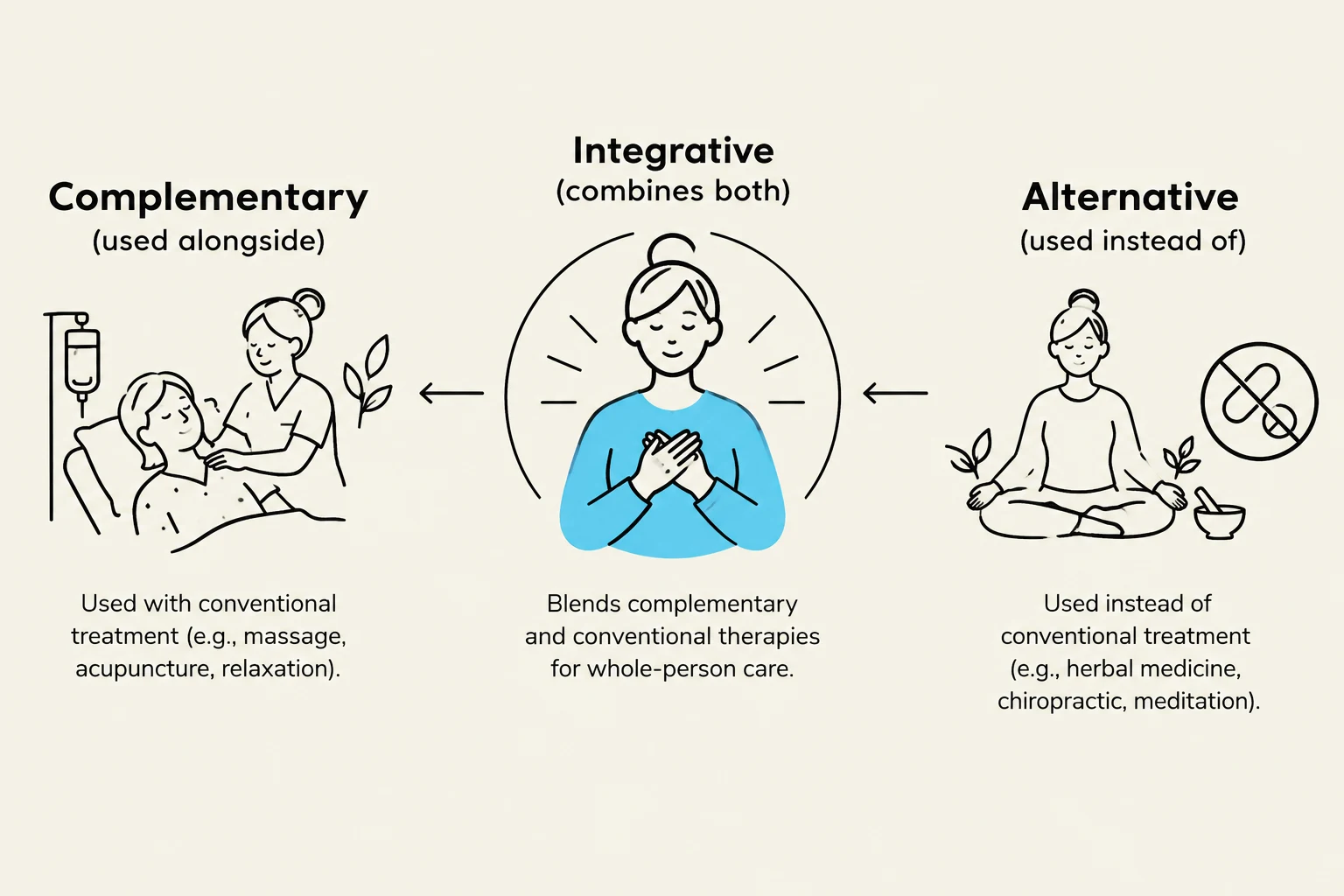
Before diving into specific treatments, it is critical to distinguish how these therapies are applied in relation to conventional medicine. The distinction lies in whether the therapy is used with, instead of, or as part of a coordinated plan with standard medical care.
- Complementary Therapy: This approach is used together with conventional (Western) medicine. The client continues their prescribed medical treatments but adds a complementary therapy to help improve comfort or manage specific symptoms.
- Alternative Therapy: This approach is used instead of conventional medicine. In these cases, the client chooses a nontraditional therapy and opts out of recommended medical treatments, which may place the client at risk if necessary medical care is delayed.
- Integrative Therapy: This represents a proactive, coordinated approach. It combines conventional medicine with evidence-based complementary therapies into a single, unified plan of care.
Categories of Non-Traditional Therapies
Non-traditional healthcare is categorized into several distinct types based on the method of intervention.
Keep reading for free.
Create an account to finish this reading and make it part of your study routine.
Continue reading freeAlready have an account? Log in
Updated