


Deoxyribonucleic acid, commonly known as DNA, is the fundamental molecule that carries the genetic instructions for the development, functioning, growth, and reproduction of all known living organisms. To understand how life works at a molecular level, one must first understand the elegant and highly specific architecture of the DNA molecule.
The Double-Stranded Architecture
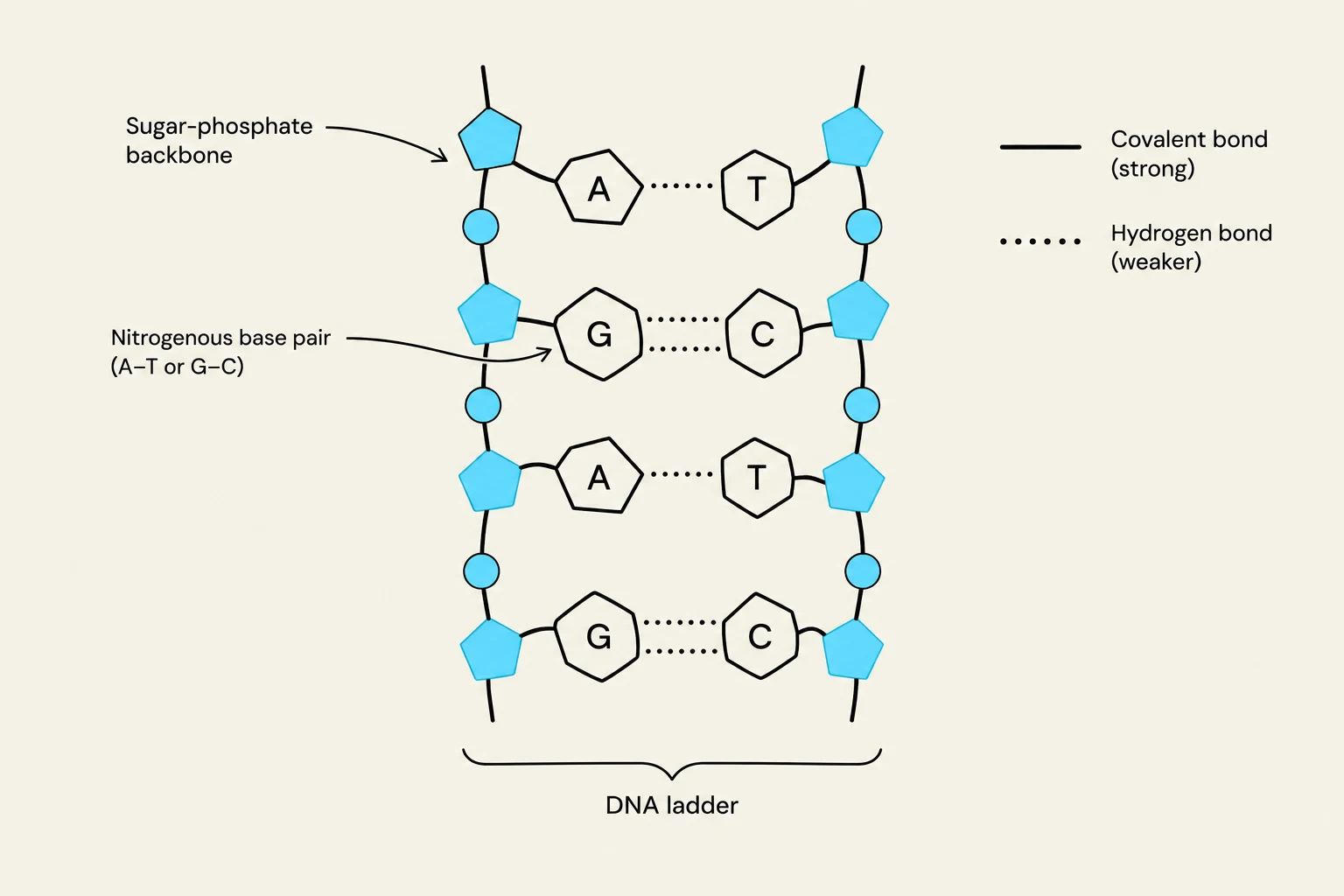
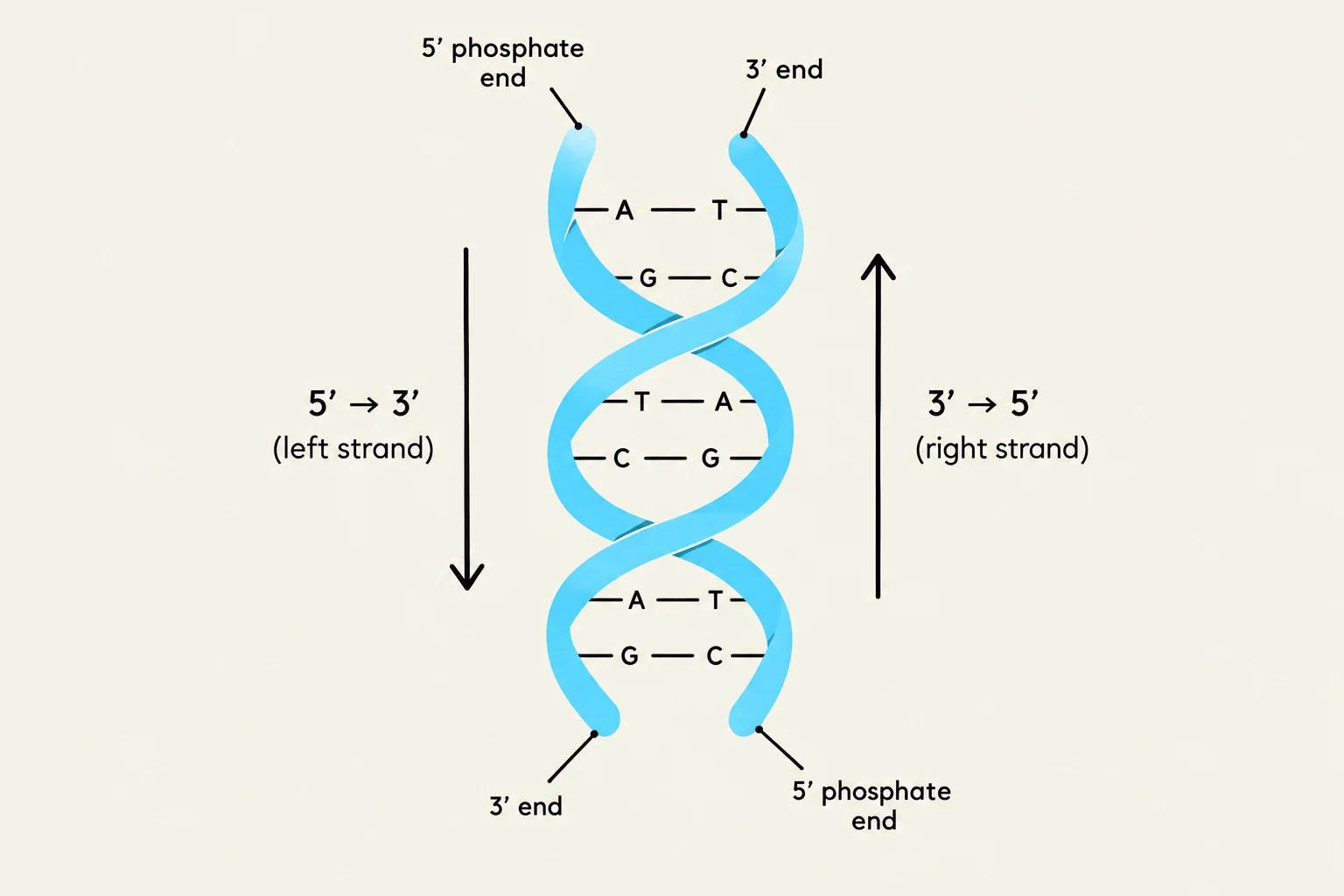
The most recognizable feature of DNA is its shape. It is a double-stranded molecule that is often compared to a twisted ladder or a spiral staircase. While a single strand of DNA contains genetic information, the molecule naturally exists as two strands that wrap around each other to form a double helix.
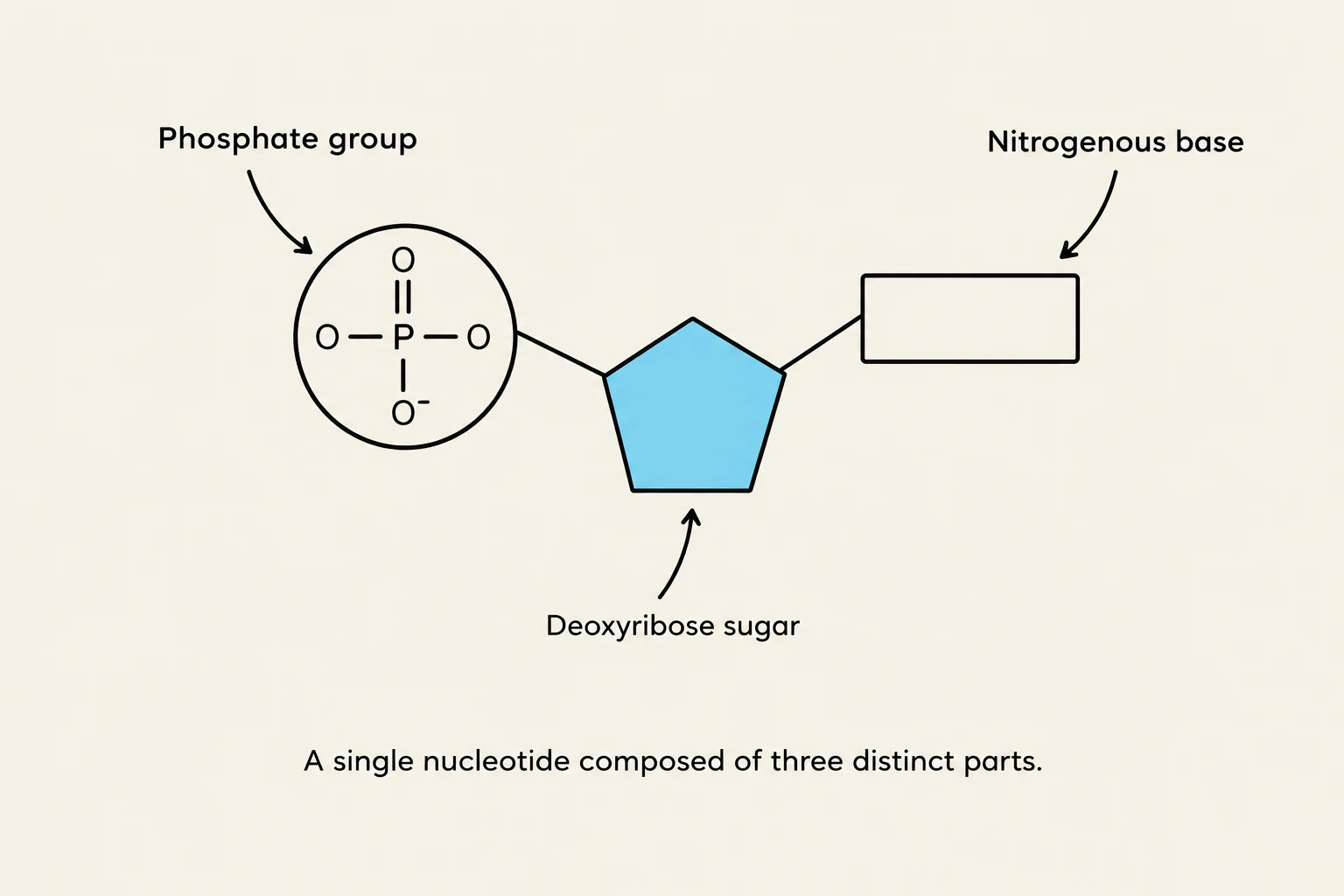
The structure of DNA is composed of repeating units called nucleotides. Each individual nucleotide is made up of three distinct components:
- A phosphate group
- A sugar molecule (specifically deoxyribose)
- A nitrogenous base
These nucleotides link together to form the long chains that make up the DNA molecule.
The Backbone: Sugars and Phosphates
If you imagine the DNA "ladder," the two long sides (the "handrails") are known as the sugar-phosphate backbone. This backbone is formed by an alternating pattern of sugars and phosphates.
The connections within this backbone are incredibly strong. The sugar and phosphate groups are held together by covalent bonds. These strong bonds ensure that the structural integrity of the DNA molecule remains intact, providing a stable framework for the genetic code.
The Rungs: Nitrogenous Bases and Hydrogen Bonding
Keep reading for free.
Create an account to finish this reading and make it part of your study routine.
Continue reading freeAlready have an account? Log in
Updated