


Nucleic acids are one of the four major groups of organic compounds essential to life. While carbohydrates provide energy, lipids offer storage and structure, and proteins perform diverse functional roles, nucleic acids serve a unique and fundamental purpose: they store and transfer the genetic information required for all biological processes.
The Building Blocks: Nucleotides
At the most basic level, nucleic acids are polymers, which are large molecules made by joining smaller repeating units called monomers. For nucleic acids, these monomers are known as nucleotides.
Every nucleotide is composed of three essential chemical components held together by covalent bonds:
- A 5-carbon sugar (either deoxyribose or ribose).
- A phosphate group.
- A nitrogenous base.
The specific arrangement and type of these components determine whether the nucleotide will contribute to a strand of DNA or RNA.
DNA: The Genetic Blueprint
Deoxyribonucleic acid, commonly known as DNA, is the molecule responsible for carrying the long-term genetic instructions for an organism.
The Double Helix Structure
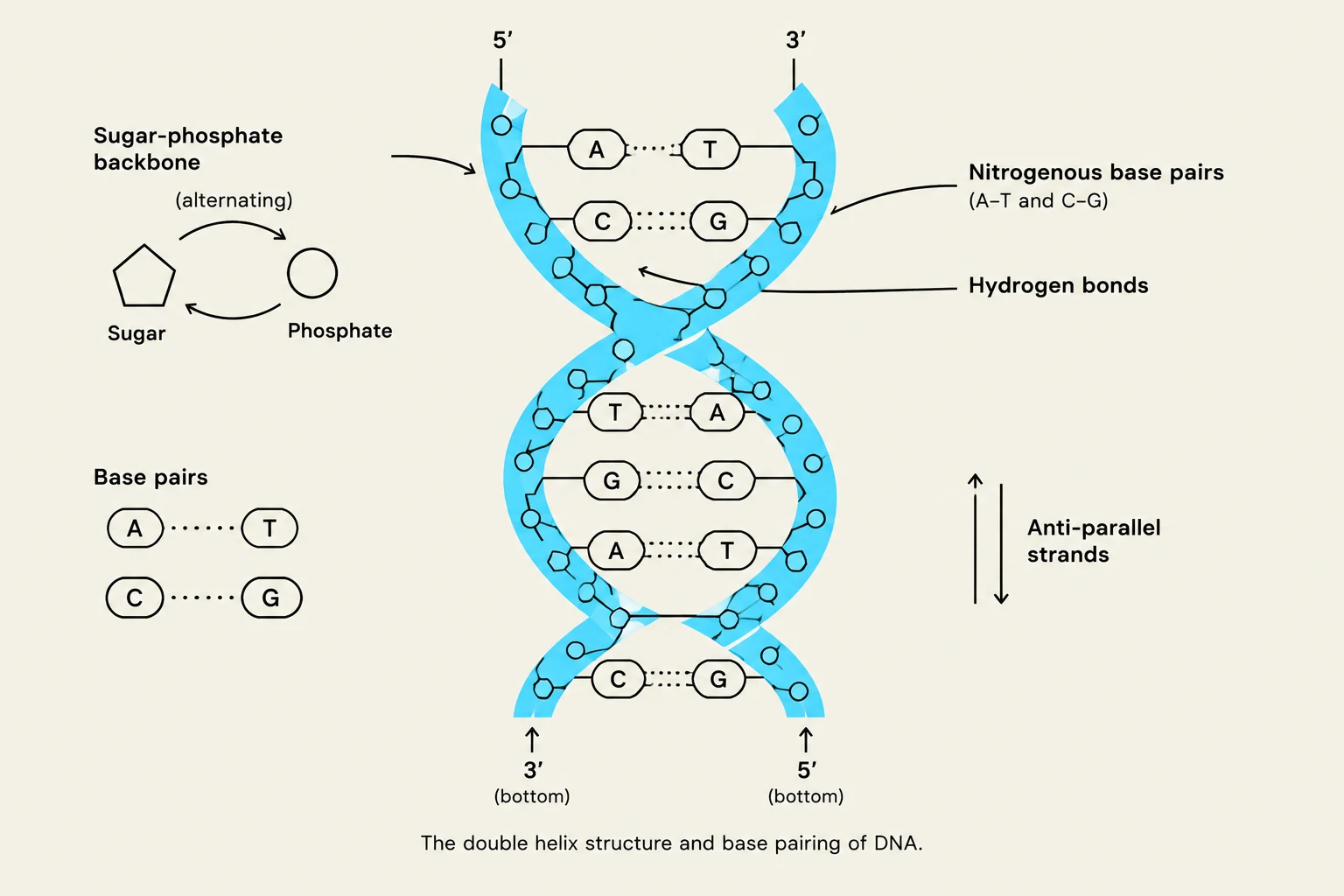
- The Sides: The "rails" or sides of the ladder are formed by a continuous sugar-phosphate backbone.
- The Rungs: The "steps" or rungs of the ladder consist of pairs of nitrogenous bases that extend across the center of the molecule.
Keep reading for free.
Create an account to finish this reading and make it part of your study routine.
Continue reading freeAlready have an account? Log in
Updated