


The Peripheral Nervous System (PNS) is a complex network that regulates involuntary bodily functions through two primary neurotransmitter systems: the cholinergic system (utilizing acetylcholine/ACh) and the adrenergic system (utilizing epinephrine and norepinephrine). Understanding the specific receptor subtypes within these systems is essential for predicting physiological responses and managing clinical conditions like urinary retention and overactive bladder.
Cholinergic Receptors
Cholinergic receptors mediate the effects of acetylcholine (ACh). These receptors are categorized into two main groups: nicotinic and muscarinic.
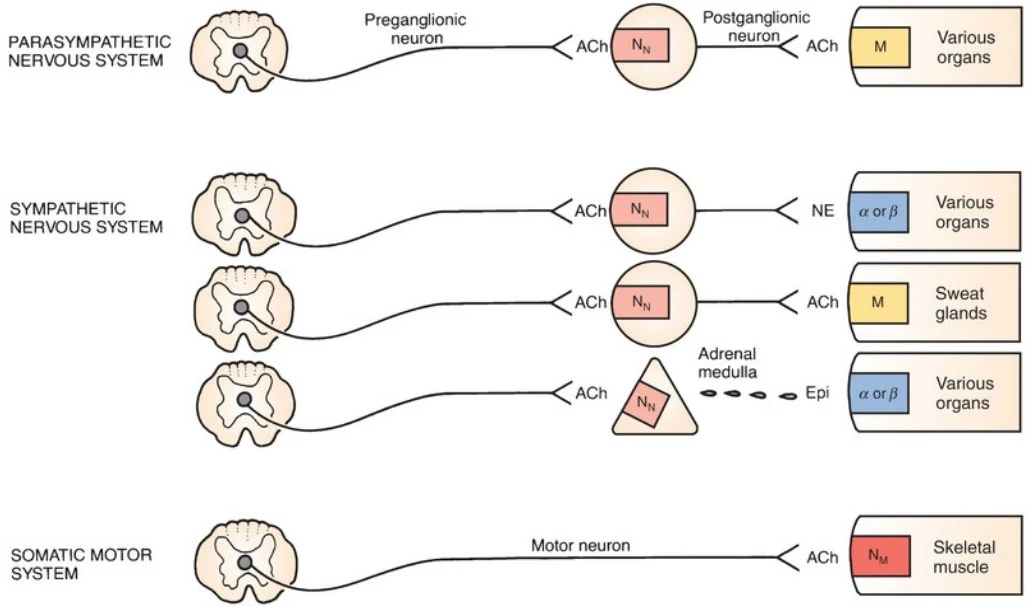
Nicotinic Receptors
Nicotinic receptors are subtyped into (neuronal) and (muscle).
Muscarinic Receptors
Muscarinic receptors are further divided into three subtypes (, , and ), each located in different tissues and producing distinct physiological effects:
| Muscarinic Subtype | Primary Locations | Response to Activation | Impact of Blockade |
|---|---|---|---|
| Salivary glands, CNS | Salivation, enhanced cognition | Dry mouth, impaired cognition | |
| Heart | Bradycardia (slow heart rate) | Tachycardia (fast heart rate) | |
| Bladder (detrusor), GI tract, Eyes, Salivary glands | Detrusor contraction, increased motility, miosis (pupil constriction), salivation | Bladder relaxation, constipation, mydriasis (dilation), dry mouth/eyes |
Exam Tip: If a question asks about the effect of a drug on the heart, think (slows it down) or (speeds it up). If it asks about the bladder, think (contracts the detrusor to allow voiding).
Parasympathomimetics: Bethanechol
Parasympathomimetics, or cholinergic agonists, mimic the effects of the parasympathetic nervous system.
Bethanechol Mechanism of Action
Bethanechol is a direct-acting agonist that is highly selective for , , and receptors. Its primary clinical use is for treating urinary retention (specifically underactive bladder) resulting from post-operative states, post-partum complications, or neurogenic bladder.
Keep reading for free.
Create an account to finish this reading and make it part of your study routine.
Continue reading freeAlready have an account? Log in
Updated