


The human nervous system is a highly complex network of nerve fibers that serves as the body's primary communication and control center. It is responsible for everything from basic survival functions, like breathing and heart rate, to high-level cognitive processes such as memory, personality, and intelligence. To understand how this system operates, it is best to view it through its two primary organizational divisions: the Central Nervous System (CNS) and the Peripheral Nervous System (PNS).
The Central Nervous System (CNS)
The Central Nervous System acts as the command center for the entire body. It is composed of two main structures: the brain and the spinal cord.
The Brain
The brain is the most complex organ in the CNS, housed securely within the cranial cavity and protected by the skull. Anatomically, the brain can be divided into three major sections: the hindbrain, the midbrain, and the forebrain.
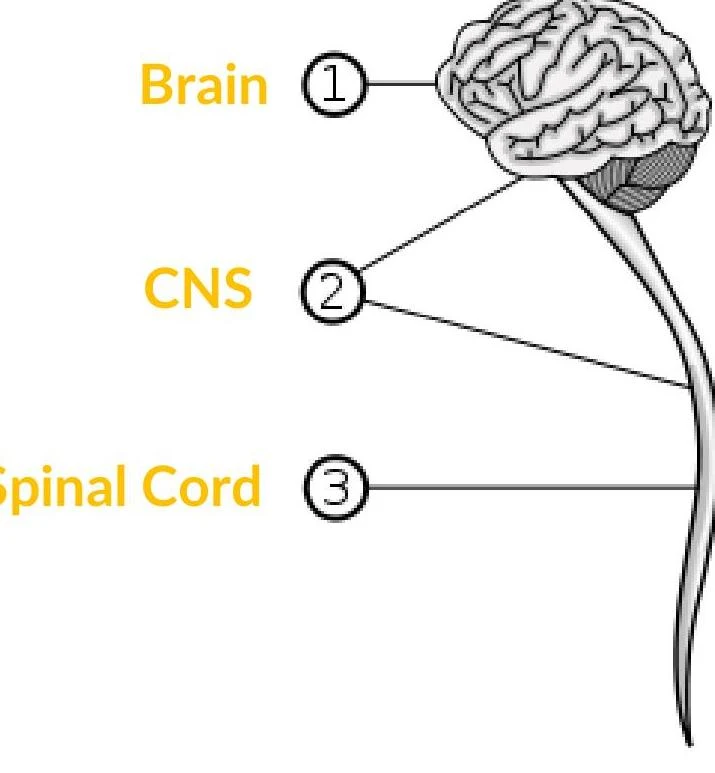
- Hindbrain: This section includes the medulla (which regulates vital functions like heart rate and blood pressure), the pons (which links the hindbrain to the midbrain and assists in respiration), and the cerebellum (which coordinates voluntary muscle movement, balance, and posture).
- Midbrain: This serves as a relay station for sensory and motor information between the forebrain and hindbrain, while also managing visual and auditory reflexes.
- Forebrain: The most advanced section, the forebrain is divided into the diencephalon and the telencephalon.
- The diencephalon contains the thalamus, which acts as a "switchboard" relaying sensory and motor signals to the cerebral cortex, and the hypothalamus, which regulates vital functions like water balance, appetite, and links the nervous system to the endocrine system.
- The telencephalon contains the cerebral cortex, the outer layer responsible for higher-order intelligence, memory, and sensory processing.
Keep reading for free.
Create an account to finish this reading and make it part of your study routine.
Continue reading freeAlready have an account? Log in
Updated