


A pressure injury is localized damage to the skin and underlying soft tissue, typically occurring over bony prominences. This damage is primarily the result of intense or prolonged pressure, often occurring in combination with shear—the force applied when skin stays in place while the underlying bone and muscle move.
Understanding the staging system developed by the National Pressure Injury Advisory Panel (NPIAP) is critical for healthcare providers to assess severity, guide treatment, and monitor healing. Tissue tolerance is not uniform; it is influenced by several physiological factors, including the microclimate (moisture and temperature), nutrition, perfusion, and existing co-morbidities.
Deep Tissue Pressure Injury (DTPI)
Before looking at the progressive stages of skin loss, it is important to understand the Deep Tissue Pressure Injury (DTPI). Unlike other stages that may show visible skin breakdown, a DTPI is characterized by persistent, non-blanchable deep red, maroon, or purple discoloration. This discoloration may occur on intact skin or non-intact skin, often revealing a dark wound bed or a blood-filled blister.
DTPI is particularly dangerous because it results from damage occurring at the tissue-bone interface, meaning the damage is happening deep beneath the surface before it is visible on the epidermis.
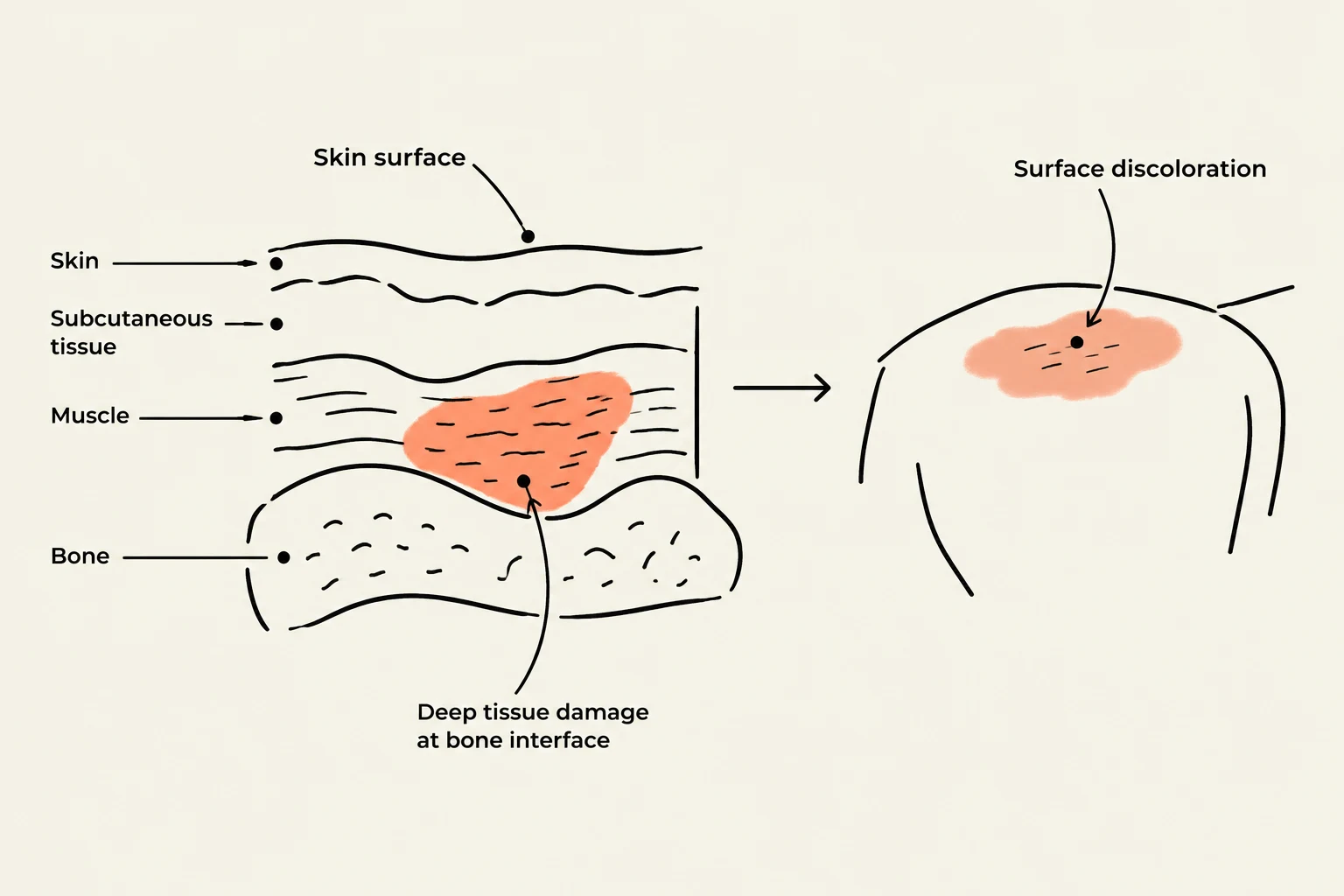
Clinical Tip: In patients with darkly pigmented skin, discoloration from a DTPI or Stage 1 injury may appear more subtle. Always assess for changes in sensation, temperature, or firmness in addition to visual cues.
The Progressive Stages of Pressure Injury
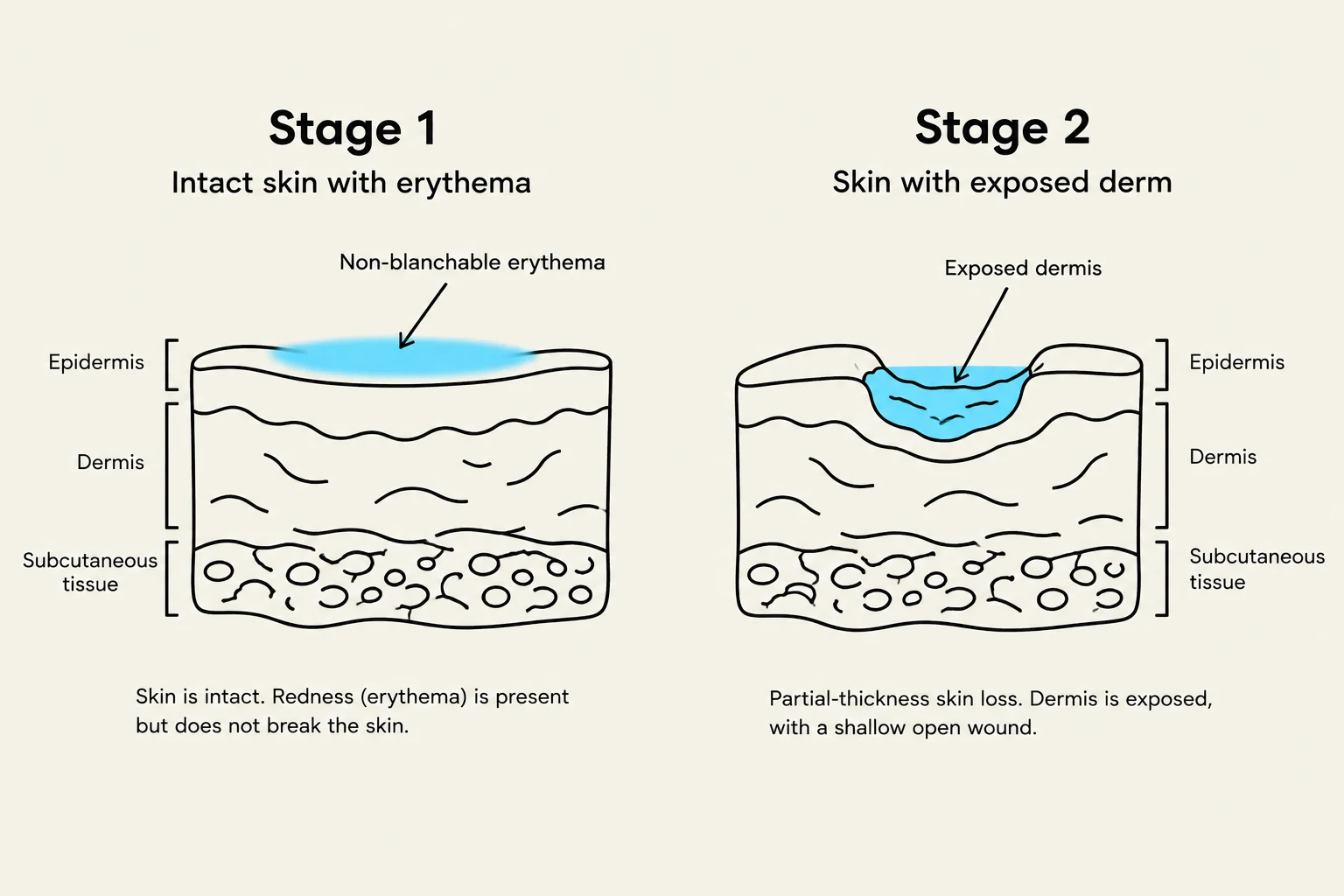
The NPIAP classifies pressure injuries into stages based on the depth of tissue involvement.

Keep reading for free.
Create an account to finish this reading and make it part of your study routine.
Continue reading freeAlready have an account? Log in
Updated