


The first two years of life are a period of unparalleled growth, not just physically, but cognitively and socially. While much of early development focuses on motor skills and sensory perception, the emergence of language is one of the most profound milestones in human development. Language allows an infant to transition from a purely reactive being to an active communicator, capable of expressing needs, recognizing patterns, and eventually constructing complex thoughts.
The Building Blocks: From Cooing to Phonemes
Language acquisition does not begin with the first word; it begins with sounds. In the earliest months, infants engage in vocalizations that serve as the foundation for future speech.
Around 2 to 3 months of age, infants begin cooing, making soft, vowel-like sounds when alone or when responding to social interaction. As they grow, specifically between 4 and 5 months, these sounds become more complex, incorporating various vowel and consonant sounds.
By approximately 6 months, infants enter the babbling stage. This is a critical period where they begin to utter phonemes—the distinct units of sound that make up a language. Interestingly, at this stage, infants are capable of producing the phonemes of all human languages, providing them with a broad phonetic repertoire before they begin to specialize in the sounds of their native environment.
Exam Tip: Pay close attention to the distinction between receptive and expressive language. Receptive vocabulary refers to what an infant understands, while expressive language refers to what they can actually produce.
Milestones of Communication
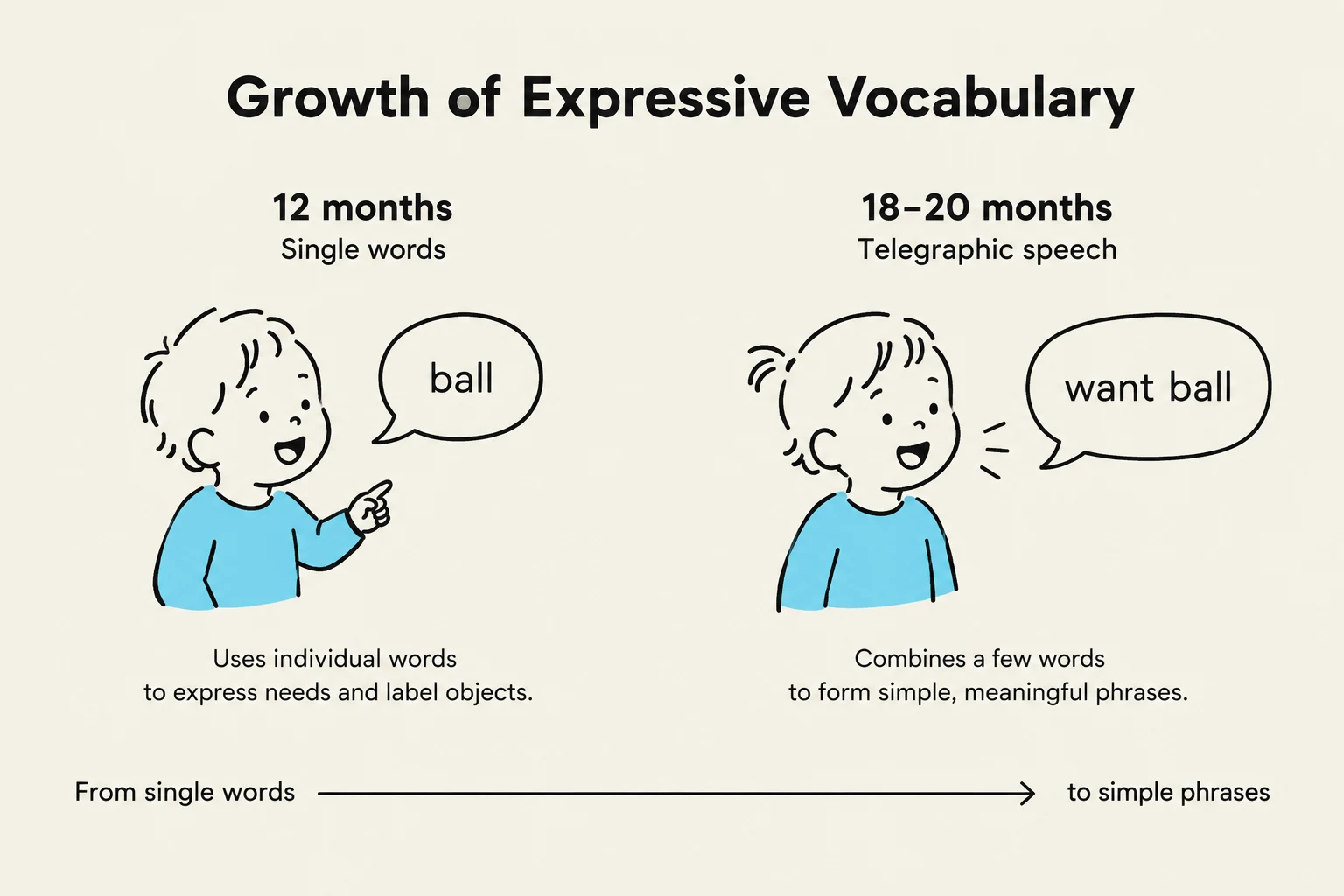
As infants approach their first birthday, a clear distinction emerges between what they understand and what they can say.
Keep reading for free.
Create an account to finish this reading and make it part of your study routine.
Continue reading freeAlready have an account? Log in
Updated