Laboratory Safety: Fire Prevention and Emergency Response
This guide covers essential laboratory safety protocols, including fire fundamentals, classifications, extinguisher usage, emergency evacuation, first aid, and specialized responses to biological and chemical incidents.
In any laboratory or clinical environment, safety is a shared responsibility. While employers are tasked with providing resources, training, and hazard identification, every individual is responsible for following established protocols to minimize risks. Laboratory personnel work amidst a complex landscape of biological, chemical, and physical hazards that require constant vigilance. Being prepared for emergencies—ranging from a small localized fire to a major biological spill—is not just a matter of compliance, but a fundamental requirement for personal and collective protection.
Fire Fundamentals and Classifications
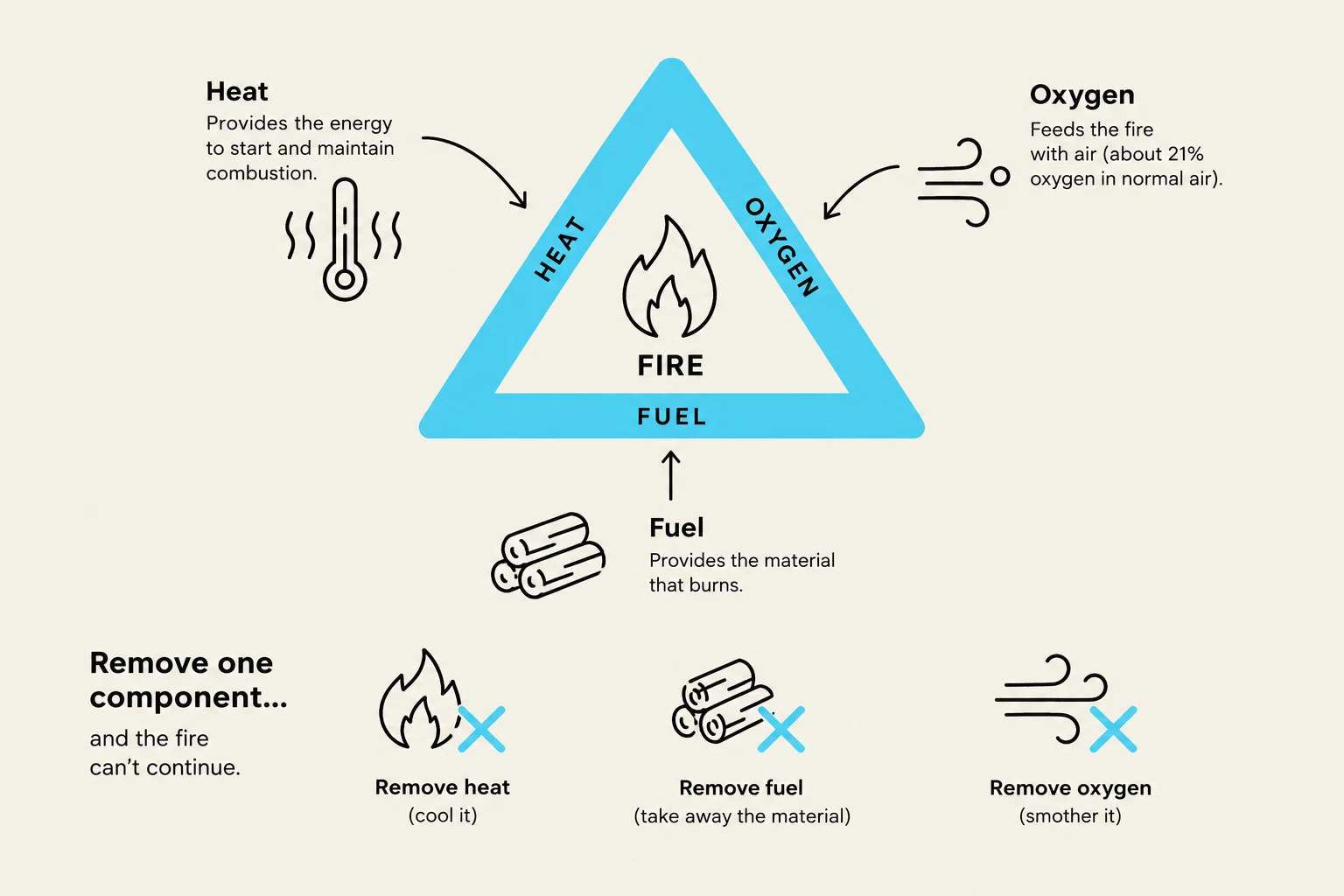
To manage a fire effectively, one must first understand why it occurs. A fire requires three specific components to exist: heat, fuel, and oxygen. This relationship is known as the fire triangle. If you can remove even one of these components, the fire will be extinguished.
Materials in the workplace are categorized by how easily they ignite, often defined by their flashpoint—the lowest temperature at which a substance generates enough vapor to ignite when exposed to an ignition source:
Flammable: Materials that ignite easily with a flashpoint below 37.8 °C.
Combustible: Materials that require a heat source to ignite, with a flashpoint between 37.8 °C and 93.9 °C.
Autoignition temperature: The specific temperature at which a substance will self-ignite without any external spark or flame.
The fire triangle illustrates the three elements necessary for combustion: heat, fuel, and oxygen. Removing any one of these components will extinguish the fire.
Fires are further classified into specific "Classes" based on the type of fuel involved:
Class A: Ordinary combustibles (e.g., wood, paper, cloth).
Class B: Flammable liquids and gases (e.g., oils, paints, solvents).
Class C: Electrical equipment (e.g., motors, instruments).
Class D: Combustible metals (e.g., magnesium, sodium, potassium).
Class K: Cooking oils and fats.
Fire Extinguisher Selection and Usage
Selecting the wrong extinguisher can be catastrophic; for example, applying water to an oil fire (Class K) can cause the fire to spread violently. Always match the extinguisher type to the class of fire:
Extinguisher Type
Suitable Fire Classes
Mechanism/Notes
Water
Class A
Empties quickly; do not use on electrical or liquid fires.
CO2
Class B and C
Displaces oxygen to blanket the fuel; do not use in confined spaces.
Dry Chemical
ABC (most common)
Creates a barrier between fuel and oxygen; may leave residue that damages electronics.
Wet Chemical
Class K
Specifically designed for kitchen/oil fires.
Exam Tip: If a question asks about a fire involving electrical equipment and flammable liquids, look for a "Dry Chemical" extinguisher labeled for "ABC" use, as it covers both hazards.
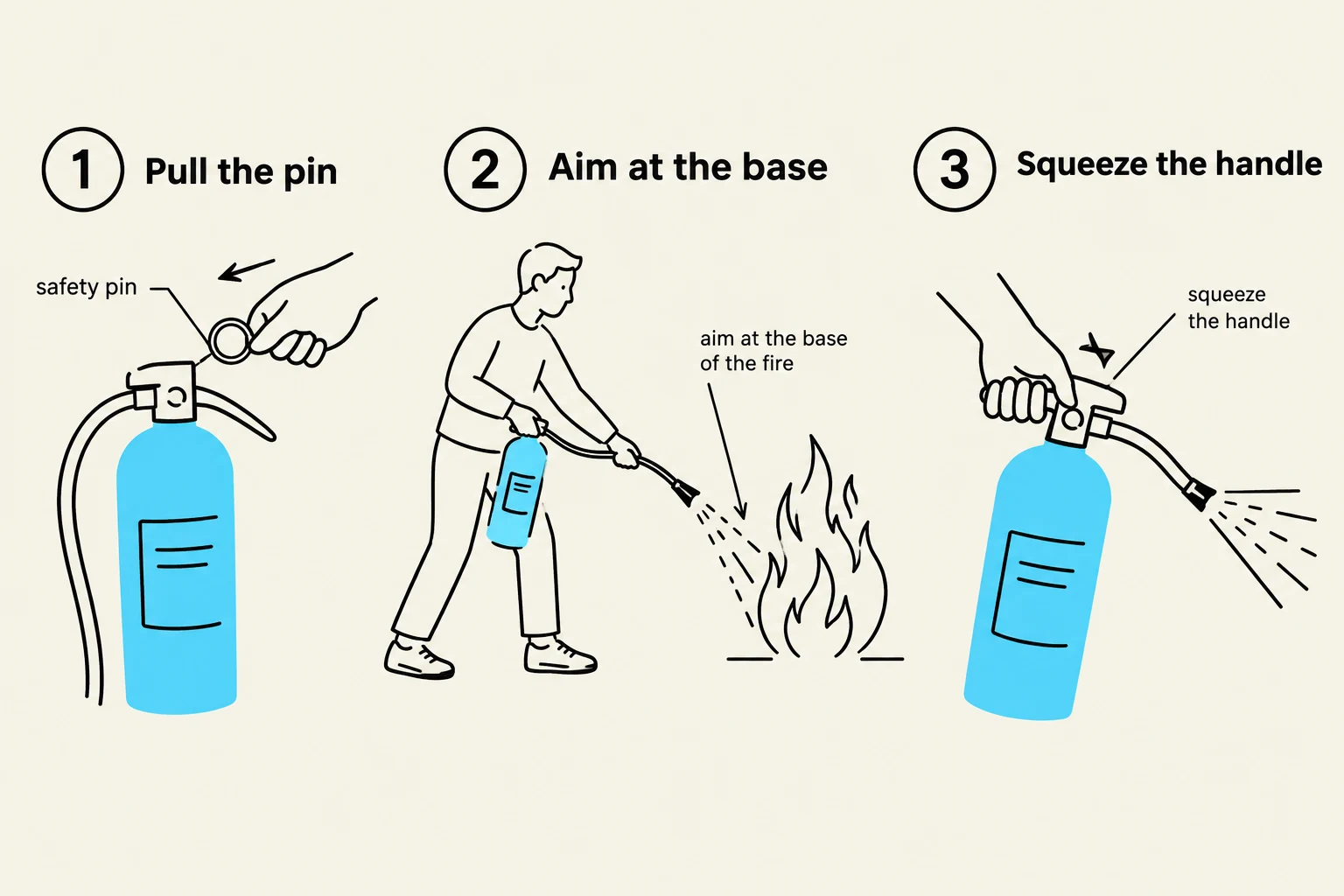
When you are trained and confident that it is safe to attempt to extinguish a small fire, use the PASS acronym to operate the device:
Pull the pin.
Aim at the base of the fire.
Squeeze the trigger.
Sweep from side to side, moving from the edge of the fire toward the center.
Instructions on how to use a fire extinguisher: pull the pin, aim at the base of the fire, and squeeze the handle.
Emergency Evacuation and Medical Response
In the event of a fire or a situation where you are not confident in your ability to control the hazard, you must prioritize evacuation.
Evacuation Protocols
Alert others: Immediately notify those in the vicinity.
Activate alarms: Pull the nearest fire alarm station.
Evacuate: Follow the designated evacuation routes posted in your workplace. Always be aware of an alternate route in case your primary path is blocked.
Muster: Proceed to the designated muster point to ensure all personnel are accounted for.
Containment: If you are the last person to leave a room, close the door to help contain smoke and fire.
If your clothing catches fire, do not run. Use the stop, drop, and roll technique to extinguish the flames, and once cooled, use a safety shower if available.
Medical Emergencies and First Aid
First aid is the immediate care provided to an injured person. While minor injuries may require simple treatment, serious incidents require professional medical intervention.
General Rule: Remain calm, examine the individual, and do not move them unless they are in immediate danger.
Life-Threatening Situations: Call 911 immediately for cardiac arrest or severe trauma.
Hazardous Material Exposure: If a chemical splashes onto the skin or into the eyes, consult the Safety Data Sheet (SDS) immediately to determine the specific required decontamination steps.
Biological Exposure: Needlesticks and Blood
Biological hazards, such as bloodborne pathogens, pose significant risks through "injection" routes (e.g., sharps and needles). In the event of a needlestick or blood exposure:
Wash the affected area immediately with soap and water.
Avoid using harsh disinfectants like bleach directly on the wound, as this can cause tissue damage.
Seek medical treatment immediately and report the incident according to institutional protocols.
Note on Documentation: Every incident, regardless of how minor it seems, must be documented. Documentation includes the name of the injured, the nature of the injury, how it occurred, and the first aid provided. This is used for risk management to prevent future occurrences.
Specialized Laboratory Emergencies
Centrifuge and Equipment Breakage
While specific centrifuge breakage protocols may vary by institution, they generally involve managing the risk of aerosolization of biological agents. If a centrifuge fails or a tube breaks during a run, the primary goal is to prevent the inhalation of potentially infectious aerosols.
Biological Spills
If a biological spill occurs, especially one that might generate aerosols, follow these steps:
Notify and Evacuate: Alert others and allow the area to sit for at least 10 minutes to let aerosols settle.
Prepare PPE: Use heavy-duty gloves, face shields, and appropriate respirators.
Contain and Disinfect: Cover the spill with paper towels and gently pour disinfectant from the outer perimeter toward the center.
Wait: Allow the disinfectant to sit for the required contact time (typically 30 minutes) before cleaning up.
Summary of Safety Responsibilities
Safety is not a static set of rules but an active practice. By understanding the fire triangle, selecting the correct extinguisher, knowing your evacuation routes, and respecting the protocols for biological and chemical exposures, you contribute to a culture of safety that protects everyone in the laboratory.
Keep reading for free.
Create an account to finish this reading and make it part of your study routine.