An overview of the human nervous system, including its divisions (Central and Peripheral Nervous Systems) and the anatomical structures and functions of the brain (Hindbrain, Midbrain, and Forebrain). It also touches upon neurotransmitters and chemical communication within the system.
The human nervous system is a highly complex network of nerve fibers that serves as the body's primary communication and control center. It is responsible for everything from basic life-sustaining functions, such as breathing, to high-level cognitive processes like memory, personality, and intelligence. To understand how the body responds to its environment, we must examine the structural divisions of the nervous system and the specific anatomical regions of the brain.
The Divisions of the Nervous System
The nervous system is organized into two main sections: the Central Nervous System (CNS) and the Peripheral Nervous System (PNS).
Central Nervous System (CNS)
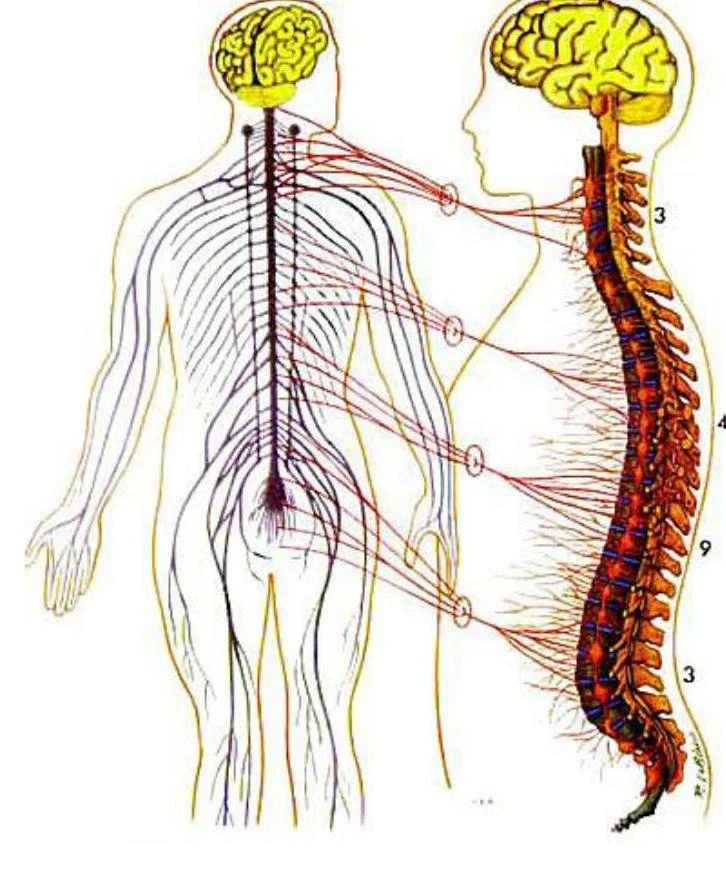
The CNS acts as the command center for the body and consists of the brain and the spinal cord. To ensure safety, these structures are encased in protective bony cavities: the brain is contained within the cranial cavity and protected by the skull, while the spinal cord resides in the spinal cavity, protected by the vertebrae.
Diagram of the human nervous system, illustrating the brain and spinal cord with associated nerves.
Peripheral Nervous System (PNS)
The PNS consists of the nerves that branch out from the CNS to the rest of the body. It is further divided into two functional systems:
Somatic Nervous System: Often referred to as the "voluntary" system, it connects the brain to voluntary muscles and provides sensory feedback regarding movement.
Autonomic Nervous System: Known as the "involuntary" system, it connects the brain to internal organs.
The Autonomic Nervous System is critical for maintaining homeostasis and is split into two antagonistic (opposing) divisions:
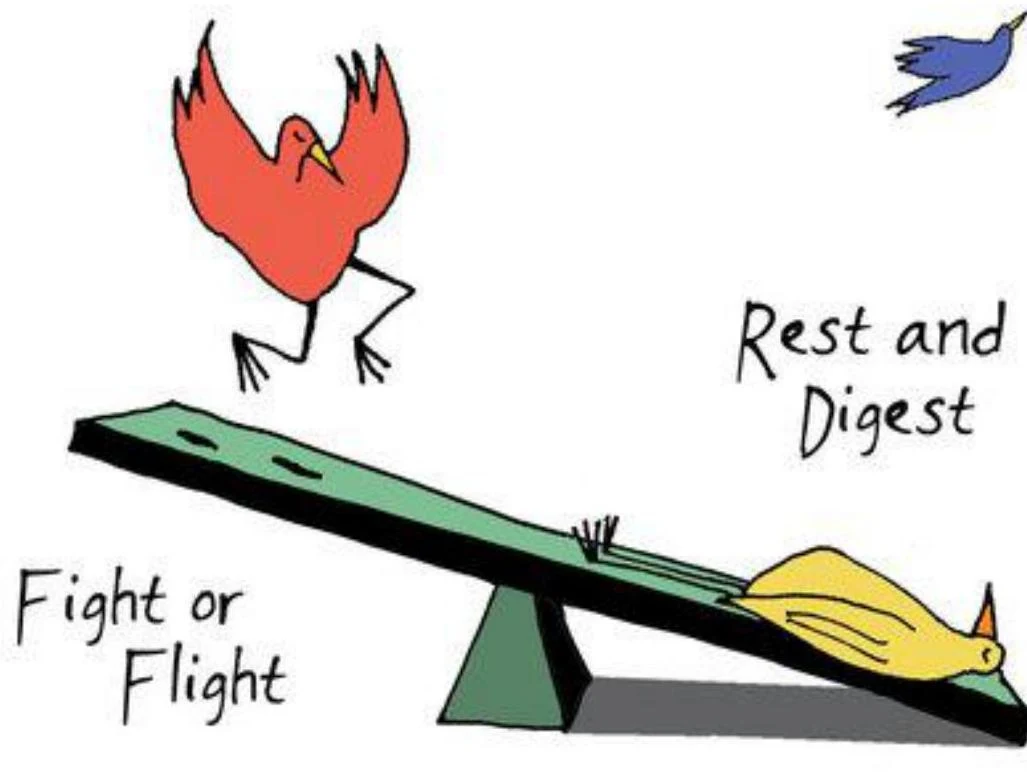
Sympathetic Nervous System: This is the "fight or flight" system. It responds to danger and stress by triggering physiological changes such as increased heart rate and blood pressure. This acute stress response is often associated with the release of catecholamines, specifically epinephrine and norepinephrine.
Parasympathetic Nervous System: This is the "rest and digest" system. It controls organs at their baseline and becomes active when an individual feels relaxed, stimulating processes like digestion.
A diagram illustrating two behavioral responses: 'Fight or Flight' and 'Rest and Digest', depicted by birds on a seesaw.
Exam Tip: Remember that the Sympathetic and Parasympathetic systems work like a seesaw; when one is highly active (e.g., during a stressful event), the other is generally suppressed to prioritize survival functions.
Brain Anatomy: From Hindbrain to Forebrain
The brain is organized into three primary anatomical sections: the hindbrain, the midbrain, and the forebrain.
The Hindbrain
The hindbrain manages many of the body's most fundamental survival functions:
Medulla: Mediates vital functions including heart rate, blood pressure, and the concentration of CO2 and O2.
Pons: Acts as a link between the hindbrain and midbrain and helps control respiration.
The midbrain serves as a relay station for sensory and motor information traveling between the forebrain and the hindbrain. It is also responsible for visual and auditory reflexes and contains the substantia nigra, which is involved in the production of dopamine (DA).
The Forebrain
The forebrain is the most complex section and is divided into two main parts: the diencephalon and the telencephalon.
The Diencephalon
The diencephalon contains two critical structures:
Thalamus: Often described as a "switchboard," it relays sensation, spatial sense, and motor signals to the cerebral cortex, while also regulating sleep, alertness, and consciousness.
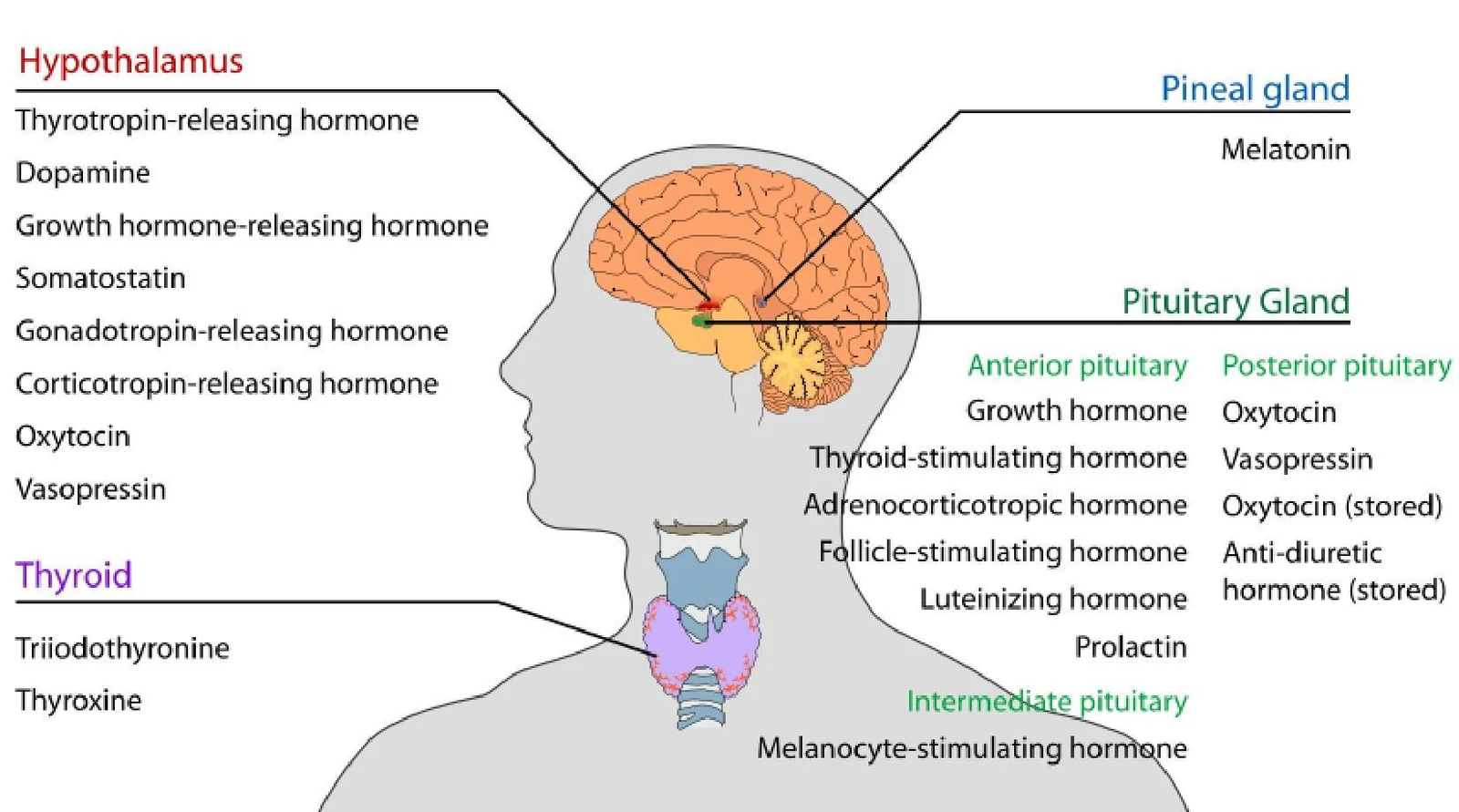
Hypothalamus: This structure regulates the medulla's control over cardiac function and respiration. It also manages water balance, appetite, and sexual desire, and serves as the vital link to the endocrine system via the pituitary gland.
This diagram illustrates the locations and functions of key endocrine glands in the human body, including the hypothalamus, pineal gland, pituitary gland, and thyroid gland, along with the hormones they produce.
The Telencephalon
The telencephalon houses the cerebral cortex, the outer region of the brain. The cerebral cortex is responsible for higher-order intelligence, memory, personality, and the processing of sensory and motor information. It is organized into four distinct lobes.
Neurotransmitters and Chemical Communication
The nervous system relies on chemical messengers known as neurotransmitters to regulate functions in both the CNS and PNS. These chemicals modulate physiology and alertness.
A key group of neurotransmitters mentioned is the catecholamines (such as epinephrine and norepinephrine), which are secreted by the sympathetic nervous system during stress. It is important to note that repeated activation of these stress responses can be linked to chronic disease.
Clinical Note: The regulation of these chemical systems is delicate. For example, the midbrain's substantia nigra is essential for dopamine production; disruptions in these neurochemical pathways are often linked to neurological disorders like Parkinson's disease.
Keep reading for free.
Create an account to finish this reading and make it part of your study routine.