Health, Wellness, and Physical Activity: A Multidimensional Approach
This article explores the multidimensional nature of health, wellness, and well-being, emphasizing the crucial role of physical activity as a unifying factor. It defines key concepts, discusses social determinants of health, outlines the seven dimensions of wellness, and details the immediate and long-term benefits of
Understanding the difference between being "not sick" and being truly healthy is the first step toward a life of vitality. For much of history, health was defined simply by the absence of disease. However, modern science and global health organizations have shifted toward a much more complex, multidimensional view. This article explores the intricate relationships between health, wellness, and well-being, and examines how physical activity serves as the vital link connecting these concepts.
Defining the Core Concepts
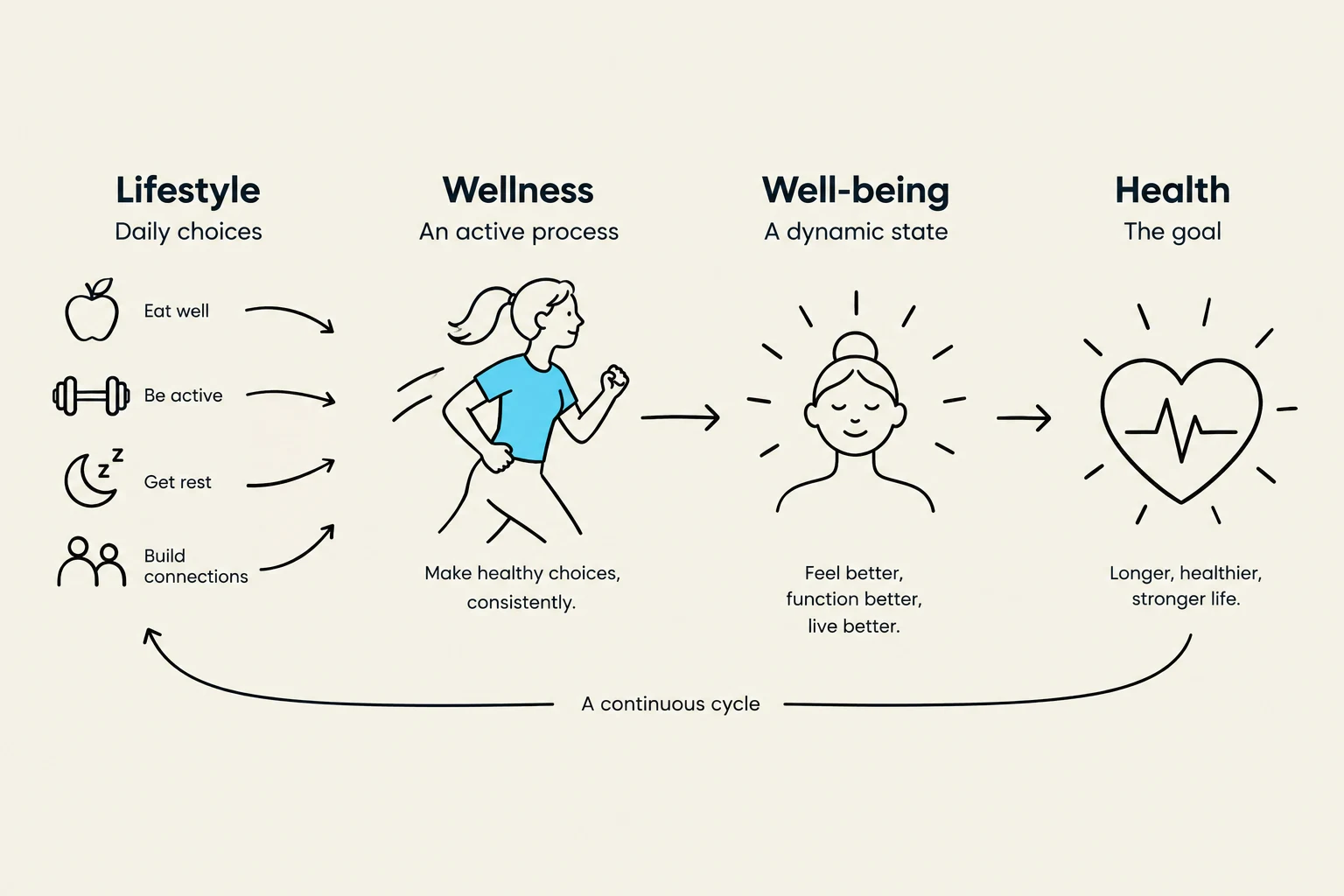
This diagram illustrates the relationship between lifestyle choices, wellness, well-being, and health, depicting them as a continuous cycle.
To navigate the world of health sciences, one must distinguish between four closely related but distinct terms: health, wellness, well-being, and lifestyle.
Health is the ultimate goal or the desired state an individual aims to achieve. According to the World Health Organization (WHO) in 1948, health is a state of complete physical, mental, and social well-being, rather than merely the absence of disease or infirmity.
Wellness is the proactive, preventative, and active process used to reach that state of health. If health is the destination, wellness is the journey—the conscious, self-directed choices and habits (such as nutrition and sleep) that drive an individual toward their potential.
Well-being is the broader, dynamic result of those wellness actions. It encompasses overall life satisfaction, including a sense of purpose, meaningful relationships, and the ability to thrive within one's social and economic environment.
Lifestyle represents the "how" of our daily existence. It consists of the daily choices, interests, and behaviors that an individual or group adopts. Because these choices directly impact our physiological and psychological states, lifestyle is considered the most important factor in determining overall health.
Exam Tip: Deconstructing Relationships
If an exam asks you to explain the relationship between these terms, remember:
Health vs. Wellness: Health is the goal; Wellness is the action taken to get there.
Wellness vs. Well-being: Wellness is the process (the effort); Well-being is the state (the result).
Lifestyle vs. Health: Lifestyle is the set of choices that determines your health outcome.
The Social Determinants of Health
While wellness emphasizes personal agency and individual choice, it is a mistake to believe that health is entirely within a person's control. A common criticism of the "wellness" concept is that it can imply an arrogant or uninformed view that "if you just do it, you'll be healthy".
In reality, health is heavily influenced by the Social Determinants of Health (SDH). These are the conditions in which people are born, grow, work, live, and age. Key factors include:
Economic Stability: Higher incomes often lead to better access to nutritious food and housing.
Education: Higher levels of education are associated with better health literacy and employment opportunities.
Social Environment: This includes social safety networks and the impact of discrimination, racism, or social exclusion, which can create significant health inequities.
Physical Environment: Access to green spaces, safe neighborhoods, and clean air significantly impacts health outcomes.
The Seven Dimensions of Wellness
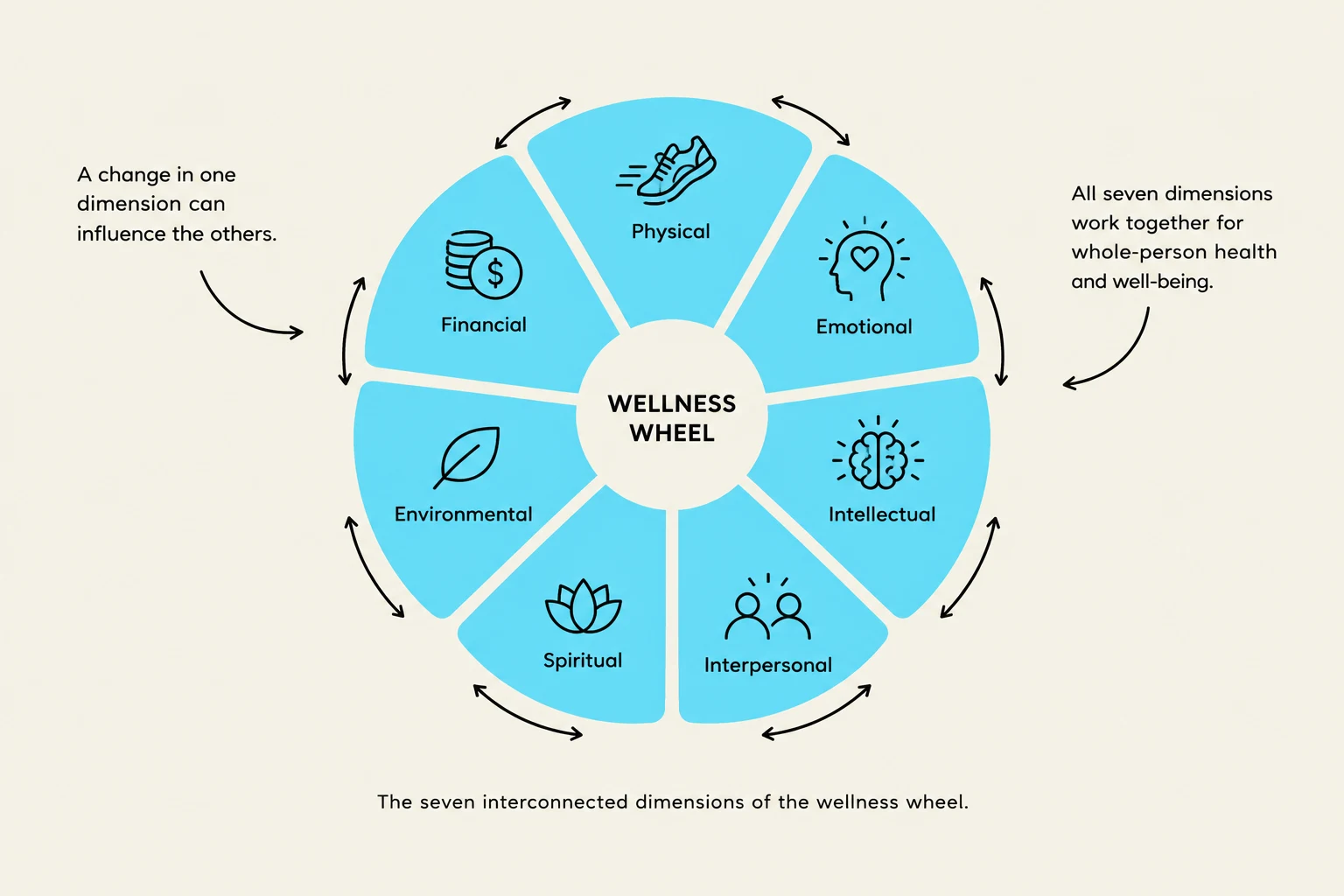
The wellness wheel illustrates seven interconnected dimensions: physical, emotional, intellectual, interpersonal, spiritual, environmental, and financial. These dimensions work together for overall well-being.
Wellness is not a single pillar but a "wellness wheel" comprised of interconnected dimensions. An imbalance in one area can impact the others.
Physical Wellness: Focuses on the functional operation of the body, fitness, and the absence of disease. This involves regular medical check-ups, nutrition, and avoiding harmful habits.
Emotional Wellness: The ability to understand, manage, and express emotions constructively. Key traits include optimism, self-control, and self-acceptance.
Intellectual Wellness: The capacity for lifelong learning, curiosity, and critical thinking.
Interpersonal (Social) Wellness: The ability to develop and maintain supportive, satisfying relationships through effective communication and intimacy.
Spiritual Wellness: Living according to principles that provide meaning and purpose, characterized by compassion and altruism.
Environmental Wellness: The vitality of one's surroundings and the practice of protecting the external environment (e.g., recycling).
Financial Wellness: The ability to live within one's means by balancing income and expenses and planning for the future.
Physical Activity: The Golden Thread
Physical activity is often referred to as the "golden thread of wellness" because it weaves through and strengthens all the dimensions mentioned above.
Impact on Health and Disease Prevention
The greatest health benefits are observed in individuals who transition from being sedentary to becoming moderately active. For those who are already active, benefits can be further enhanced by increasing the intensity of the activity.
Physical activity contributes to health in two primary ways: increasing health markers and preventing disease.
Increasing Health & Function
Disease Prevention
Increased endurance, strength, and flexibility
Reduced risk of heart disease and diabetes
Improved body composition and energy expenditure
Reduced risk of certain cancers (colon, breast, prostate)
Improved mood, self-esteem, and sleep quality
Reduced risk of obesity and dementia
Better ability to cope with stress
Reduced risk of falls and fractures
Immediate vs. Long-Term Effects
Exercise provides both instant and cumulative benefits:
After one session: You may experience lower blood pressure, improved insulin sensitivity, better concentration, improved memory, and an immediate boost in mood.
In the long term: Regular activity helps maintain a healthy weight, strengthens muscles and bones, and can even help treat or reverse chronic conditions like high blood pressure and high cholesterol.
The 24-Hour Movement Guidelines
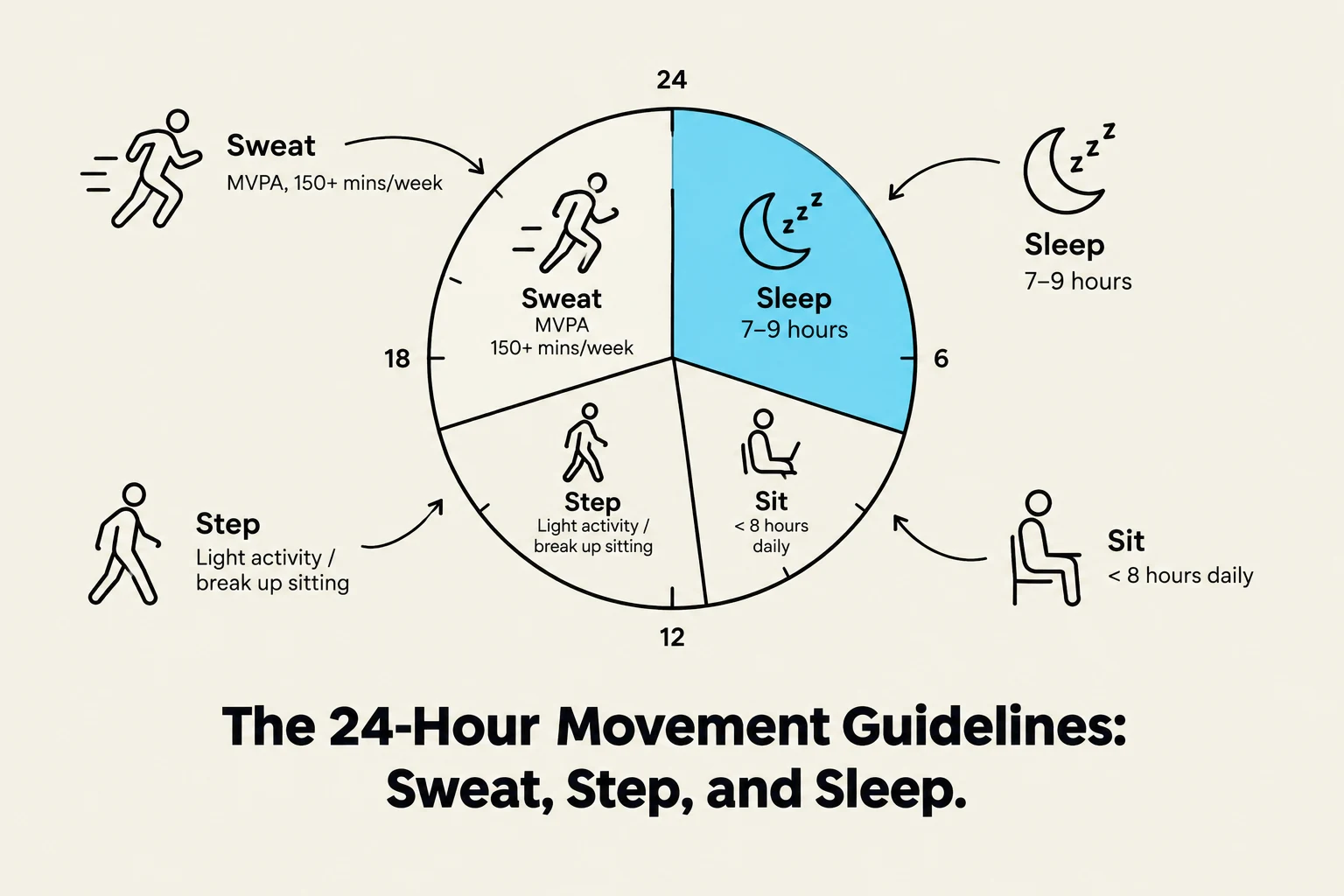
The 24-Hour Movement Guidelines illustrate recommended daily durations for sleep, moderate-to-vigorous physical activity (MVPA), light activity, and sitting.
To achieve optimal health, we must look at the entire day, not just the time spent in the gym. The Canadian 24-Hour Movement Guidelines for adults (18–64 years) integrate three key components: Sweat, Step, and Sleep.
Sweat (Moderate to Vigorous Physical Activity - MVPA): Aim for an accumulation of at least 150 minutes per week of moderate to vigorous aerobic activity.
Step (Light Physical Activity): Incorporate several hours of light activity, such as walking or standing, to break up sedentary time.
Sit (Sedentary Behaviour): Limit sedentary time to 8 hours or less per day, including no more than 2 hours of recreational screen time.
Sleep: Prioritize 7 to 9 hours of good-quality, uninterrupted sleep per night.
Note on Canadian Statistics:
While the guidelines are clear, many Canadians struggle to meet them. For example, only a portion of adults meet the MVPA requirements, and sedentary behavior remains a significant challenge across various income levels.
Changing Behavior: A Practical Approach
Knowledge does not automatically equal behavior. Many people know that smoking, vaping, or inactivity is harmful, yet they continue these habits. Changing a lifestyle habit is difficult and requires more than just willpower.
To successfully change a behavior, your goals should be:
Specific: Instead of "I will exercise more," try "I will walk for 30 minutes on Monday and Wednesday".
Personalized: The goal must be important to you, not someone else.
Realistic: Start with small, achievable steps to avoid burnout.
Supported: Seek support from friends, family, or professionals.
Planned: Identify potential barriers (like using an iPad in bed) and create a "backup plan" to overcome them.
By viewing health as a multidimensional process and utilizing physical activity as a tool for both prevention and enhancement, individuals can move toward a state of lasting well-being.
Keep reading for free.
Create an account to finish this reading and make it part of your study routine.