


Understanding human development is a journey that begins long before a child takes their first steps. It is a complex, lifelong process that involves intricate changes in the body, the mind, and the way we relate to the world around us. By studying developmental psychology—the scientific study of age-related changes in our bodies, behavior, thinking, emotions, social relationships, and personalities—we can better understand how to support children during their most formative years.
The Domains of Development
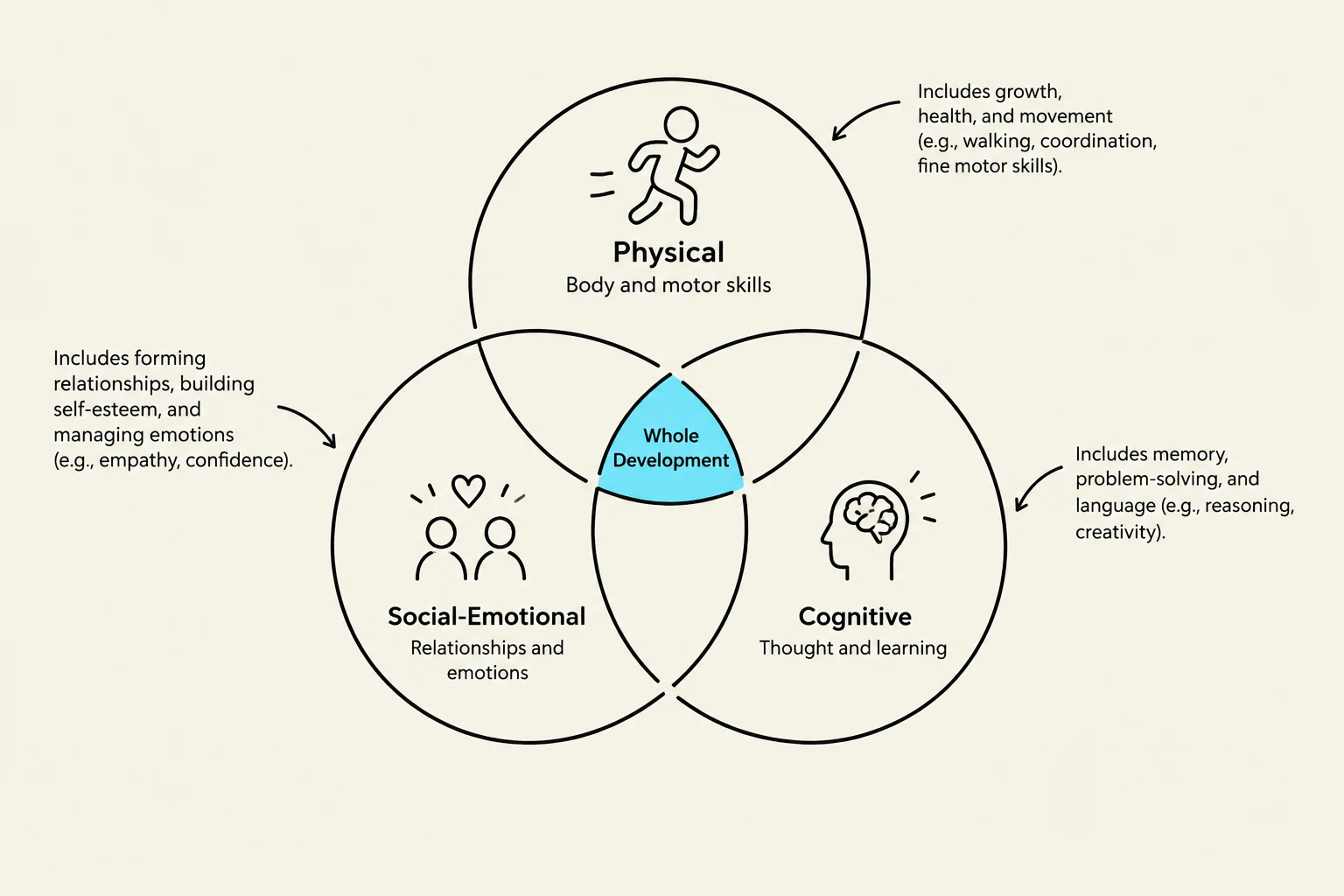
To make the study of human growth manageable, researchers classify age-related changes into three broad categories known as domains. While these domains are studied individually, they are deeply interconnected; a change in one often triggers a change in another.
- Physical Domain: This includes changes in the size, shape, and characteristics of the body.
- Cognitive Domain: This encompasses changes in thinking, memory, problem-solving, and other intellectual skills.
- Social Domain: This involves changes in the variables associated with how an individual relates to others.
Key Periods and Principles of Growth
Development is often categorized into specific stages, particularly during the "formative years"—the period from conception through the first few years of life.
Defining the Early Years
- Prenatal Period: The time period prior to birth, typically lasting about 9 months or 38 to 43 weeks.
- Infant: The stage from birth to 18 months of age.
- Toddler: The stage from 18 months to 36 months of age.
Keep reading for free.
Create an account to finish this reading and make it part of your study routine.
Continue reading freeAlready have an account? Log in
Updated