


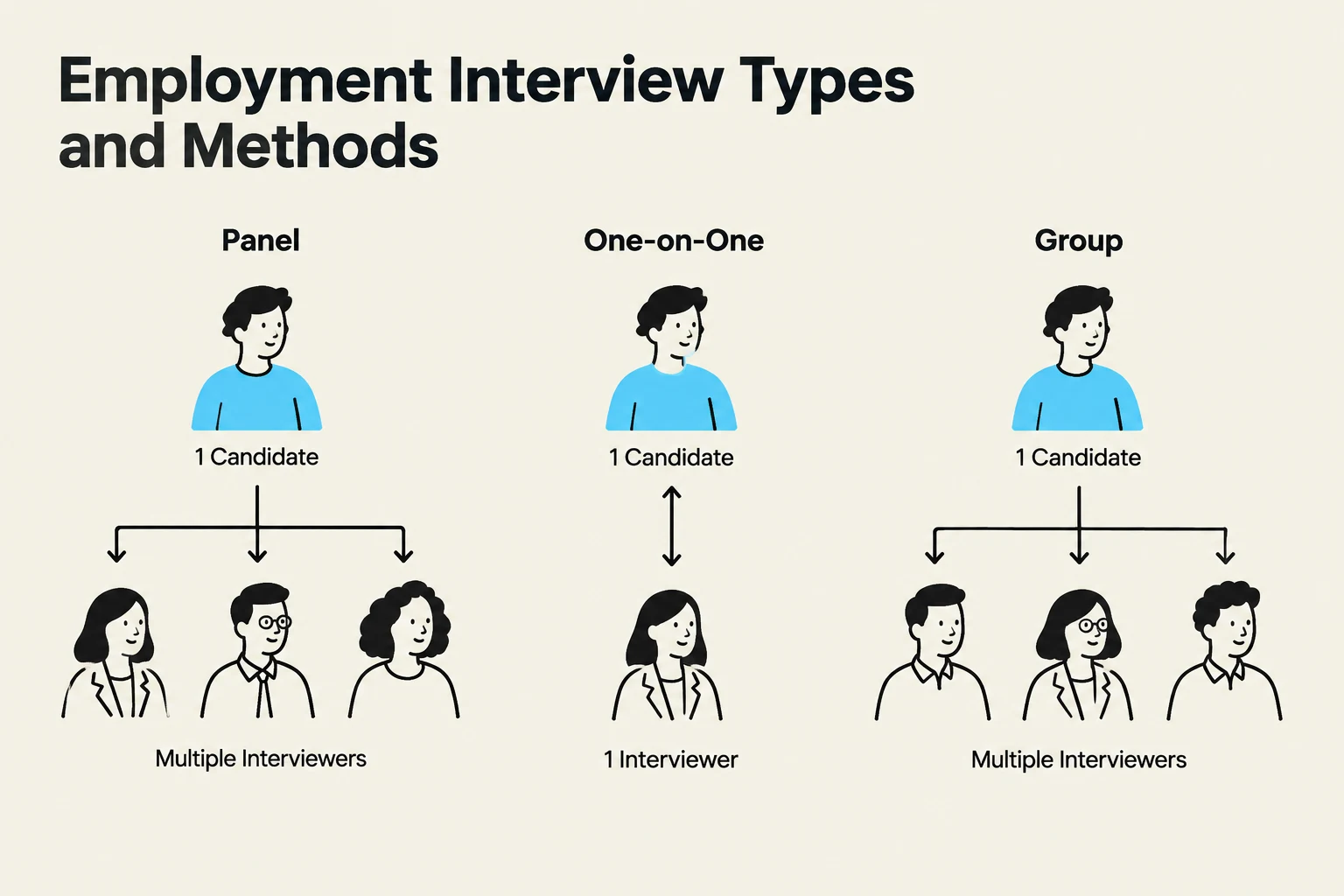
In the complex process of employee selection, the employment interview remains a cornerstone technique. Despite ongoing academic debates regarding its absolute validity, organizations continue to rely heavily on interviews because they are highly practical for small applicant pools, serve as an important public relations tool for the company, and allow hiring managers to exercise their professional judgment. However, not all interviews are created equal. The effectiveness of an interview depends heavily on its structure, the method of administration, and the interviewer's ability to remain objective and legally compliant.
Categorizing Interview Structures
Interviews can be broadly categorized by how much control the interviewer maintains over the conversation and the specific nature of the questions asked.
Nondirective Interviews
In a nondirective interview, the applicant is granted maximum freedom to determine the flow of the discussion. The interviewer's role is to listen and avoid influencing the applicant's remarks, allowing the candidate's personality and communication style to emerge naturally. While this provides a relaxed atmosphere, it can lead to inconsistent data across different candidates.
Structured Interviews
To combat the inconsistency of nondirective approaches, many organizations use structured interviews. This method employs a standardized set of questions and an established set of answers for every candidate. This standardization ensures that all applicants are evaluated against the same criteria, which helps improve the reliability and validity of the selection process.
Situational and Behavioural Interviews
Two highly effective forms of structured interviewing focus on predicting future performance by looking at past or hypothetical actions:
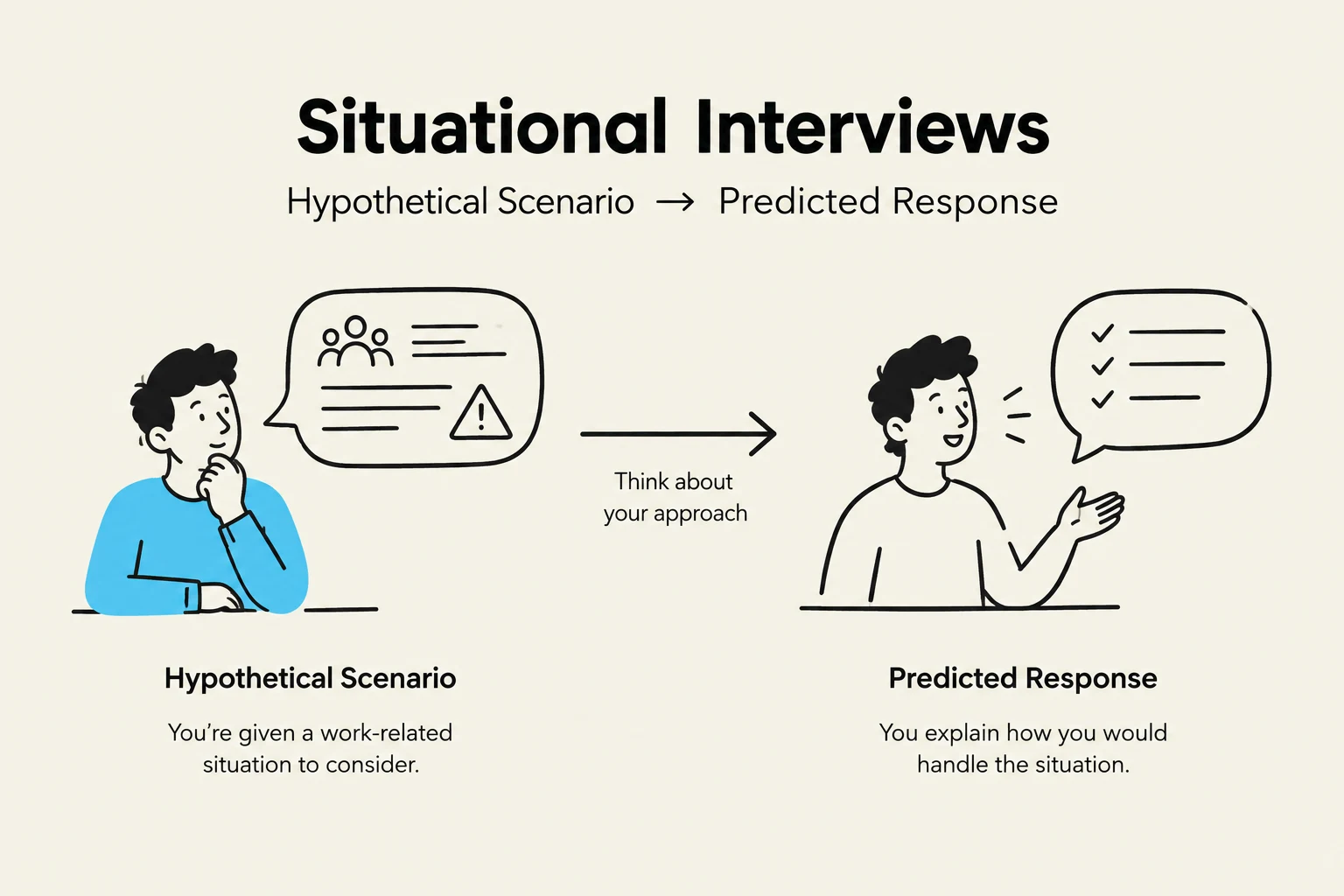
- Situational Interview: The interviewer presents a hypothetical incident and asks the applicant how they would respond to that specific scenario.
- Behavioural Description Interview (BDI): Rather than asking about hypotheticals, the BDI asks applicants to describe how they actually handled specific situations in the past.

Keep reading for free.
Create an account to finish this reading and make it part of your study routine.
Continue reading freeAlready have an account? Log in
Updated