


In the study of human anatomy and biomechanics, joints serve as the critical connection points between bones, governing how our bodies move and resist external forces. While some joints are designed for stability and minimal movement, others are engineered for high-velocity, wide-ranging motion. Understanding the classification of these joints requires looking at their structural architecture and their capacity for movement, specifically measured by their axes of rotation.
The Spectrum of Joint Mobility
Before diving into the specific types of freely moveable joints, it is essential to understand where they sit within the broader hierarchy of joint classification. Anatomists generally categorize joints into three functional groups based on the amount of movement they permit:
- Synarthrosis (Immovable Joints): These joints permit little to no movement. Examples include sutures in the skull and syndesmosis (fibrous tissue holding bones together, like the interosseous membrane between the radius and ulna).
- Amphiarthrosis (Slightly Movable Joints): These joints allow for limited motion and often serve to attenuate (reduce) applied forces. This category includes synchondrosis (hyaline cartilage connections) and symphysis (fibrocartilaginous discs, such as the pubic symphysis).
- Diarthrosis (Freely Movable Joints): Also known as synovial joints, these are the most complex and mobile joints in the body.
Exam Tip: If a question asks you to distinguish between a synarthrosis and a diarthrosis, look for the presence of a synovial cavity. Diarthrodial joints are characterized by five specific criteria: hyaline cartilage, an articular capsule, a synovial membrane, synovial fluid, and reinforcing ligaments.
Understanding Axes of Rotation
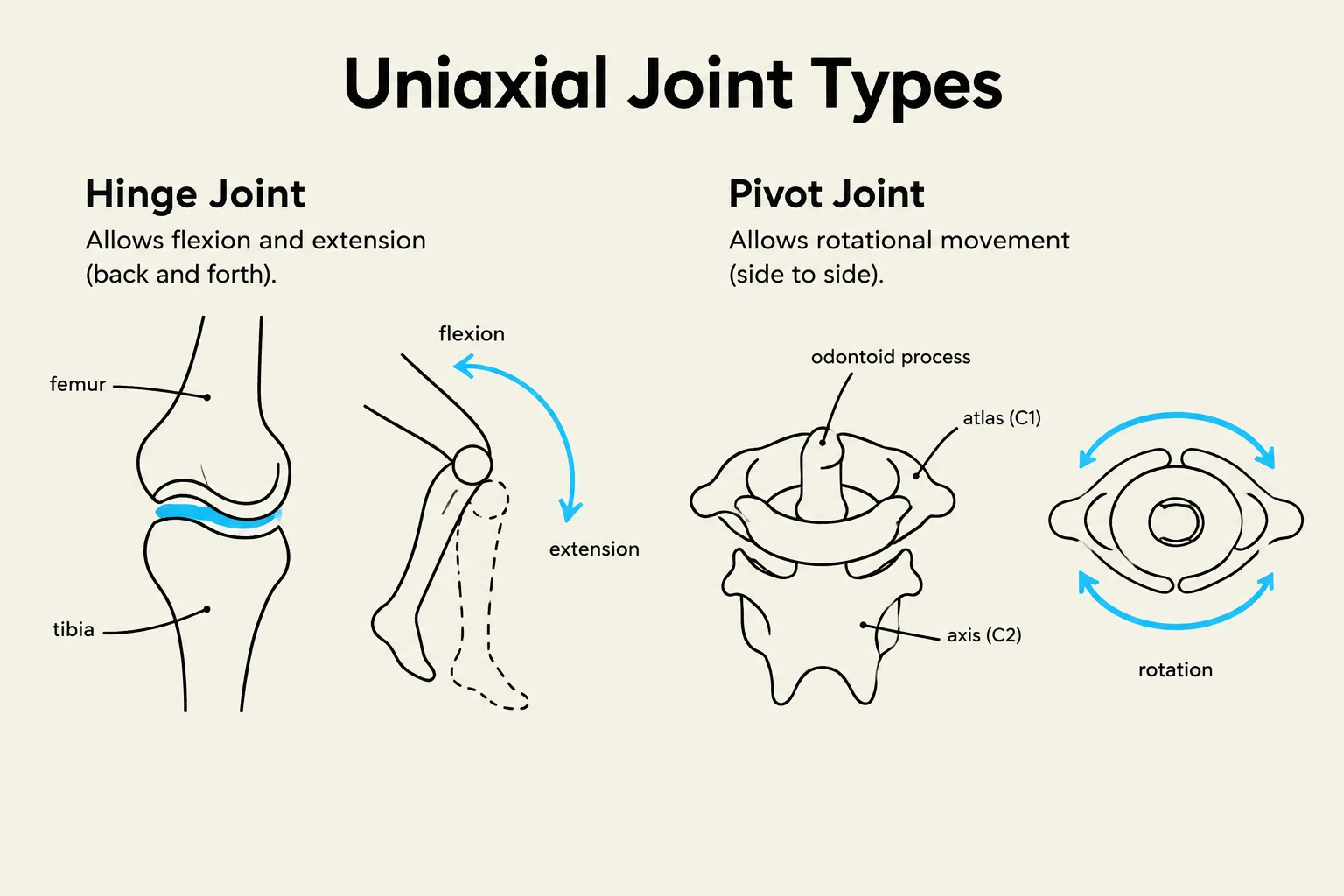
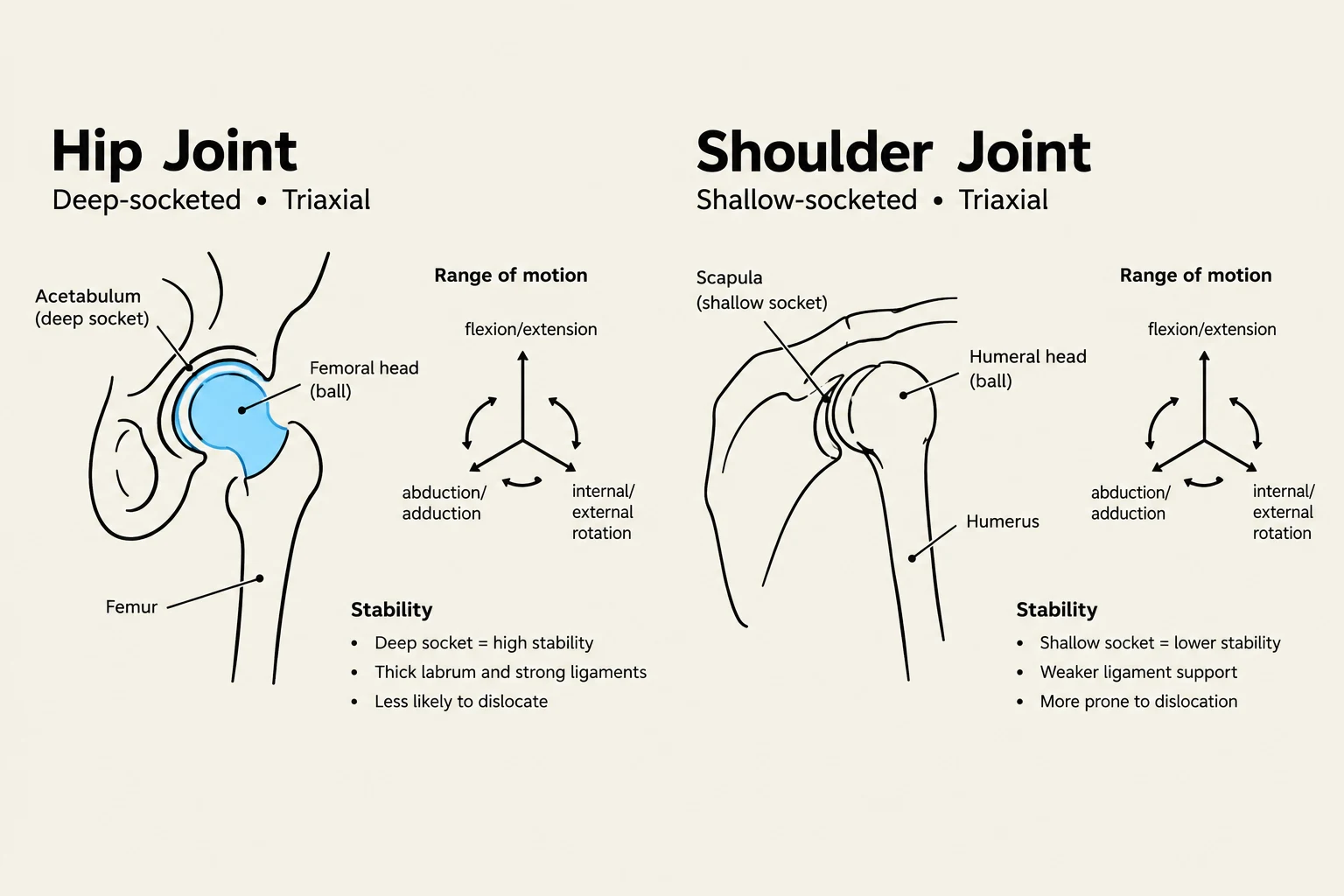
The classification of diarthrodial joints is primarily driven by their degrees of freedom (df), which refers to the number of independent planes or axes of rotation in which the joint can move.

Keep reading for free.
Create an account to finish this reading and make it part of your study routine.
Continue reading freeAlready have an account? Log in
Updated