Childhood Obesity: Causes, Consequences, and Management
An overview of childhood obesity, covering its definition using BMI percentiles, multifactorial etiology including biological, behavioral, social, economic, and psychological factors, its health consequences, and management strategies.
Childhood obesity is a growing global health concern characterized by an increased incidence across all age groups. At its core, obesity occurs when a child's caloric intake consistently exceeds their caloric requirements and energy expenditure. Because the health of children has a significant impact on lifelong individual health and the health of entire communities, understanding the complex drivers of this condition is essential for effective pediatric health promotion.
Defining Obesity: BMI Percentiles
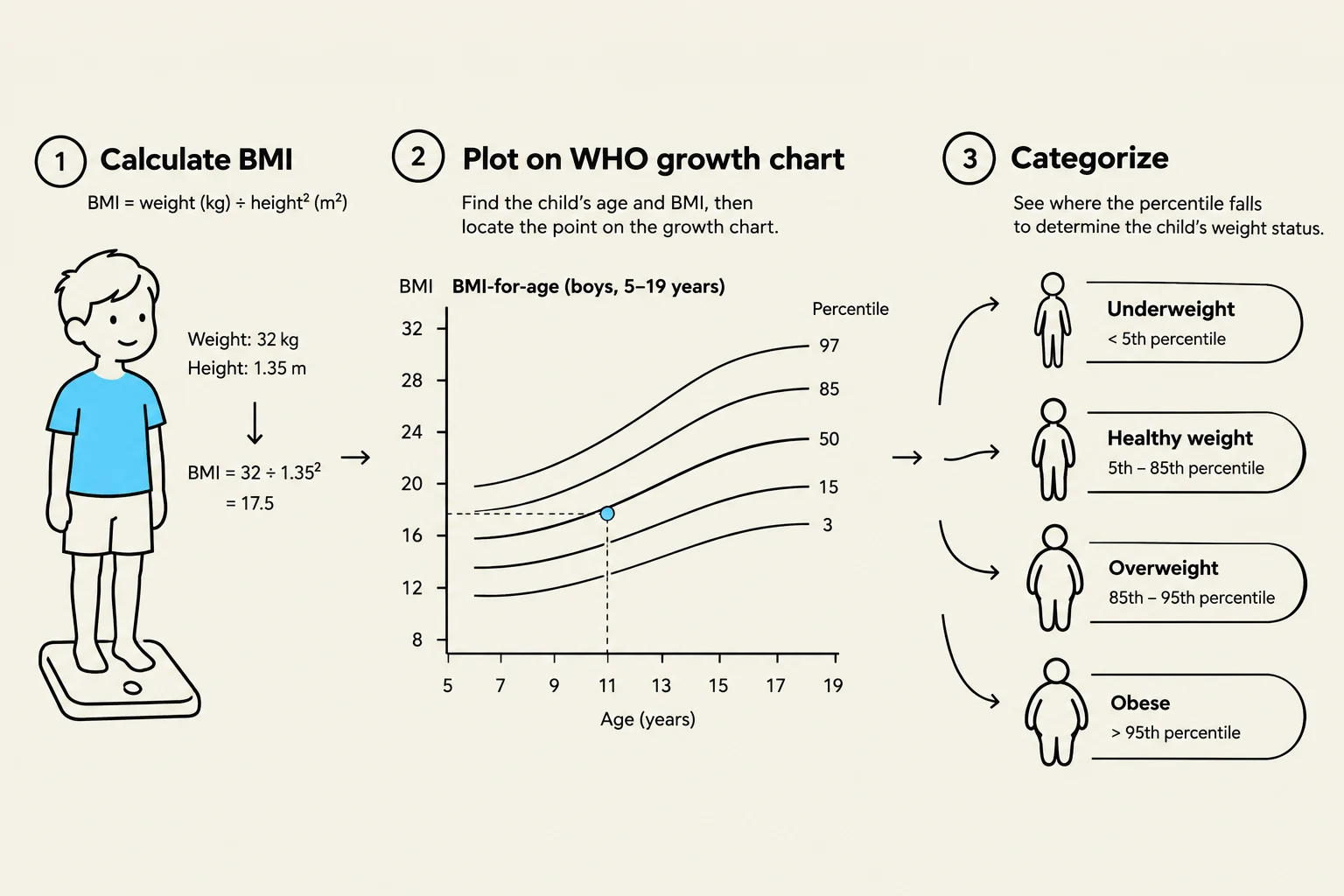
In pediatric populations, weight status is not assessed by a single static number but rather through Body Mass Index (BMI) plotted on growth charts to determine percentiles. This allows clinicians to compare a child's BMI to a reference population of the same age and sex.
Overweight: Defined as a BMI between the 85th and 97th percentile.
Obesity: Defined as a BMI at or above the 95th percentile (specifically greater than 30 in some contexts).
This illustration explains how to calculate a child's Body Mass Index (BMI) and categorize their weight status using a WHO growth chart for boys aged 5-19 years. It shows the steps of calculating BMI from weight and height, plotting the BMI on a growth chart based on age, and then determining the weight category (Underweight, Healthy weight, Overweight, or Obese) based on the percentile.
Etiology and Pathophysiology: A Multifactorial Approach
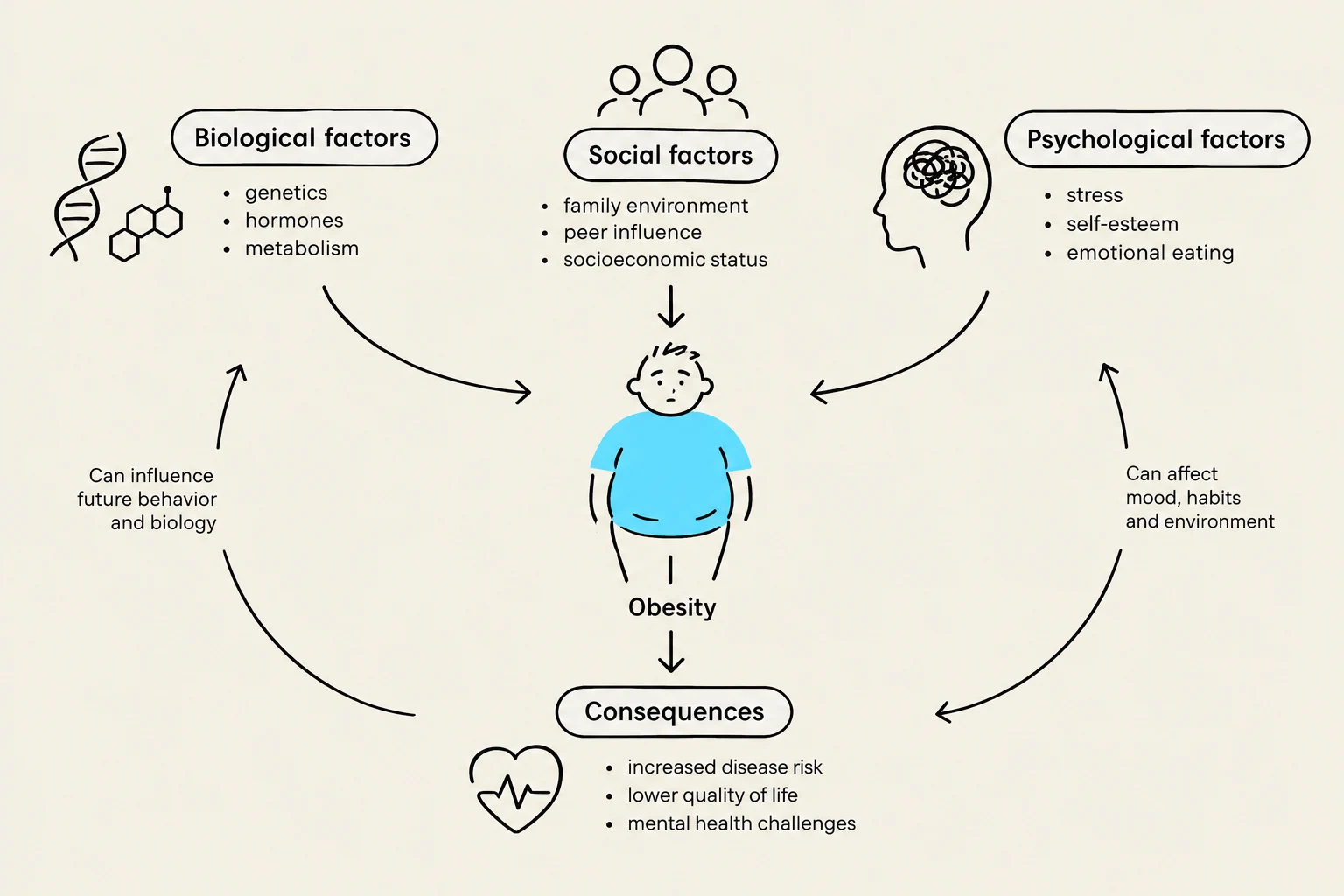
The development of obesity is rarely the result of a single factor; instead, it is a multifactorial process involving a complex interplay of biological, behavioral, social, psychological, environmental, economic, and cultural factors.
Biological and Genetic Influences
Genetic tendencies can predispose certain children to weight gain. Additionally, early life nutritional factors play a role; for instance, breastfeeding is noted to decrease the risk of obesity later in life.
Behavioral and Lifestyle Factors
Modern lifestyle trends significantly contribute to caloric imbalance. A sedentary lifestyle, characterized by increased time spent on televisions, computers, and video games, reduces energy expenditure. Concurrently, nutritional behaviors such as skipping breakfast, frequent consumption of snack foods, and eating out more often (which often involves high-calorie fast foods) drive caloric surplus.
Social, Economic, and Environmental Determinants
The environment in which a child lives dictates their food choices and activity levels.
Social Determinants: Low socioeconomic groups often experience higher rates of obesity.
Environmental Factors: Increased accessibility to unhealthy food choices, larger portion sizes, and community designs that do not support active living (e.g., lack of sidewalks or parks) create "obesogenic" environments.
Economic Factors: Unequal access to nutritious foods and opportunities for physical activity remains a significant barrier.
Cultural Factors: Family and cultural eating patterns—such as using food as a reward or punishment, or viewing high-fat foods as indicators of good health—influence long-term habits.
Psychological Factors
Psychological health is deeply intertwined with nutrition. Emotional eating, where food is used as a coping strategy for anxiety or depression, is a significant risk factor.
This diagram illustrates the multifactorial nature of obesity, encompassing biological, social, and psychological factors, and its resulting consequences.
Health Consequences of Childhood Obesity
The physiological impact of obesity extends far beyond weight, affecting nearly every system in the developing body.
Metabolic and Cardiovascular: Obesity is a primary driver of insulin resistance, which can lead to Type 2 diabetes. It also increases the risk of cardiovascular disease.
Musculoskeletal: The extra weight places significant stress on growing bones and joints, leading to musculoskeletal disorders.
Psychological and Psychiatric: Children may face psychological and psychiatric problems, including low self-esteem, depression, and an increased risk of being bullied.
Other Risks: There is an increased risk of certain cancers (endometrial, breast, and colon), early menarche, and long-term disability.
Management and Nursing Care
Management of childhood obesity requires a holistic, family-centered plan rather than a restrictive "diet" approach.
Lifestyle Modifications and Behavioral Therapy
The cornerstone of management involves lifestyle modifications, including changing thought processes around food and increasing physical activity.
Physical Activity: Children require high levels of physical activity to boost energy, strengthen bones, and burn calories. For children aged 5–17, this includes at least 60 minutes of moderate-to-vigorous aerobic activity daily.
Behavioral Therapy: This focuses on changing habits and addressing the psychological drivers of eating.
Nutritional Counselling
Nutritional counselling is an essential component of care. Nurses and dietitians work with families to:
Encourage eating meals together as a family.
Promote the consumption of protein, vegetables, fruits, and whole grains.
Limit juice consumption and sugary/high-sodium foods.
Involve children in food preparation to encourage variety.
Clinical Note: Management should involve the whole family. Because children often imitate adult behaviors, parental modeling of healthy eating and active lifestyles is critical for success.
Advanced Interventions
In extreme cases, pharmacological measures or bariatric surgery may be considered as part of a comprehensive medical plan.
Summary Table: Activity Recommendations for Weight Management
Age Group
High Activity Level Goal
Sedentary Limit
Infants (<1 yr)
Interactive floor-based play; "tummy time"
No more than 1 hour restrained
Toddlers (1-2 yrs)
180+ mins of varied activity
No more than 1 hour restrained; limited screen time
Preschoolers (3-4 yrs)
180+ mins (incl. 60 mins energetic)
No more than 1 hour screen time
Children/Adolescents (5-17 yrs)
60+ mins moderate/vigorous daily
Max 2 hours recreational screen time
Keep reading for free.
Create an account to finish this reading and make it part of your study routine.