24-Hour Movement Guidelines and Behavior Change Strategies
This content explains the 24-hour movement guidelines for adults, emphasizing the balance between physical activity, sedentary behavior, and sleep. It also provides strategies for effective behavior change, including goal setting and implementation techniques.
Understanding health requires looking beyond the simple absence of disease. Modern health is a multidimensional construct involving physical, mental, and social well-being. While "health" is often viewed as the ultimate goal or state of being, "wellness" is the active, conscious, and self-directed process of making choices to improve that health.
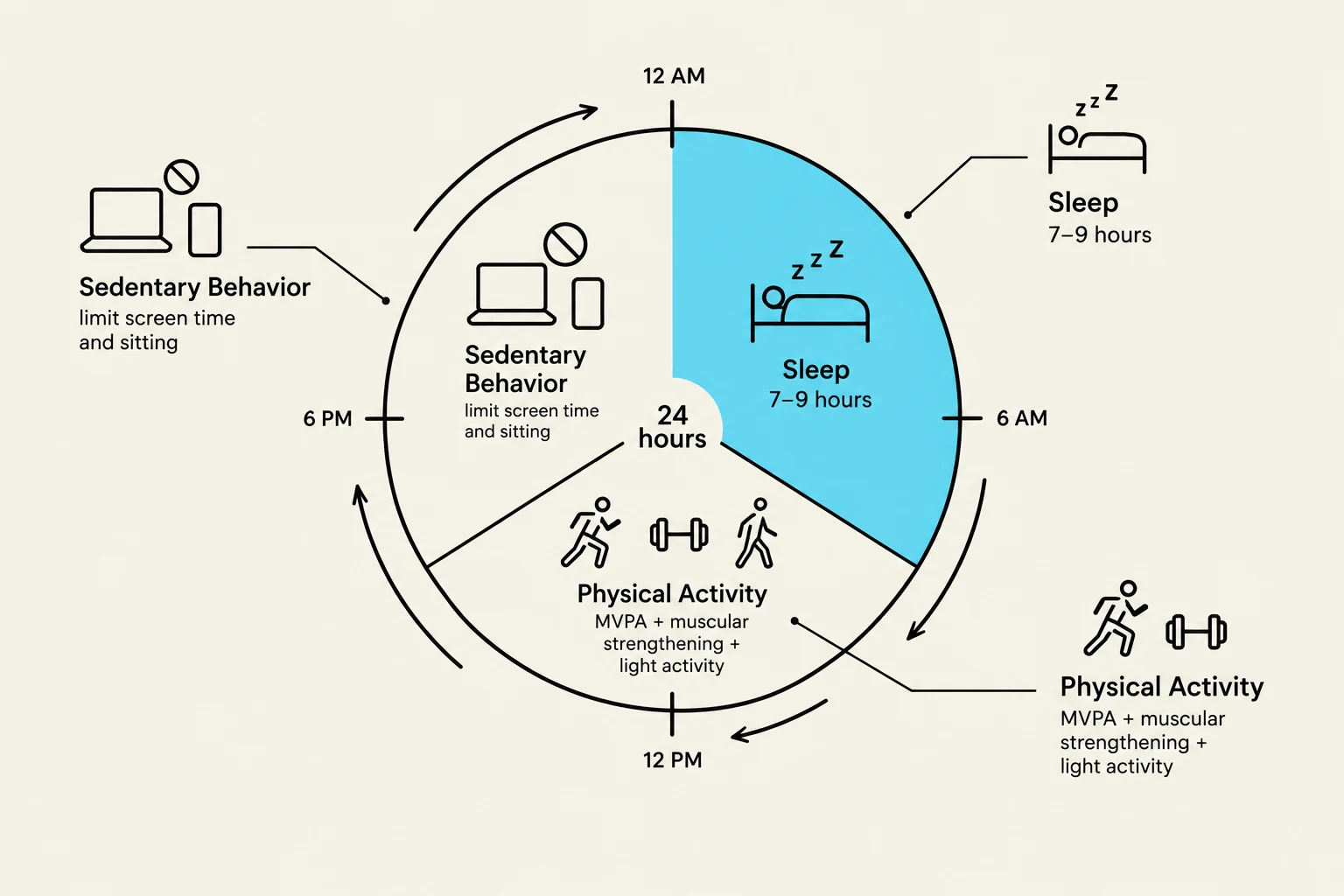
A diagram illustrating a 24-hour cycle divided into sleep, sedentary behavior, and physical activity, with recommended durations for sleep.
To achieve optimal health, we must look at our entire day. The 24-hour movement guidelines provide a holistic framework that moves away from just focusing on exercise sessions and instead looks at the interplay between physical activity, sedentary behavior, and sleep.
The 24-Hour Movement Guidelines for Adults
For adults aged 18–64, the guidelines emphasize a balanced approach to movement throughout the day. Rather than just focusing on a single hour at the gym, these guidelines consider how we spend every hour of our 24-hour cycle.
Physical Activity
Physical activity is often called the "golden thread of wellness" because of its profound impact on nearly every dimension of health. The recommendations are divided into three main components:
Moderate to Vigorous Physical Activity (MVPA): Adults should aim for at least 150 minutes per week of moderate to vigorous aerobic activity. This means activities that significantly increase your heart rate, such as brisk walking, cycling, or running.
Muscular Strengthening: In addition to aerobic work, adults should engage in muscular strengthening activities involving all major muscle groups at least twice a week. This includes activities like weightlifting, using body weight (push-ups, curl-ups), or resistance training through Pilates.
Light Physical Activity: The guidelines also encourage several hours of light physical activity, such as standing or walking, to help break up periods of inactivity.
Sedentary Behavior and Screen Time
Sedentary behavior is defined as any posture or activity that requires very little movement. In a world dominated by technology, reducing sedentary time is a major challenge.
Daily Limit: Aim for eight hours or less of sedentary behavior per day.
Recreational Screen Time: Limit recreational screen time (such as watching TV, playing video games, or surfing the internet) to no more than three hours per day.
Sleep Quality
Sleep is a critical pillar of the 24-hour cycle. The recommendation for adults is seven to nine hours of good quality sleep on a regular basis, maintaining consistent bedtimes.
Exam Tip: Understanding the Statistics
When reviewing the Canadian participation report card, note these key statistics for adults:
Physical Activity: Only about 46% of Canadian adults achieve the recommended 150 minutes of MVPA.
Sedentary Behavior: Only 42% of adults meet the recommendation of 8 hours or less of sedentary behavior per day.
Sleep: Approximately 63% of Canadian adults meet the sleep recommendations.
Gender Trends: Generally, men report higher levels of physical activity, while women report higher rates of meeting sleep recommendations.
The Impact of Movement on Health
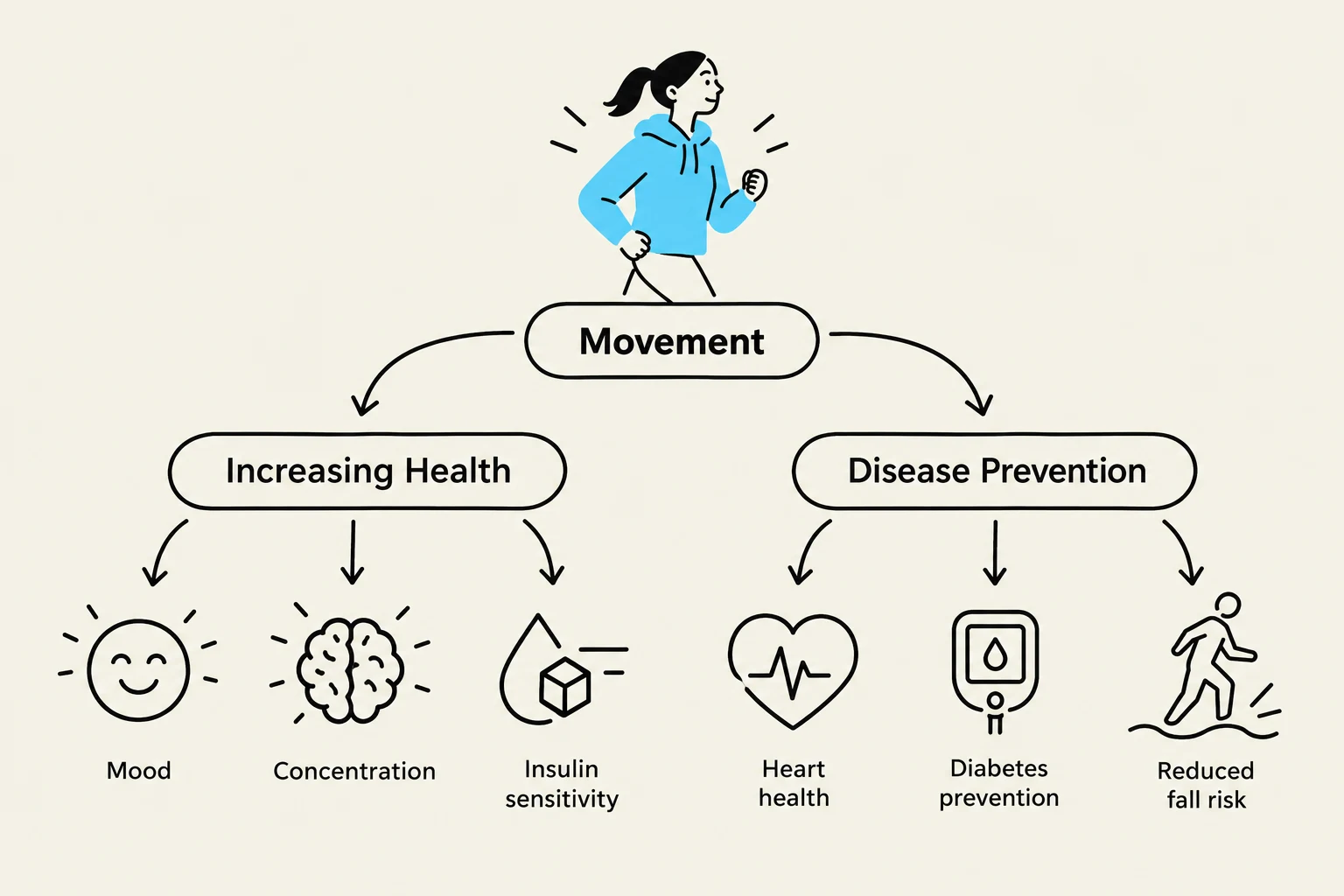
This diagram illustrates the benefits of movement, categorizing them into increasing health (mood, concentration, insulin sensitivity) and disease prevention (heart health, diabetes prevention, reduced fall risk).
Physical activity serves two primary purposes: increasing health benefits and providing disease prevention.
Reduced risk of heart disease, diabetes, high blood pressure, cancer, and obesity; reduced risk of falls and fractures.
It is important to note that the greatest health benefits are often seen in those moving from a sedentary lifestyle to a moderately active one.
Strategies for Effective Behavior Change
A common misconception is that changing behavior is simply a matter of willpower. In reality, "just doing it" is rarely successful because behavior change requires intention, planning, and environmental structuring. Knowledge of what is healthy does not automatically translate into healthy behavior.
Goal Setting Framework
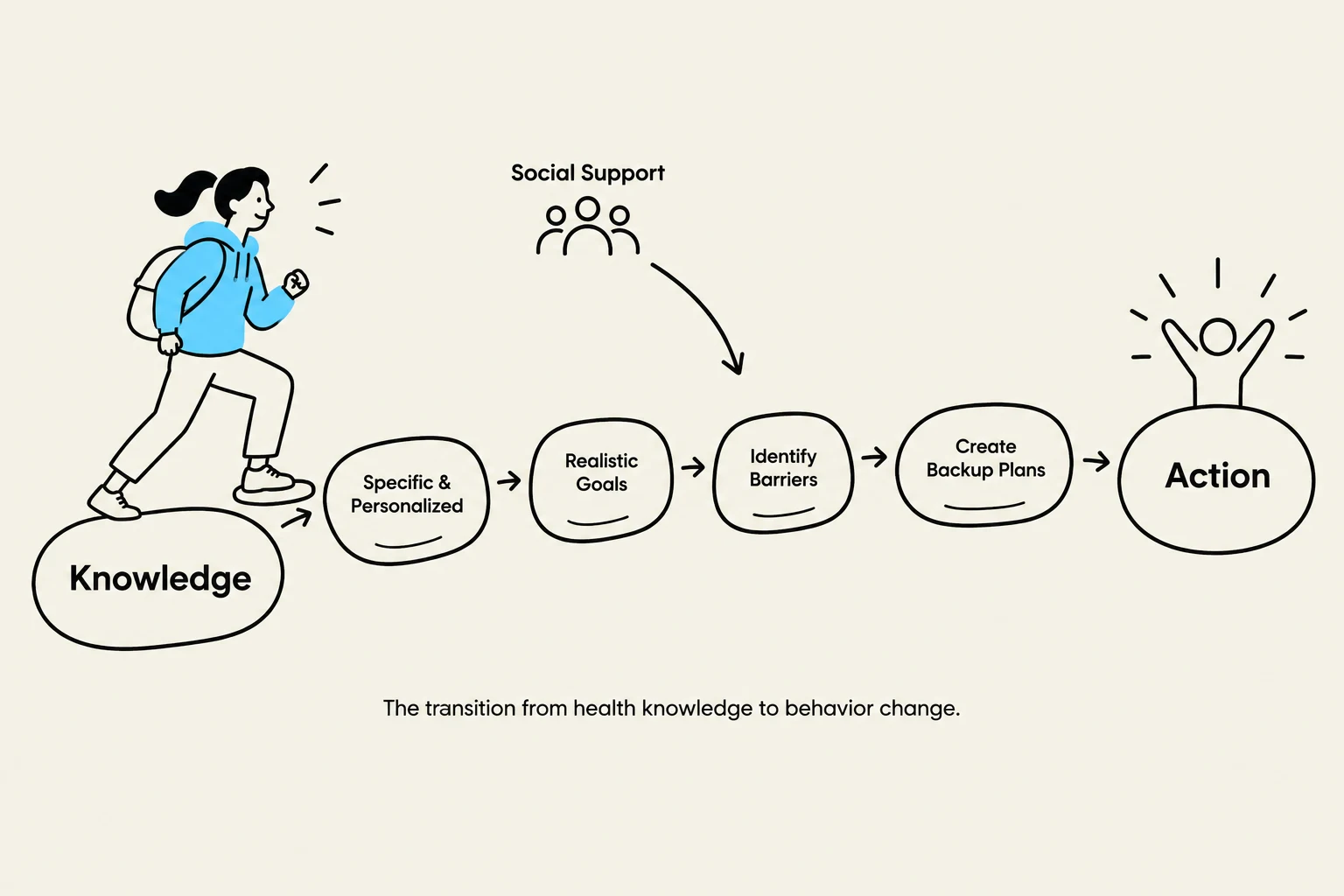
This diagram illustrates the process of transitioning from knowledge to action, involving setting specific goals, identifying barriers, creating backup plans, and utilizing social support.
To move from knowledge to action, goals must be well-planned and personalized. A successful goal-setting process follows these criteria:
Be Specific: Instead of saying "I will sleep more," say "I will get eight hours of uninterrupted sleep".
Be Personalized: The goal must be important to you personally, not just a requirement from an instructor or doctor.
Be Realistic: If you have never exercised, do not aim for seven days a week immediately. Start with something within your reach, such as once or twice a week.
Identify Barriers: Anticipate what might stop you. For example, if your iPad prevents sleep, identify that as a barrier.
Create a Plan and Backup Plan: If your primary plan fails (e.g., you can't leave your phone in another room), have a backup (e.g., "I will put my phone away after 30 minutes of reading").
Seek Support: Tell friends or family what you are trying to achieve. Social support is a powerful tool for accountability.
Implementation and Maintenance
To ensure a new habit "sticks," you must transition from planning to consistent action.
Environmental Structuring: Change your surroundings to make the healthy choice easier (e.g., leaving your phone in a different room to improve sleep).
Use Reminders: Use technology or visual cues to remind yourself of your intentions.
Record Progress: Keep a simple log of your successes and failures. This helps you analyze why you met or missed a goal.
Reward Yourself: Use positive reinforcement. Whether it is a small treat or simply acknowledging the feeling of being well-rested, rewards help reinforce the new behavior.
A Note on Social Determinants
While individual choices are vital, remember that health is also influenced by "social determinants"—factors outside of an individual's control, such as income, education, and access to safe green spaces. Recognizing these barriers is part of understanding the complexity of health and wellness.
Keep reading for free.
Create an account to finish this reading and make it part of your study routine.