


World War II was a global conflict of unprecedented scale, reshaping the political, social, and moral landscape of the modern world. From the strategic maneuvers on the battlefields of Europe and the Pacific to the profound human rights violations committed by totalitarian regimes, the war touched every corner of the globe. Understanding this era requires looking beyond simple troop movements to examine the complex interplay of leadership, civil liberties, and the devastating human cost of total war.
Civil Liberties and the Home Front: Japanese Americans
While much of the history of World War II focuses on overseas combat, significant events occurred within the borders of the United States. Following the outbreak of hostilities, the U.S. government took drastic measures against its own citizens based on ethnicity.
More than 120,000 people of Japanese descent were removed from their homes and forced into "war relocation camps," often referred to as detention camps. Notably, approximately 80,000 of these individuals were actually U.S. citizens. Historians frequently cite this period as the worst violation of civil liberties in United States history. Despite this treatment, some Japanese Americans, primarily from Hawaii, volunteered to serve in the U.S. military.
Study Tip: When discussing the home front, remember that "civil liberties" refers to the rights of individuals to be free from arbitrary government interference. The relocation of Japanese Americans is a primary example of these rights being suspended during wartime.
Strategic Shifts: D-Day and the European Theater
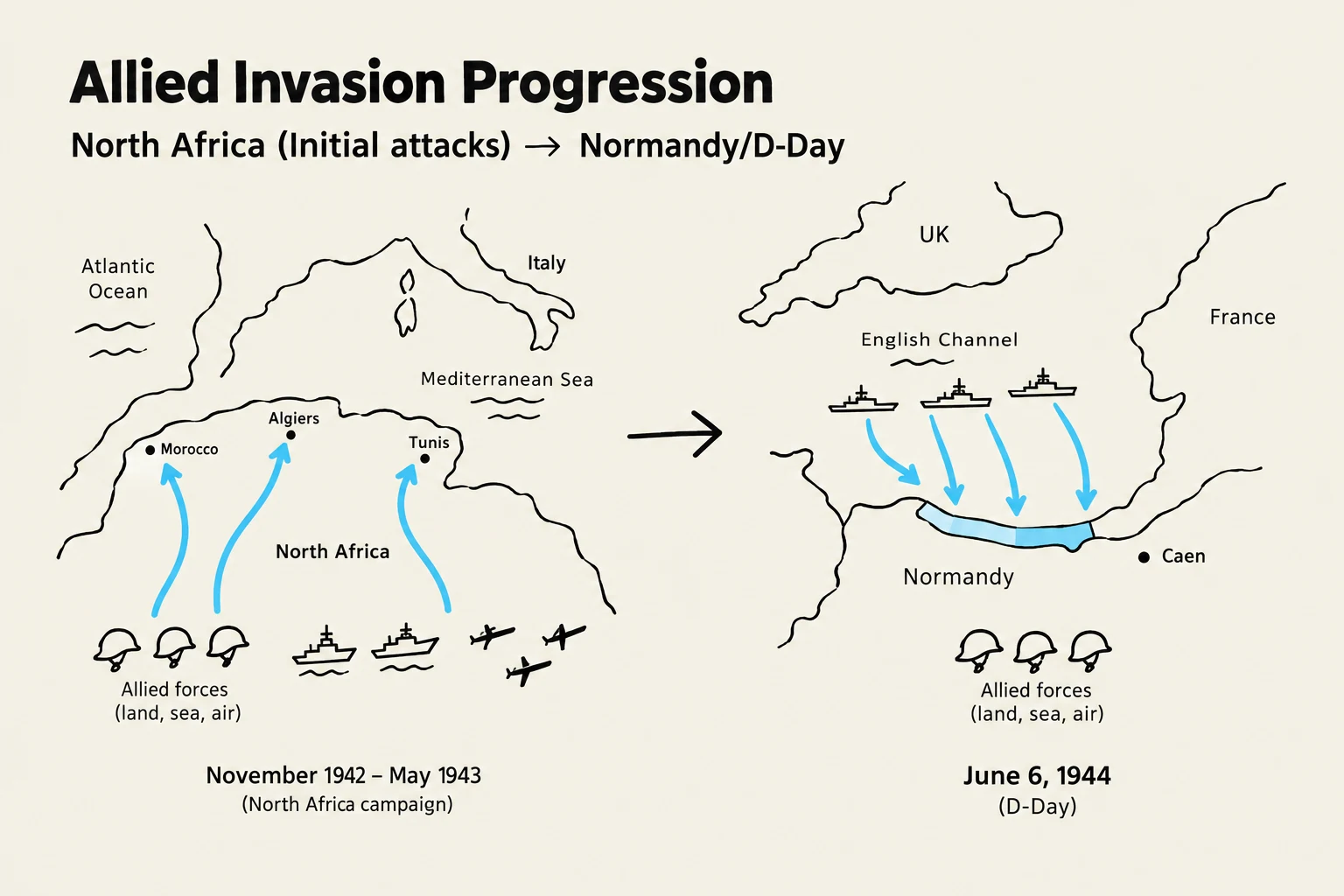
The tide of the war in Europe was heavily influenced by massive amphibious assaults and intense defensive battles. Initially, the United States and Great Britain focused their attacks in North Africa to secure a foothold. However, the most pivotal moment came with the invasion of France.
Keep reading for free.
Create an account to finish this reading and make it part of your study routine.
Continue reading freeAlready have an account? Log in
Updated