


In the modern business landscape, human resources are no longer viewed merely as an expense to be managed, but as vital "human capital"—the collective training, experience, judgment, and insight of an organization's employees. Because human capital is valuable, rare, and difficult to imitate, organizations must engage in strategic workforce planning to ensure they remain competitive.
Workforce planning is the process of comparing an organization's current internal workforce strengths and weaknesses against its future goals. The ultimate objective is to ensure the organization has the right people, with the right skills, in the right place, at the right time.
The Workforce Planning Process
Effective planning is not a single event but a continuous cycle. The process begins with forecasting and moves through strategic goal setting to implementation and evaluation.
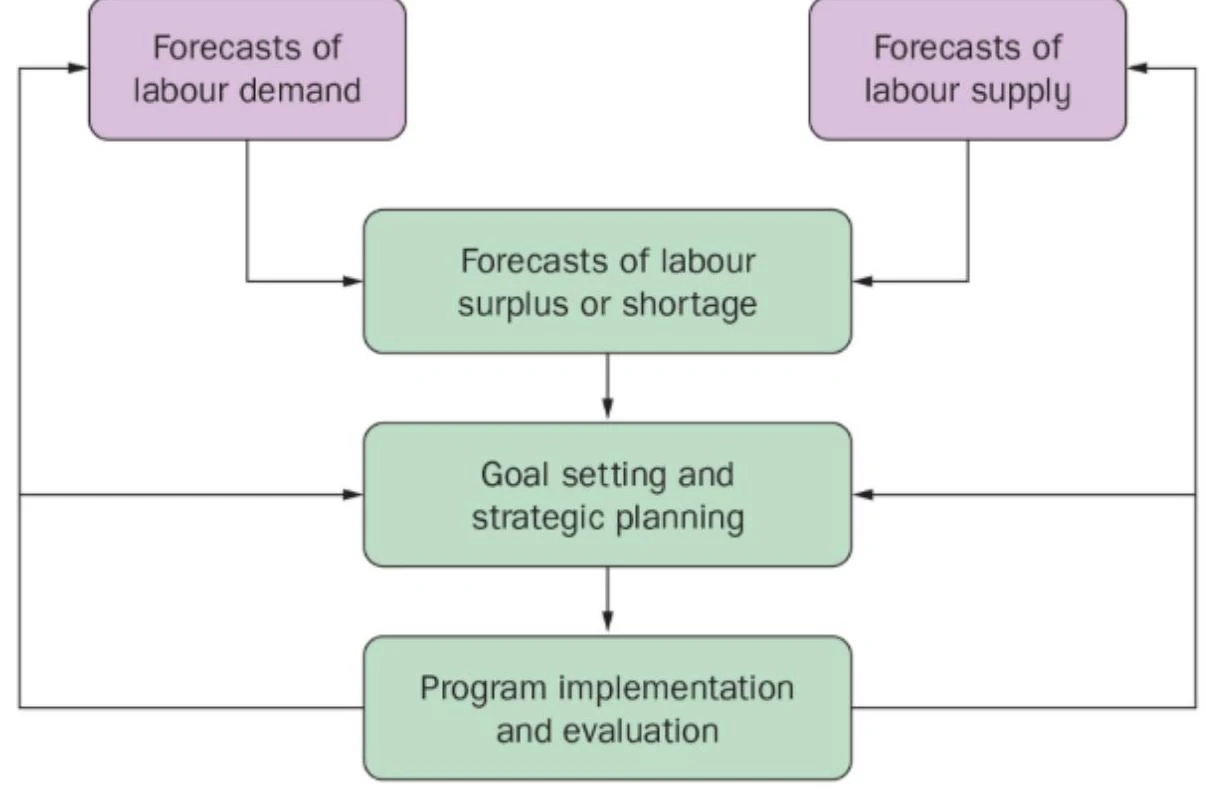
1. Forecasting Labour Demand and Supply
The first step in the cycle is forecasting, which involves predicting whether the organization will face labour shortages or surpluses. This is achieved by analyzing two distinct sides of the equation:
Forecasting Labour Demand This focuses on the organization's needs. Managers ask, "Will the need for people increase or decrease?". To answer this, they often use statistical models such as trend analysis or leading indicators to predict demand for specific job categories or skill sets.
Forecasting Labour Supply This focuses on the availability of talent. It involves a detailed analysis of how many people currently hold specific skills within the organization and examining expected internal changes. Tools used here include:
Keep reading for free.
Create an account to finish this reading and make it part of your study routine.
Continue reading freeAlready have an account? Log in
Updated