


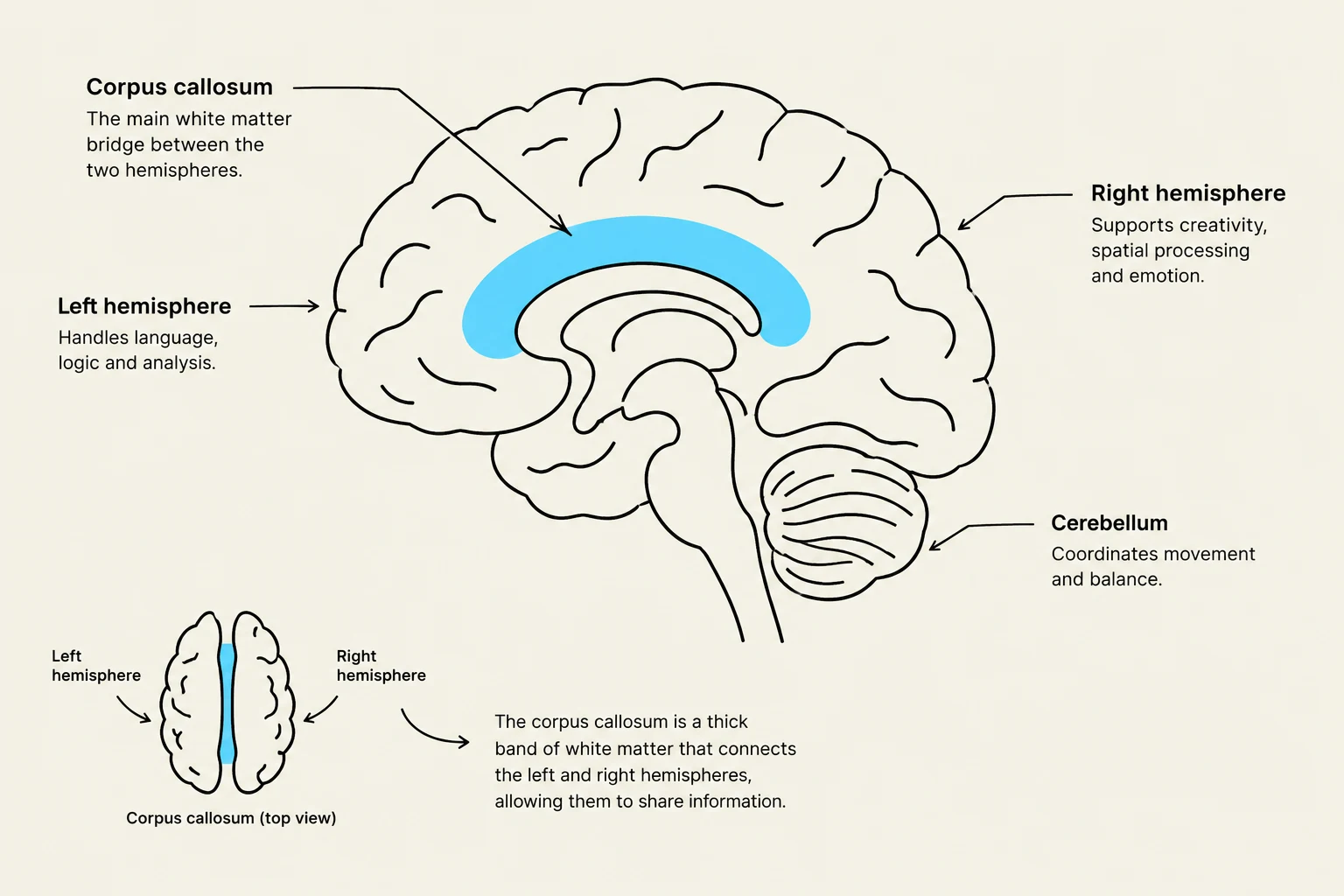
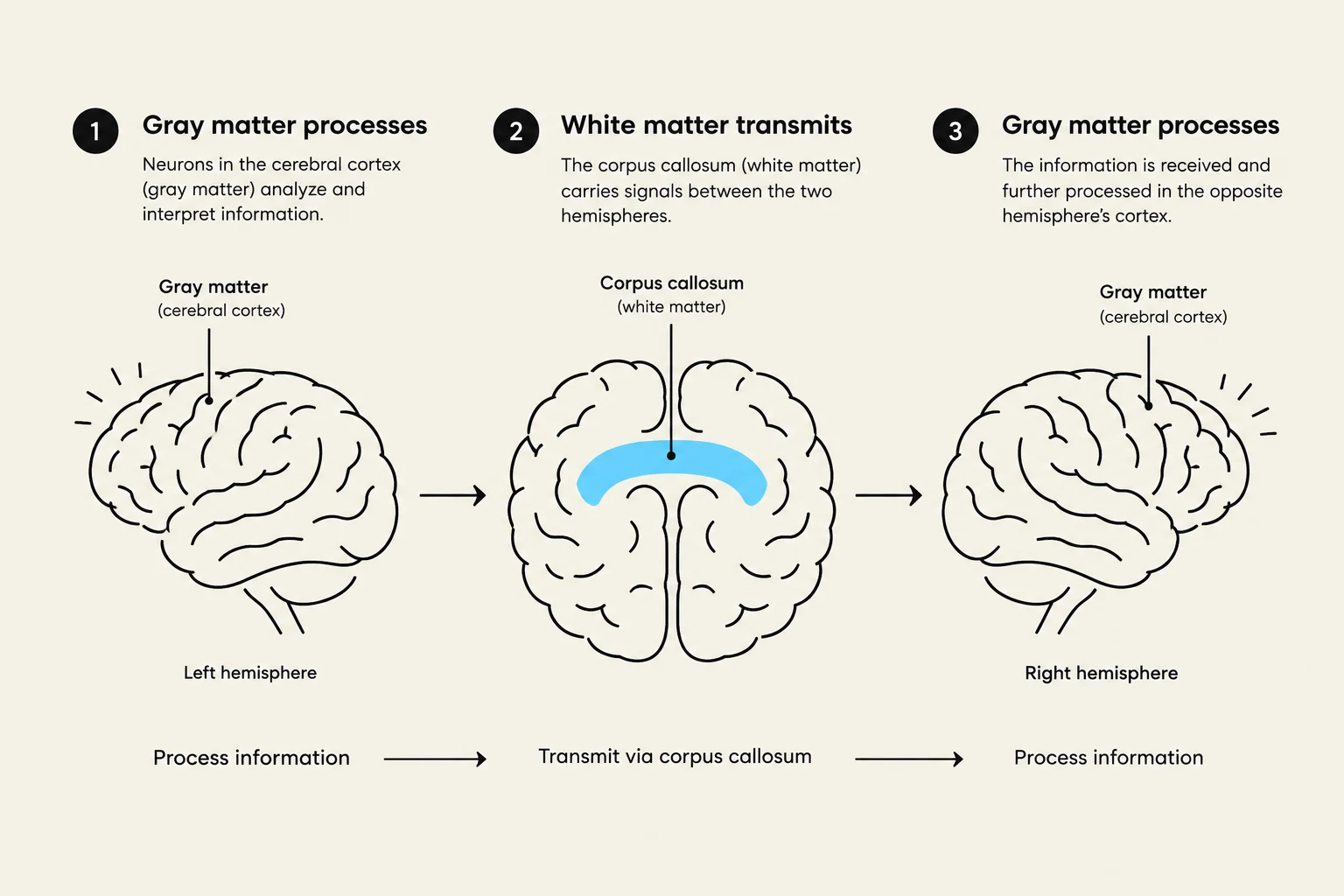
When we think about the brain, we often focus on the "gray matter"—the outer layer of neurons where processing, thinking, and decision-making occur. However, a brain without connections is like a city with brilliant thinkers but no roads to connect them. This is where white matter comes into play. White matter consists of the vast networks of axons that serve as the communication infrastructure of the central nervous system, allowing different regions of the brain to coordinate complex behaviors.
The Composition of White Matter
To understand why white matter is called "white," we must look at its microscopic composition. While gray matter is dense with cell bodies and dendrites, white matter is primarily composed of long, slender projections called axons. These axons are the "wires" of the neuron, carrying electrical impulses away from the cell body toward other neurons.
The defining characteristic of white matter is the presence of myelin. Myelin is a fatty, lipid-rich substance produced by specialized cells known as oligodendrocytes in the central nervous system. Because lipids (fats) appear white in color, these bundled axonal tracts take on a distinct pale appearance compared to the darker gray matter.
Exam Tip: If a question asks why white matter is essential for speed, the answer is almost always myelination. Myelin acts as an electrical insulator, allowing for "saltatory conduction," where the electrical signal jumps between gaps in the myelin (Nodes of Ranvier), significantly increasing signal velocity.
Classification of White Matter Tracts
Not all white matter tracts serve the same purpose. Based on their direction of travel and the regions they connect, we can categorize them into three functional types:
Keep reading for free.
Create an account to finish this reading and make it part of your study routine.
Continue reading freeAlready have an account? Log in
Updated