


Understanding the white blood cell (WBC) profile is a fundamental skill in clinical pathology. By analyzing the different types of leukocytes present in a blood sample, clinicians can determine if a patient is facing an acute or chronic issue, how severe the problem is, and even gain clues toward a specific diagnosis. This article explores the diverse family of white blood cells and the sophisticated mechanisms used by neutrophils to defend the body.
The White Blood Cell Family: Granulocytes vs. Agranulocytes
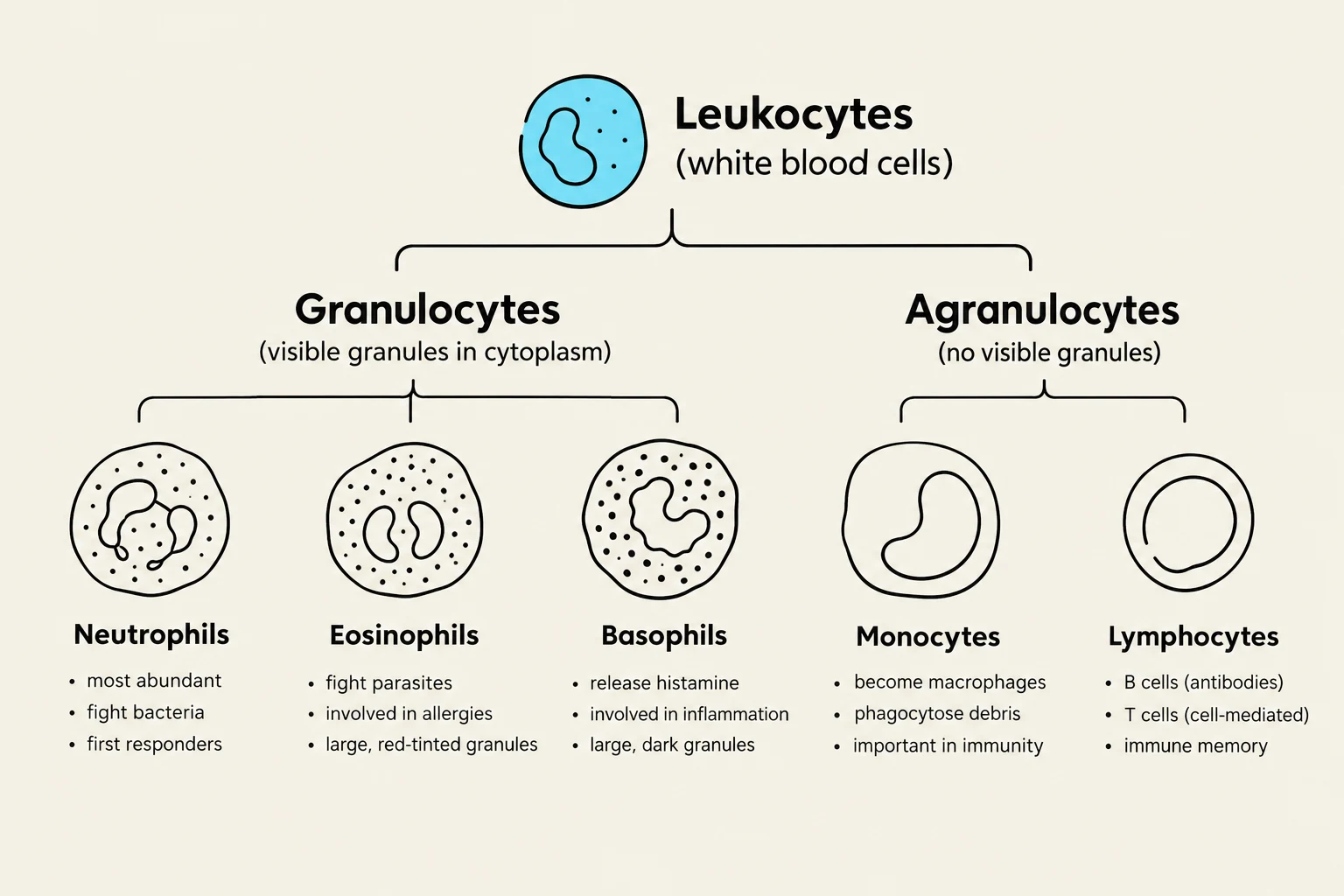
White blood cells, or leukocytes, are produced in the bone marrow through a process called myelopoiesis. They are broadly categorized into two groups based on the presence of visible granules in their cytoplasm:
Granulocytes
These cells contain tiny sacs called granules, which house enzymes used to digest microorganisms.
- Neutrophils: The most common granulocyte, characterized by "neutral" staining granules.
- Eosinophils: Identified by distinct red or pink granules.
- Basophils: The rarest WBC, featuring dark blue or black granules.
Agranulocytes
These cells lack prominent granules and play specialized roles in the immune response:
- Monocytes: Large cells with a "ground glass" appearance due to very fine granules.
- Lymphocytes: Small cells with scant bluish cytoplasm and a round nucleus.
Granulocyte Dynamics: Pools and Circulation
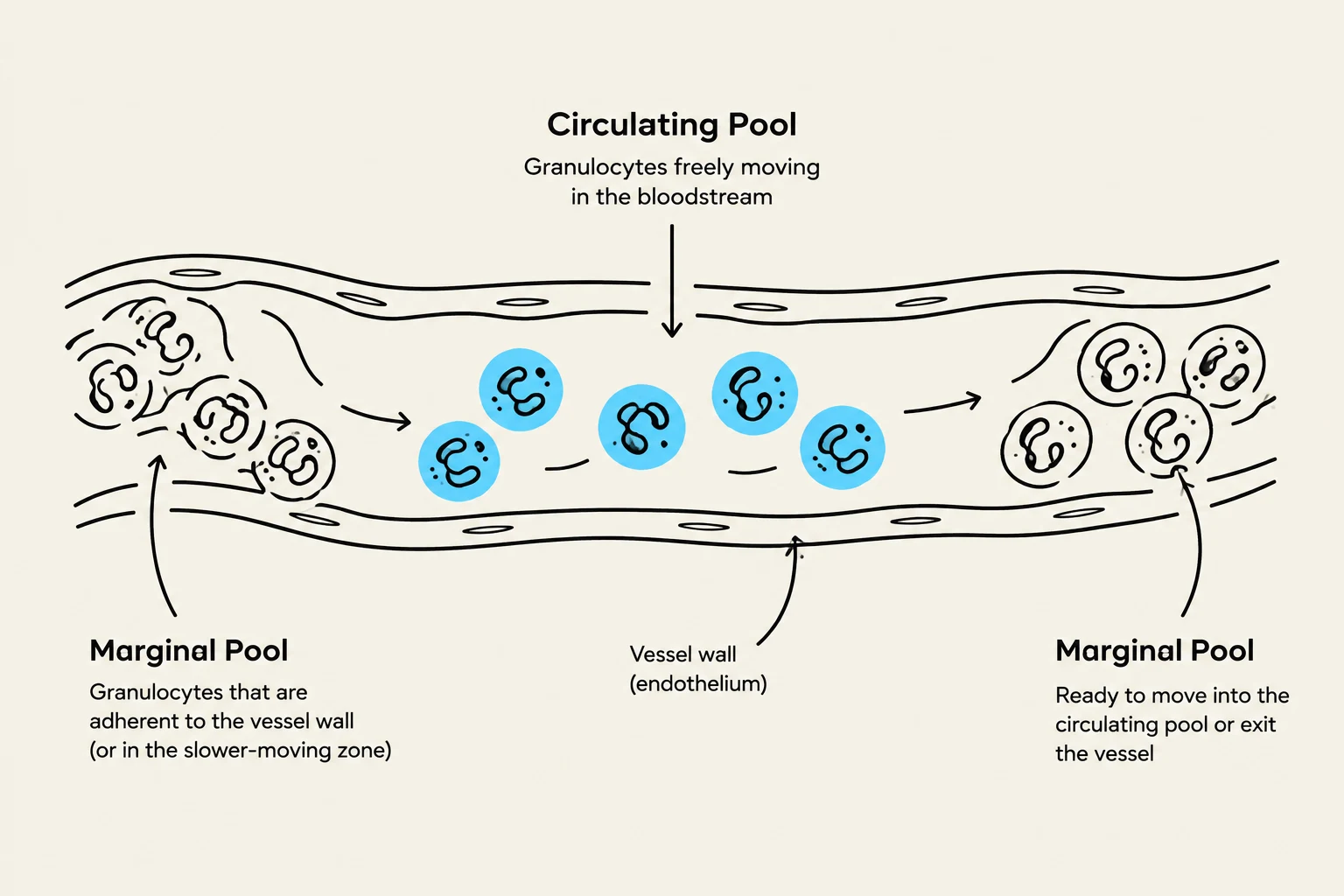
In the bone marrow, granulocytes undergo granulopoiesis, a maturation process stimulated by various factors known as leukopoietins. Within the marrow, cells exist in either a proliferating pool (capable of division) or a maturation/storage pool (cells awaiting entry into the blood).

Keep reading for free.
Create an account to finish this reading and make it part of your study routine.
Continue reading freeAlready have an account? Log in
Updated