


Waxing is a popular professional hair removal service because it is quick, effective for large areas, and results in softer, finer hair regrowth. However, because the process involves forcibly removing hair from the follicle, it can cause skin reactions such as erythema (redness), swelling, or even blood spotting. To ensure client safety and prevent injury, a practitioner must be able to identify contra-indications—conditions that either prohibit a treatment entirely or require specific adaptations to the procedure.
Absolute Contra-Indications
Absolute contra-indications are conditions that prohibit the treatment entirely. Performing a wax on a client with these conditions poses a significant risk of injury, such as skin tearing, bruising, or the spread of infection.
Vascular and Inflammatory Concerns
- Varicose Veins: These are dilated and twisted veins, usually in the legs, caused by structural changes in the vessel walls or valves.
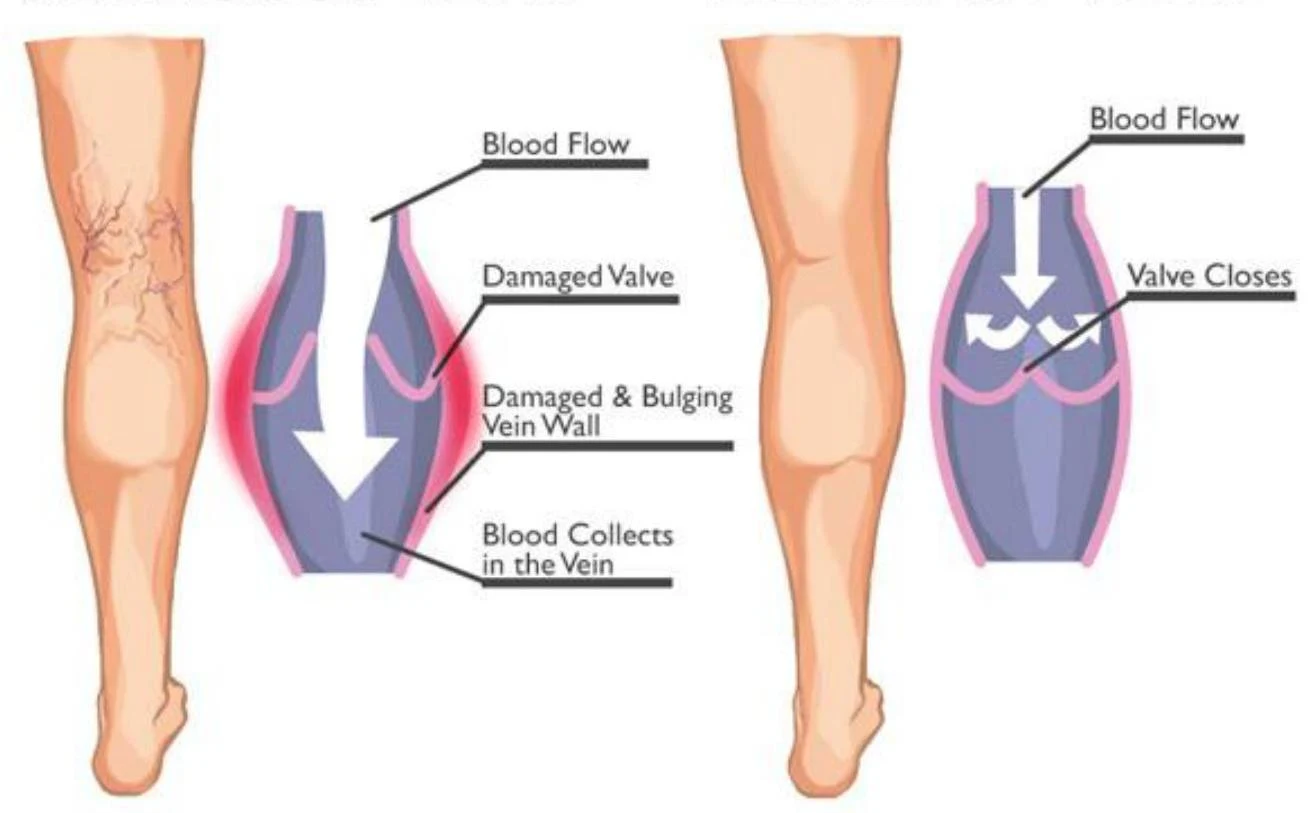
Diagram illustrating the mechanism of varicose veins, showing blood flow and damaged valves in a vein. - Phlebitis: This is an inflammation of a vein that can lead to the formation of a thrombus (blood clot). Symptoms include pain, swelling, and redness along the vein.
- Infectious or Inflammatory Skin Conditions: Any active infection or widespread inflammation makes the skin unsafe for waxing.
Skin Integrity and Sensitivity
- Hypersensitive Skin: Skin that is already red, sensitive, or swollen due to external factors like wind or sunburn must not be waxed.
- Aged or Very Thin Skin: Fragile skin is at high risk of bruising or tearing during the hair removal process.
- Skin-Thinning Medications: The use of certain topical or systemic medications makes the skin too thin and sensitive to withstand the pull of the wax.
Keep reading for free.
Create an account to finish this reading and make it part of your study routine.
Continue reading freeAlready have an account? Log in
Updated