


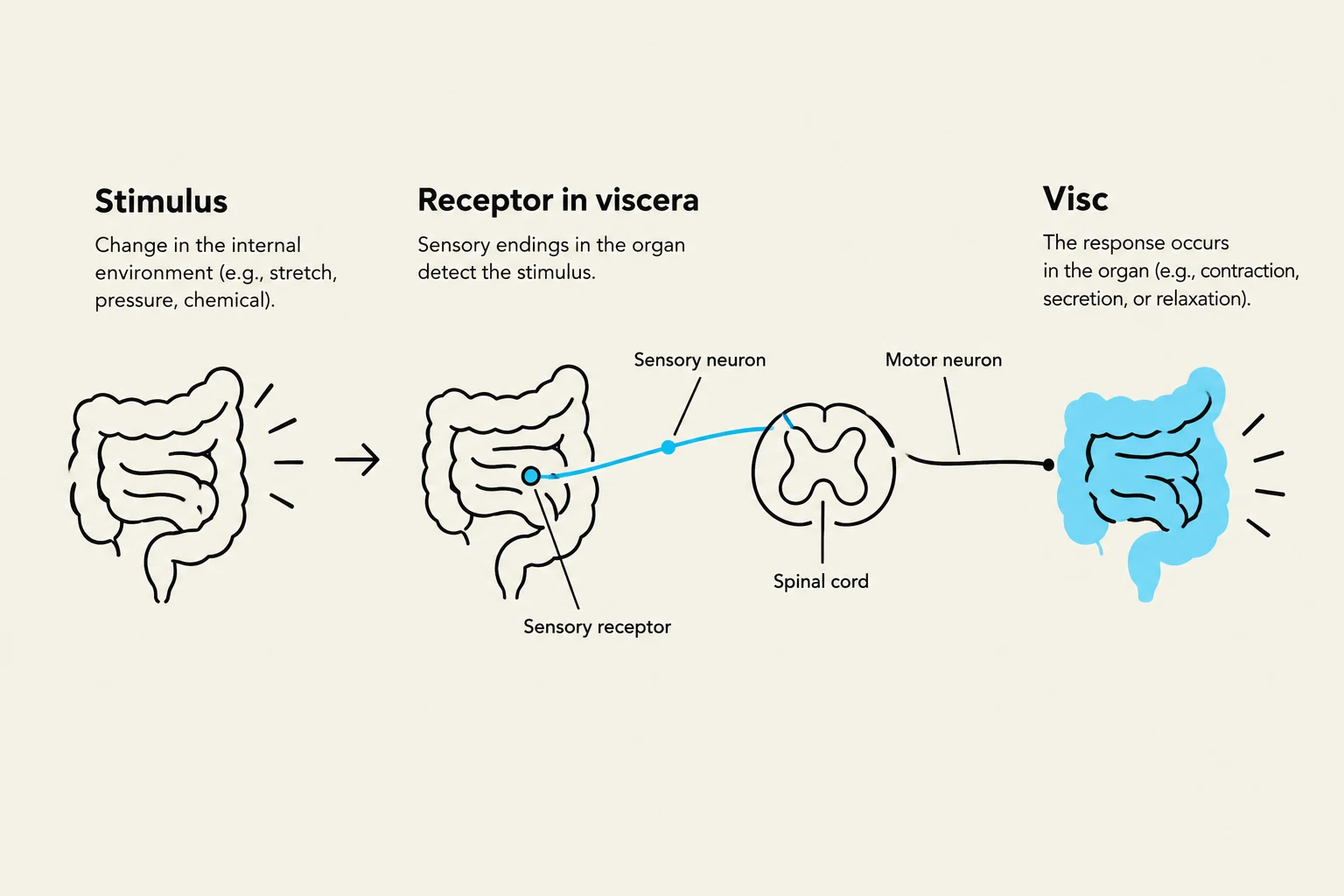
The human body is constantly monitoring its internal environment to maintain homeostasis. While we are consciously aware of external stimuli like heat on our skin or a loud noise, much of our internal regulation happens behind the scenes. This subconscious monitoring and response system relies on specialized neurons that detect changes within our organs and trigger rapid, automatic responses known as visceral reflexes.
Visceral Sensory Neurons: The Body's Internal Monitors
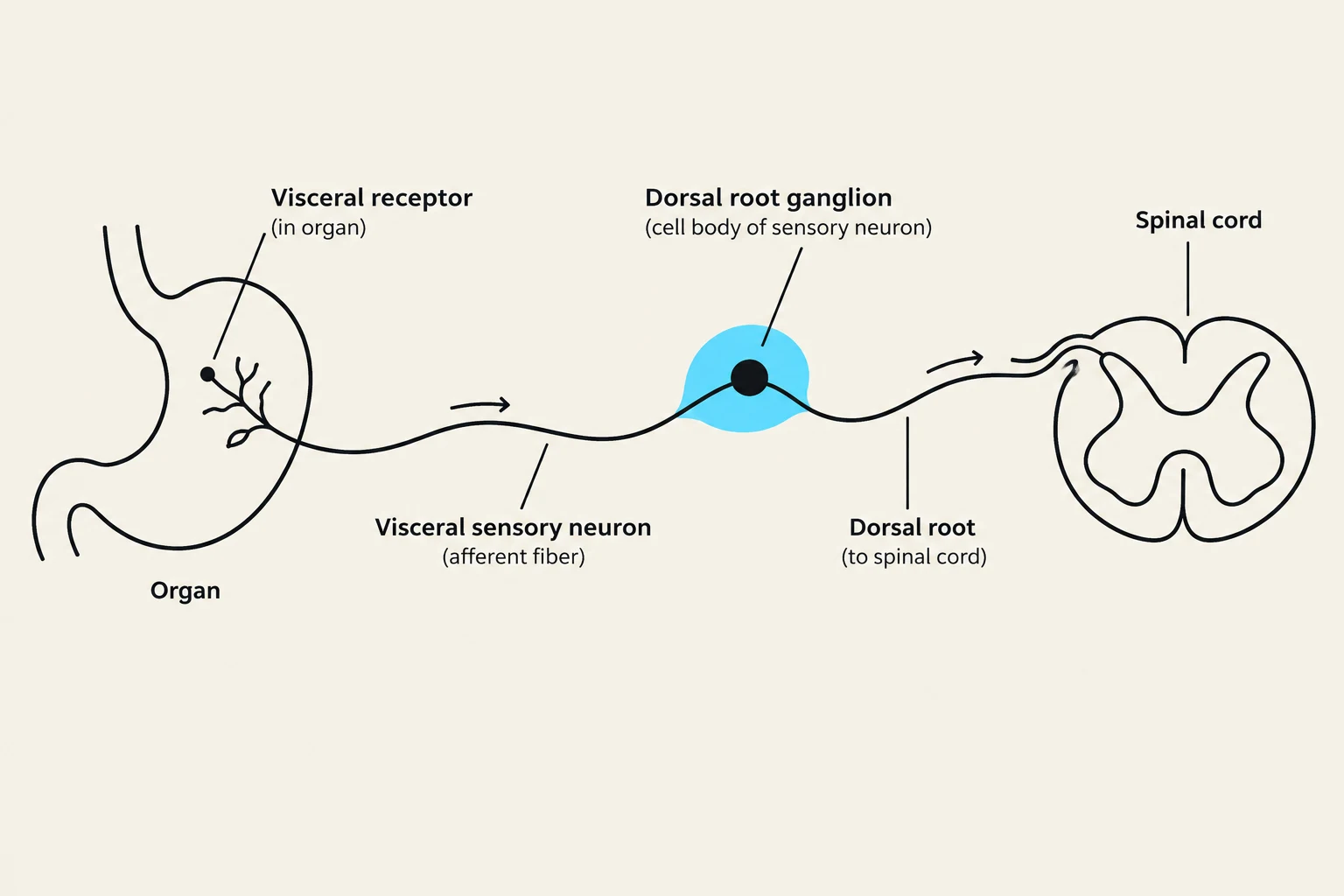
To maintain stability, the body must know what is happening inside its organs (viscera). Visceral sensory neurons are the specialized cells responsible for this task. These neurons utilize free nerve endings that are widely scattered throughout the internal organs to detect several types of stimuli, including:
- Chemical changes: Such as shifts in pH or nutrient levels.
- Stretch: Such as the expansion of the bladder or stomach.
- Temperature: Monitoring internal thermal conditions.
- Irritation: Detecting damage or inflammation within the viscera.
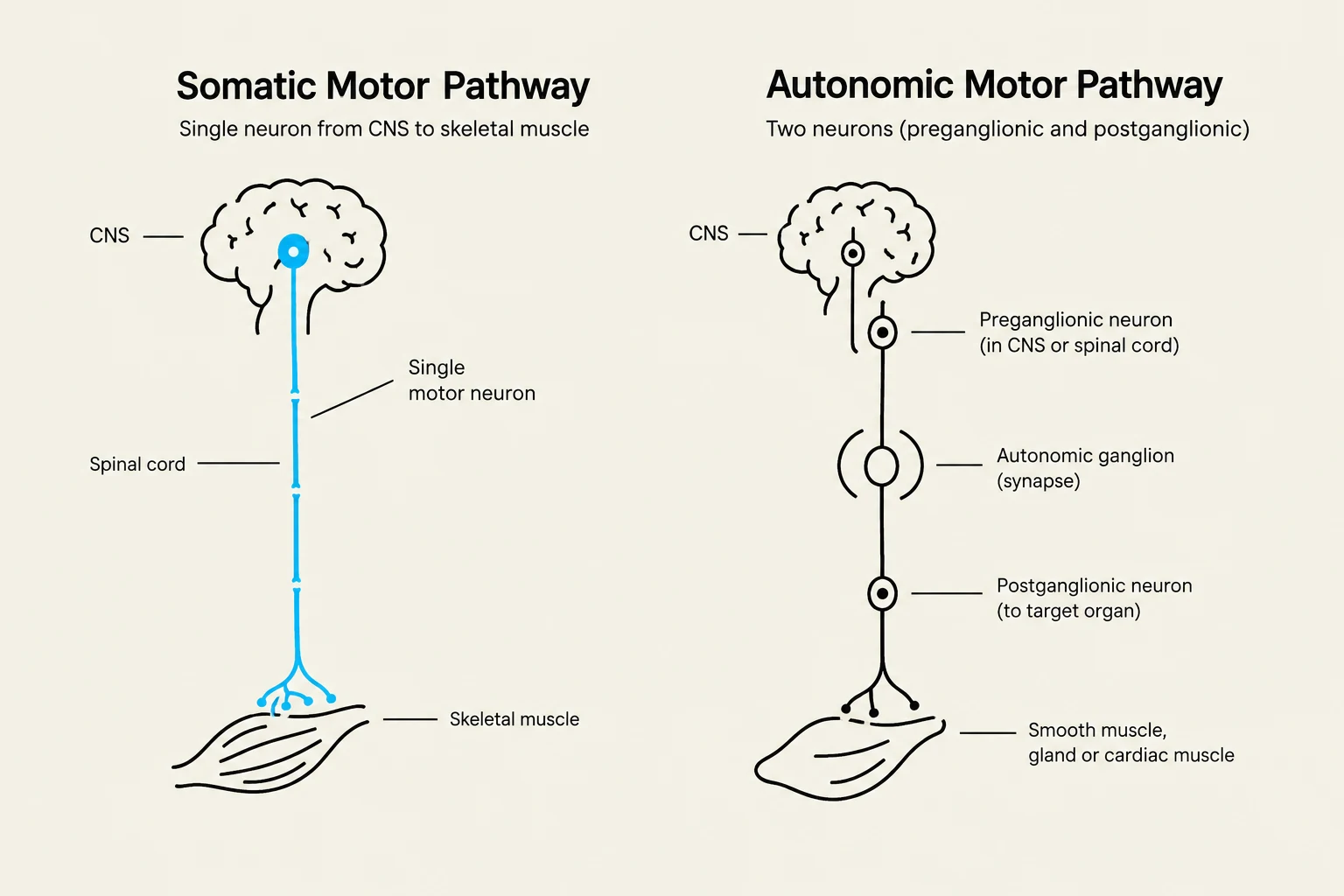
The cell bodies of these sensory neurons are located in the dorsal root ganglia (for spinal nerves) or in the sensory ganglia of various cranial nerves. Interestingly, the axons of these visceral sensory neurons often travel in the same nerves as the autonomic motor fibers.
Clinical Connection: Referred Pain Because visceral sensory neurons can converge on the same second-order sensory neurons in the spinal cord that receive input from somatic (skin/muscle) sensory neurons, the brain sometimes misinterprets the source of the signal. This phenomenon is known as referred pain, where pain from an internal organ is felt on the surface of the body (for example, feeling heart pain in the left arm).
Keep reading for free.
Create an account to finish this reading and make it part of your study routine.
Continue reading freeAlready have an account? Log in
Updated