


Viruses are obligate intracellular parasites, meaning they are not considered living organisms because they can only multiply within a living host cell. Despite their non-living status, they follow universal tenets: they consist of a protein capsid protecting a DNA or RNA genome, and they must infect, take over, assemble, and release new particles to continue their life cycle. Understanding how these entities enter cells, replicate their genetic material, and ultimately affect the host is central to virology.
The Five Stages of Viral Replication
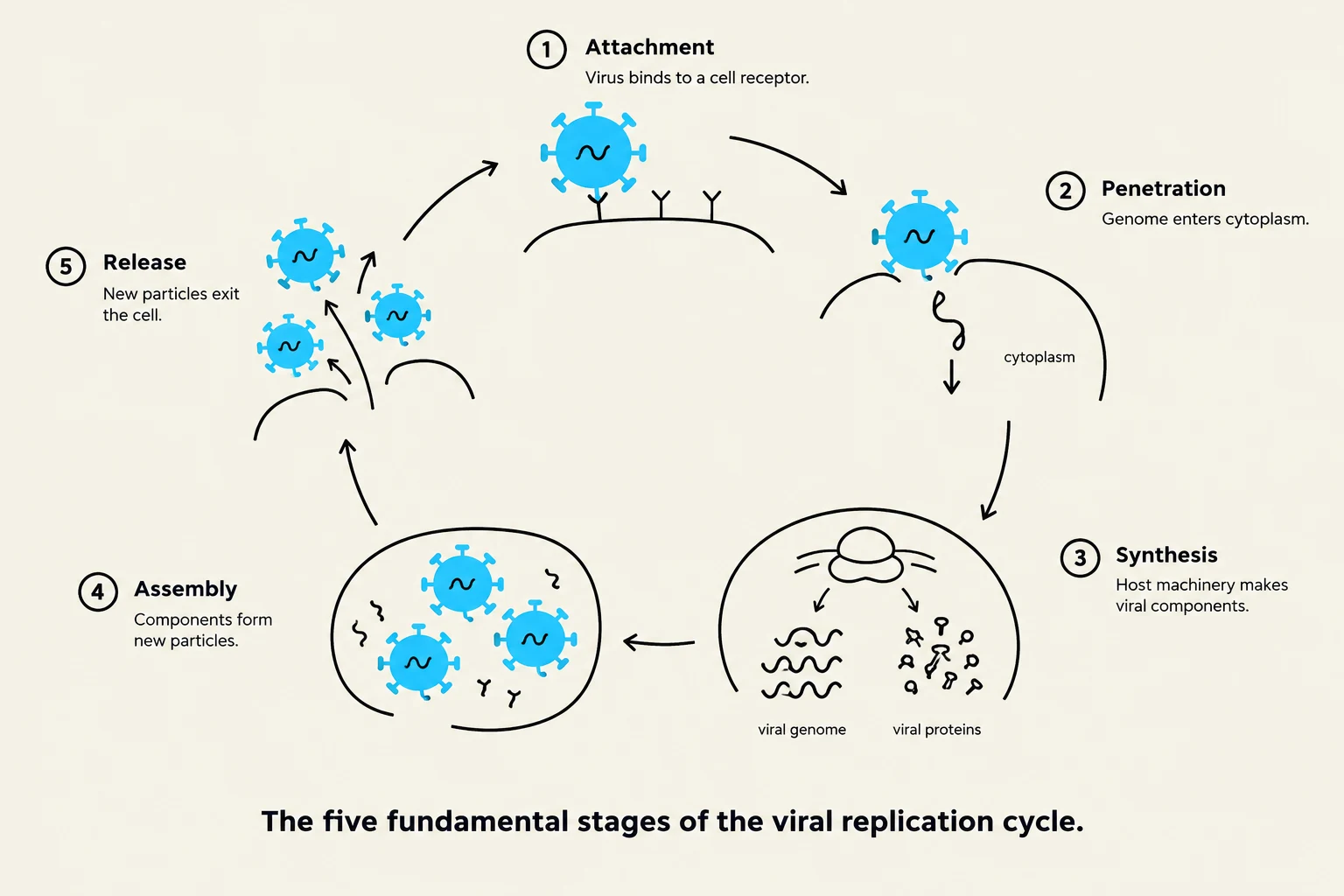
- Attachment (Adsorption): The virus binds to specific receptors on the host cell surface. This is a "lock and key" mechanism where a viral protein or glycoprotein must match a specific host protein, carbohydrate, or lipid. This specificity is why certain viruses only infect specific tissues or species.
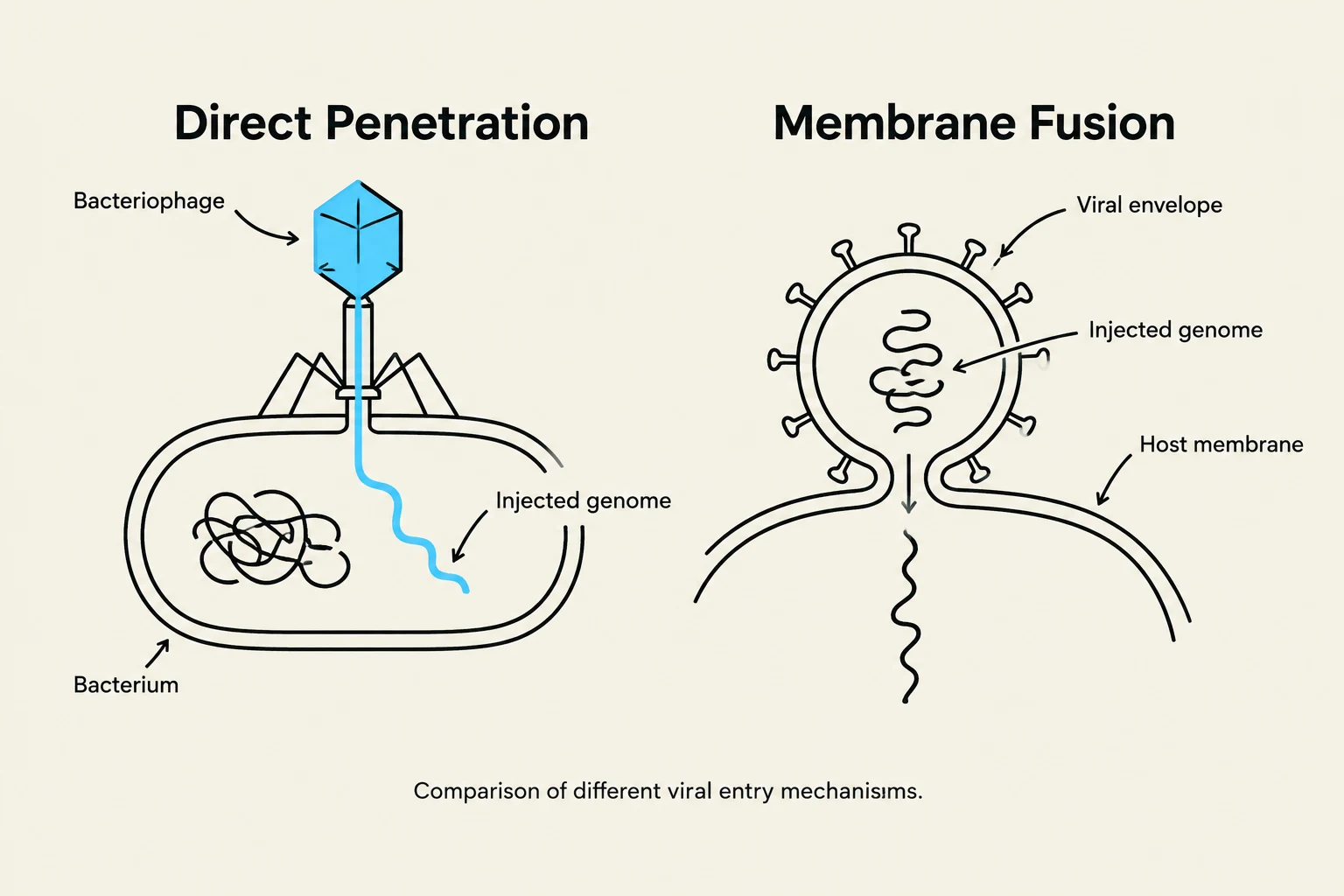
- Penetration (Entry): The virus or its nucleic acid enters the host cell.
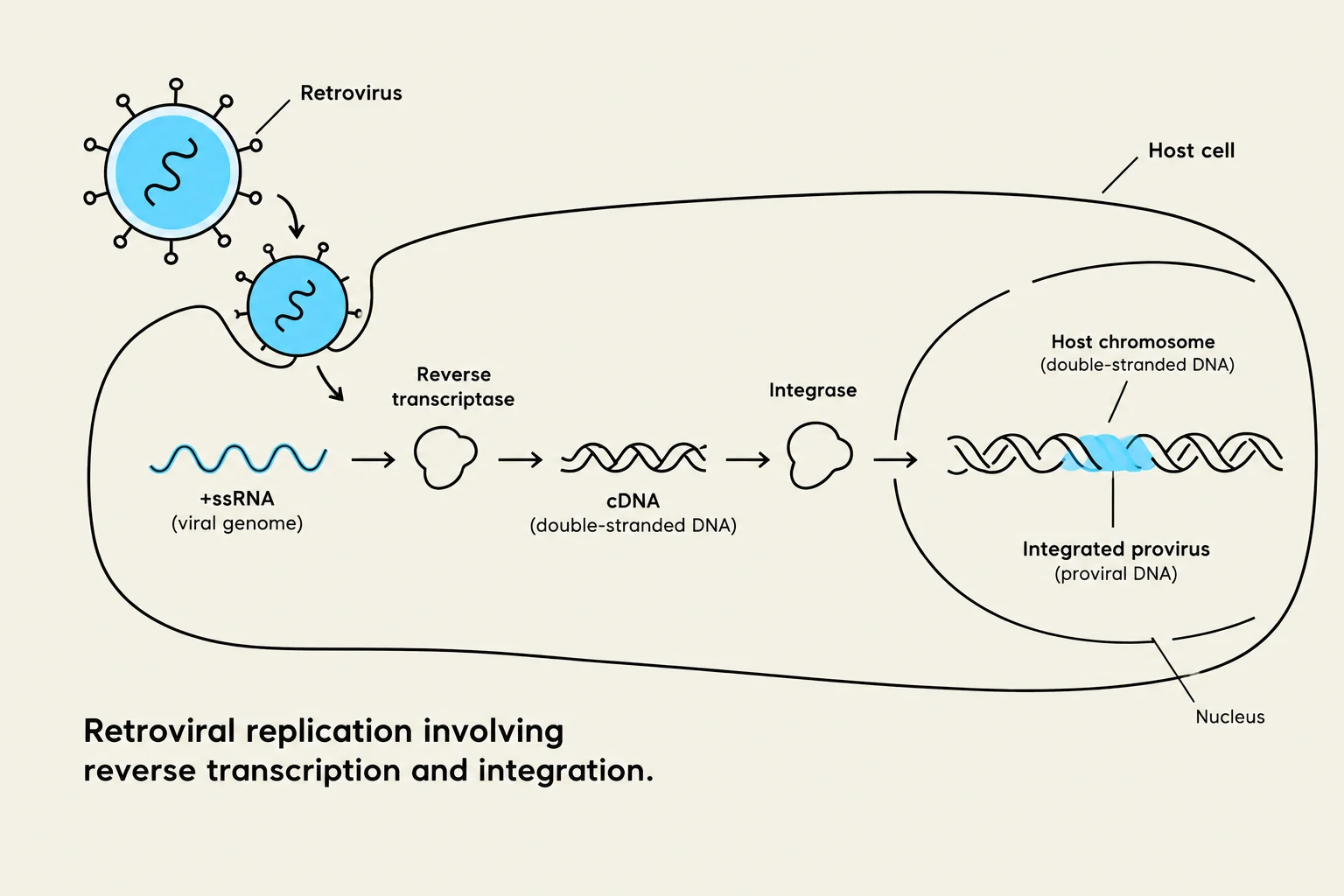
- Synthesis: The virus redirects host cell metabolism to replicate its genome and produce viral proteins.
- Assembly: New viral components (capsids and genomes) are packaged together to form new virions.
- Release: New virions exit the host cell via lysis, budding, or exocytosis.
Exam Tip: The One-Step Growth Curve Viral replication is often measured by a "one-step growth curve". During the eclipse phase, the genome is being replicated and proteins are being translated, but no infectious virions are visible. This is followed by maturation (packaging) and the latent period (the sum of eclipse and maturation). Finally, the release phase occurs, often resulting in a sudden spike in the number of infectious particles, known as the burst size.
Keep reading for free.
Create an account to finish this reading and make it part of your study routine.
Continue reading freeAlready have an account? Log in
Updated