


Viruses are among the most efficient biological hijackers in existence. Unlike bacteria, which are living organisms capable of independent metabolism, a virus is essentially a minimal biological package consisting of only two essential components: a genetic blueprint in the form of DNA or RNA, and a protective protein coat known as a capsid. Because they lack the machinery to reproduce on their own, they must infiltrate a host cell and force that cell to become a factory for viral production.
The Art of Deception: Attachment and Entry
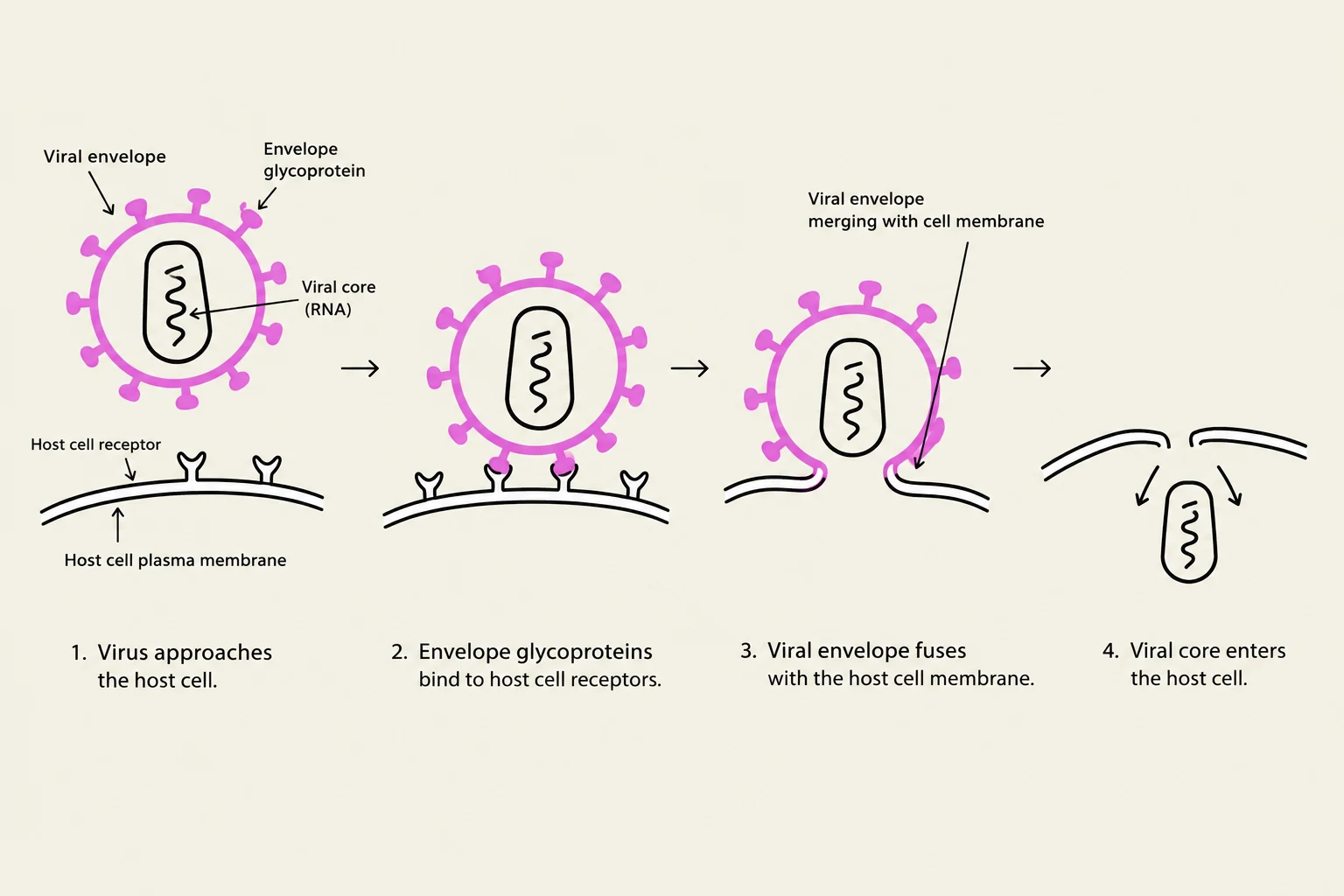
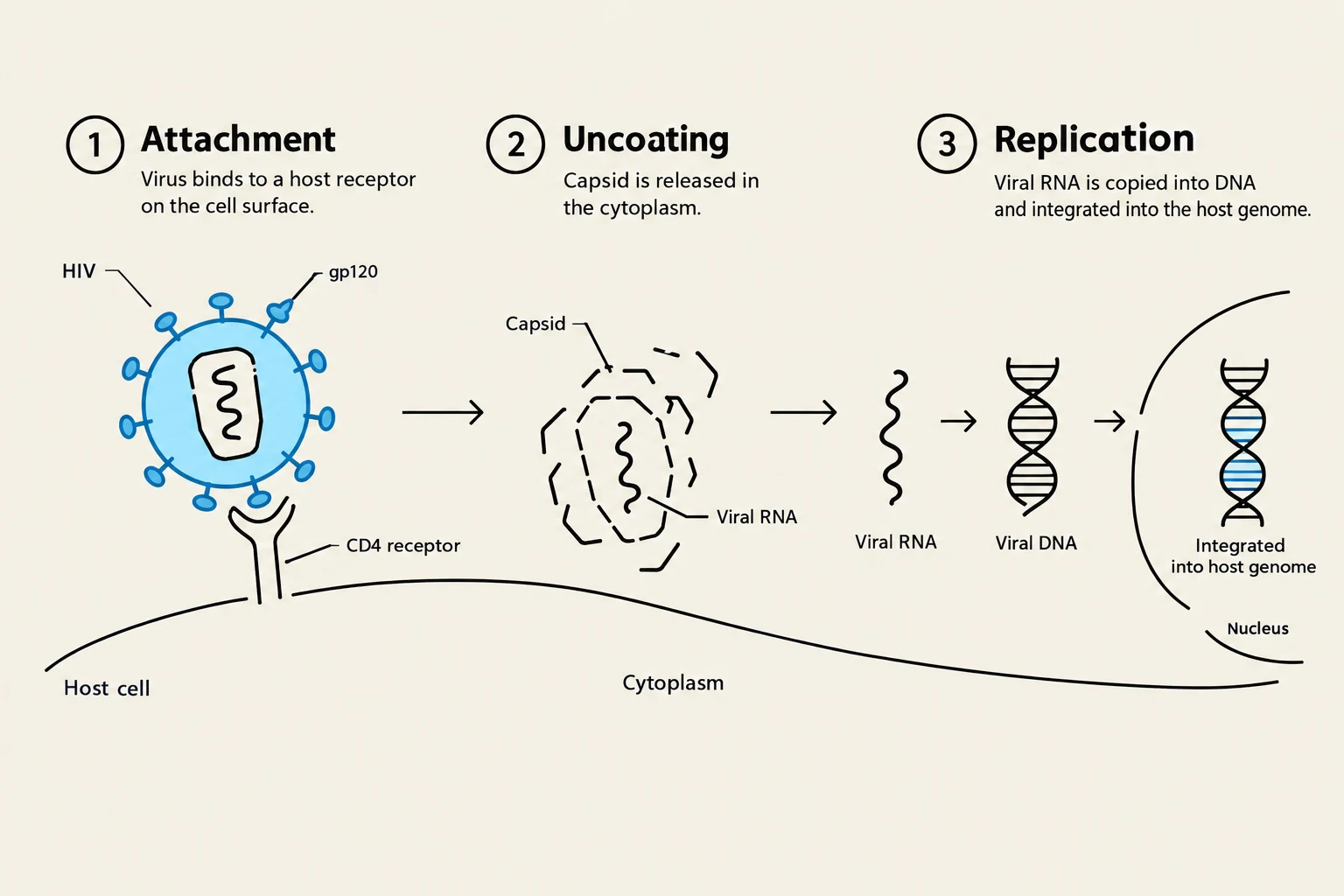
The infection process begins with a highly specific "lock and key" mechanism. For a virus to enter a cell, its surface proteins must fit perfectly into the host cell's integral protein receptors. These receptors are naturally designed by the cell to bring in beneficial molecules, but viruses exploit this by mimicking the shape of those "good" molecules.
In the case of HIV, the virus specifically targets T cells, which are vital components of the acquired immune system. By disabling these cells, HIV doesn't just cause a single illness; it wipes out the body's ability to remember and fight off other diseases, effectively destroying the host's entire defense mechanism.
Many animal viruses are enveloped, meaning they are wrapped in a lipid layer stolen from a previous host. When an enveloped virus approaches a target, its envelope merges with the host's plasma membrane, allowing the viral contents to slip inside.
Keep reading for free.
Create an account to finish this reading and make it part of your study routine.
Continue reading freeAlready have an account? Log in
Updated