


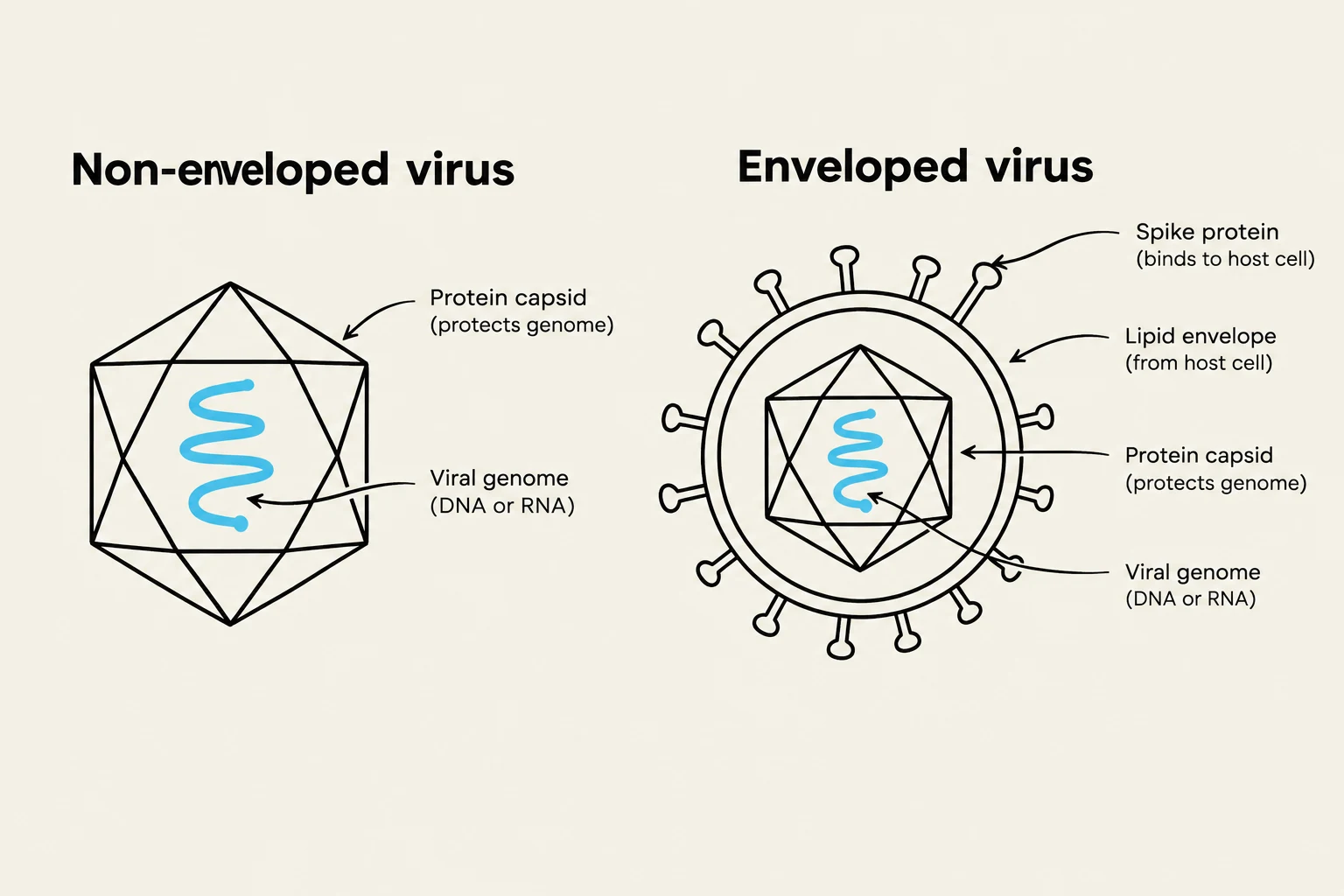
Viruses are fascinating biological entities that occupy a unique space between living organisms and inanimate matter. Often described as "molecular machines," viruses are non-cellular and lack the independent metabolic machinery found in bacteria or eukaryotes. Instead, a virus's entire biological identity is defined by two fundamental components: its genome (the genetic instructions) and its protective structure (the physical housing).
The Diversity of Viral Genomes
Unlike cellular organisms, which almost exclusively use double-stranded DNA (dsDNA) as their hereditary material, viruses exhibit extraordinary genomic diversity. A viral genome, or viral chromosome, can be categorized by its nucleic acid type, its strandedness, and its physical configuration.
Nucleic Acid Types and Strandedness
The genetic material of a virus can be either DNA or RNA. Within these two categories, viruses further diversify based on whether the strands are single or double:
- DNA Viruses: These may possess dsDNA (double-stranded DNA) or ssDNA (single-stranded DNA). For example, the Herpes simplex virus utilizes a dsDNA genome.
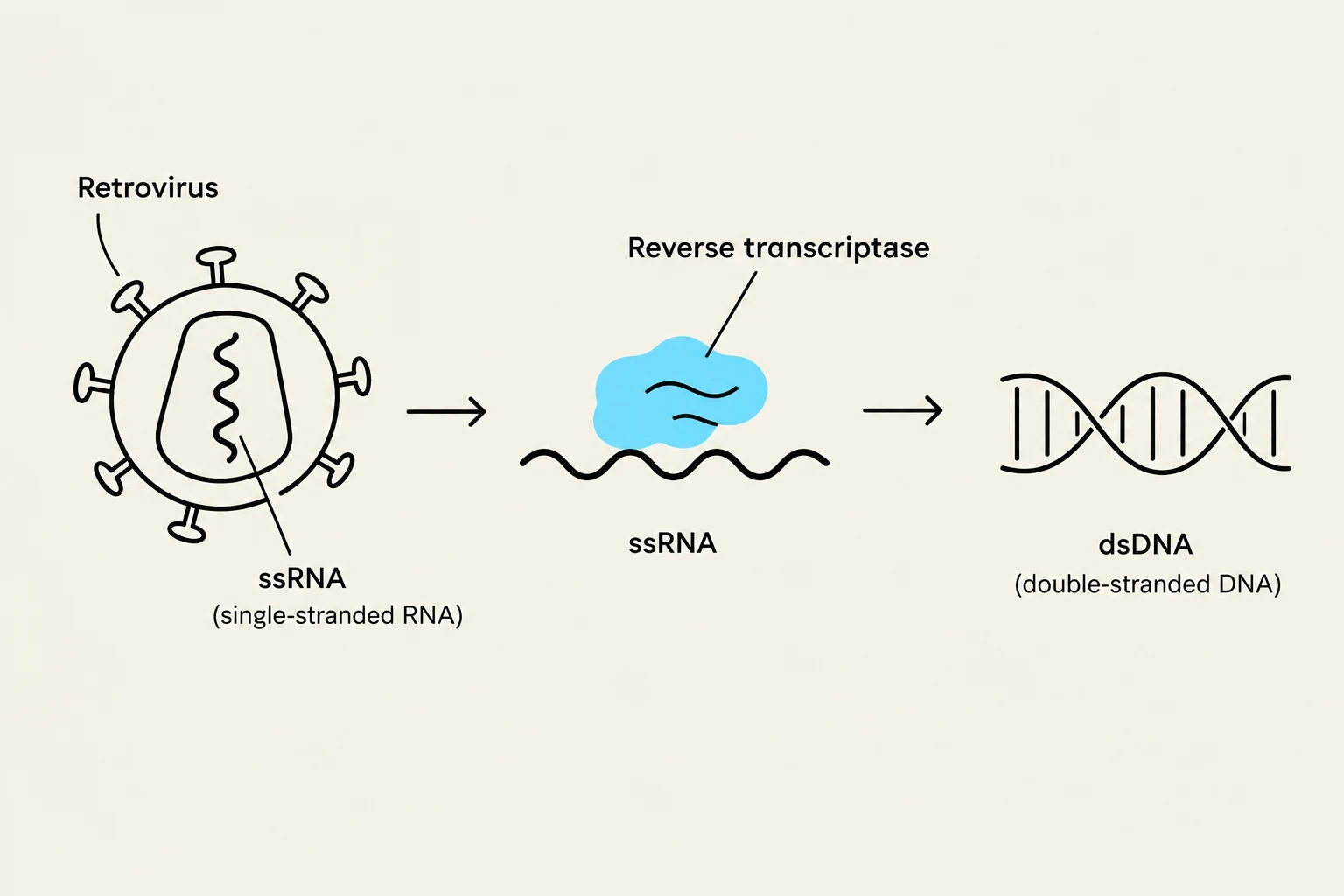
- RNA Viruses: These may possess dsRNA (double-stranded RNA) or ssRNA (single-stranded RNA). A notable example of a complex RNA virus is the Rotavirus, which features a segmented dsRNA genome consisting of 11 distinct segments. Other examples include the Ebola virus, which uses ssRNA.
Configuration and Complexity
Viral chromosomes are not limited to a single, continuous loop. They can be linear or circular. Furthermore, while some viruses have a single chromosome, others have "segmented" genomes, where the genetic information is split across multiple separate molecules.

Keep reading for free.
Create an account to finish this reading and make it part of your study routine.
Continue reading freeAlready have an account? Log in
Updated