


In the study of virology, understanding the distinction between what belongs to the virus and what belongs to the host cell is fundamental. A virus is more than just a collection of particles; it is a biological entity defined by its genetic material and the specific structural proteins it uses to interact with the world. To master this topic, one must grasp the relationship between the instructions (the genome) and the tools (the glycoproteins) that allow a virus to infect a cell.
The Viral Genome: The Master Blueprint
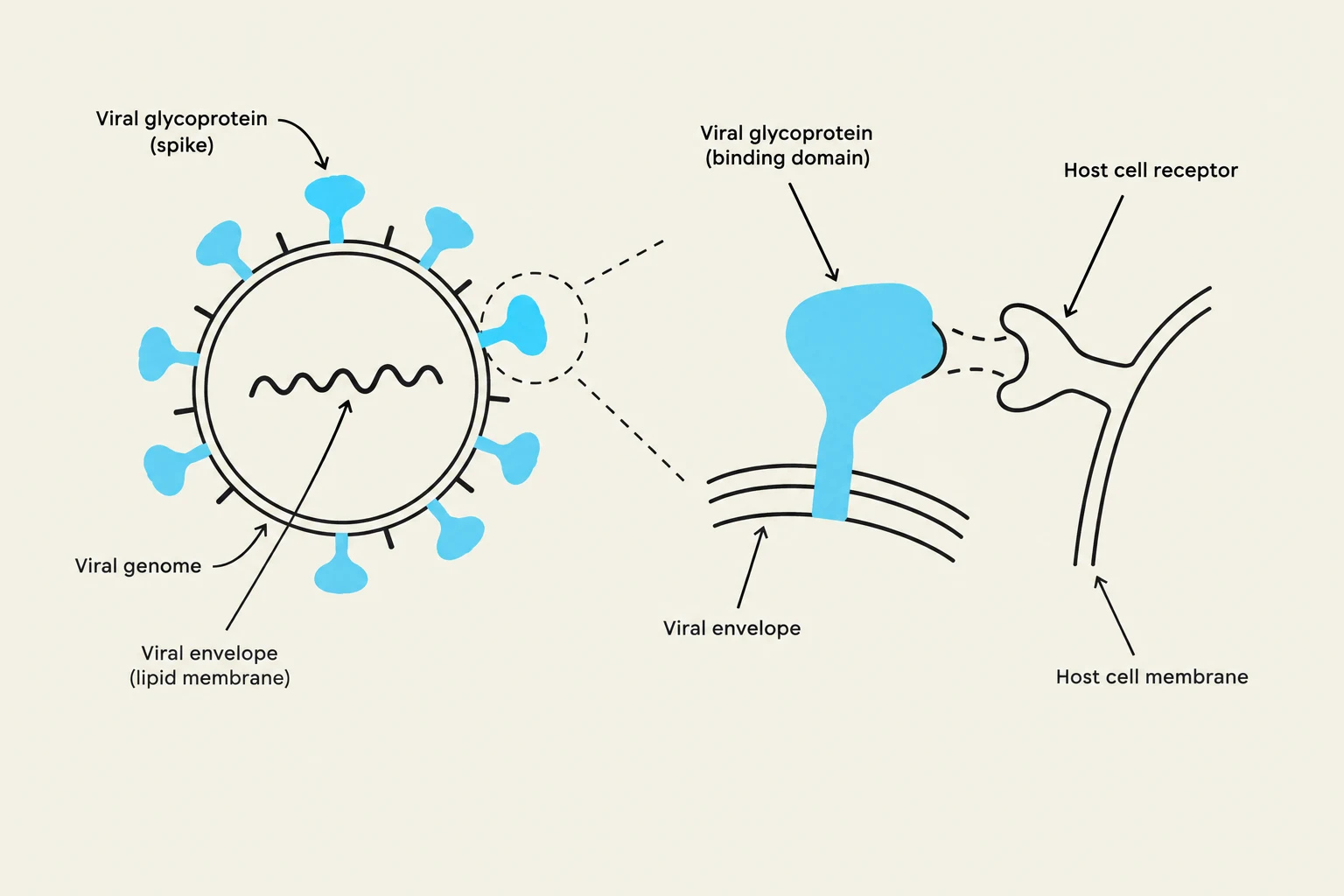
At the core of every virus lies the viral genome. This is the repository of all the information required for the virus to replicate its components and assemble new, infectious particles. Unlike cellular organisms that rely on complex, multi-chromosomal DNA, a viral genome can consist of either DNA or RNA, and it can be single-stranded or double-stranded.
The primary role of the viral genome is to serve as a template. It contains the specific genetic sequences—the "code"—that dictate the shape, size, and function of every viral component. When a virus enters a host cell, it essentially "hijacks" the cell by introducing this genome, forcing the host to follow the viral instructions rather than its own.

Keep reading for free.
Create an account to finish this reading and make it part of your study routine.
Continue reading freeAlready have an account? Log in
Updated