


Uterine sarcomas are a group of rare malignant mesenchymal tumors that arise from the uterus. Unlike common endometrial carcinomas, which are epithelial in origin, uterine sarcomas involve the connective tissues of the uterus, such as the myometrium. Because these tumors can behave aggressively and spread through different pathways, accurate staging is critical for determining prognosis and designing treatment strategies.
Staging for uterine sarcomas is primarily achieved through two integrated systems: the AJCC (American Joint Committee on Cancer) TNM system and the FIGO (International Federation of Gynecology and Obstetrics) surgical staging system. While they are often used in tandem, they provide a comprehensive view of the disease by assessing the primary tumor, regional lymph nodes, and distant spread.
The TNM Staging Framework
The TNM system is the gold standard for describing the extent of cancer. It breaks the disease down into three distinct components: T (Tumor), N (Node), and M (Metastasis).
Primary Tumor (T) Assessment
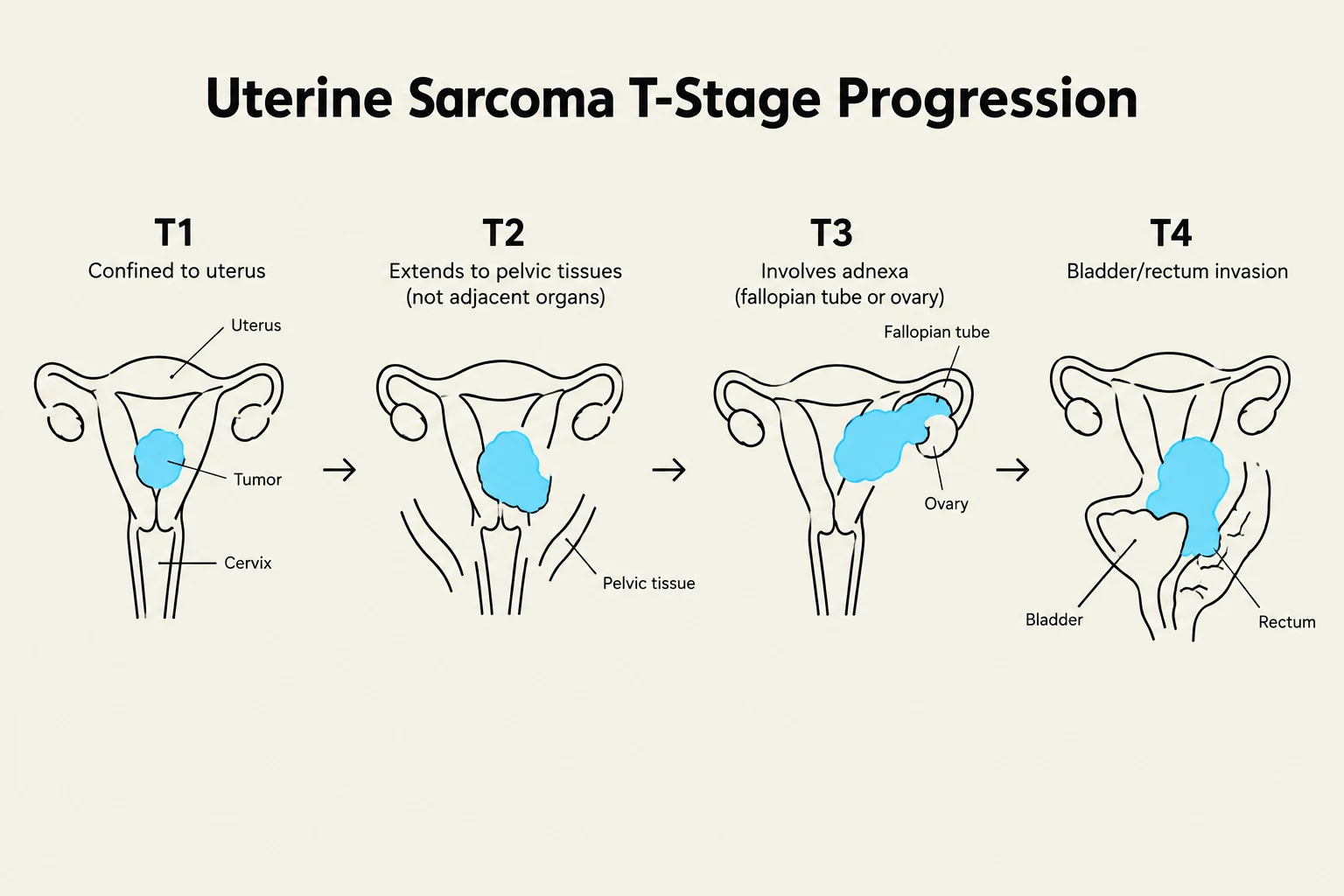
The "T" descriptor focuses on the size and local extent of the primary tumor within the uterus and surrounding pelvic structures.
- TX: The primary tumor cannot be assessed.
- T0: No evidence of a primary tumor is found.
- T1: The tumor is confined strictly to the uterus.
- T1a (IA): The tumor is limited to the endometrium or the endocervix.
- T1b (IB): The tumor has invaded the myometrium, but the invasion is half of the myometrial thickness.
- T1c (IC): The tumor has invaded more than half of the myometrium.
- T2 (II): The tumor has extended beyond the uterus but remains within the pelvic cavity.
- T2a (IIA): The tumor involves the adnexa (ovaries or fallopian tubes).
- T2b (IIB): The tumor involves other pelvic tissues.
- T3 (III): The tumor has infiltrated abdominal tissues.
- T3a (IIIA): Involvement of a single site.
- T3b (IIIB): Involvement of more than one site.
- T4 (IVA): The tumor has invaded highly critical adjacent organs, specifically the bladder or the rectum.

Keep reading for free.
Create an account to finish this reading and make it part of your study routine.
Continue reading freeAlready have an account? Log in
Updated