A comprehensive guide on understanding Asthma and COPD, the proper use of Metered Dose Inhalers (MDIs) with spacers, and essential maintenance and troubleshooting tips for effective respiratory management.
For individuals living with chronic respiratory conditions, the ability to breathe freely is often dependent on the precise administration of medication. Two of the most common conditions requiring inhaled therapy are Asthma and Chronic Obstructive Pulmonary Disease (COPD). While these conditions share certain symptoms—such as coughing, wheezing, and shortness of breath—they have distinct underlying pathologies.
Regardless of the specific diagnosis, the effectiveness of treatment relies heavily on the use of a Metered Dose Inhaler (MDI). An MDI is a pressurized device designed to deliver a specific amount of medication directly into the airways. However, simply pressing the canister is not enough; improper technique can result in the medication hitting the back of the throat rather than reaching the lungs, rendering the treatment ineffective.
Understanding the Conditions: Asthma vs. COPD
Before mastering the device, it is vital to understand why the medication is necessary. Both Asthma and COPD involve airway obstruction, but they manifest differently.
Asthma
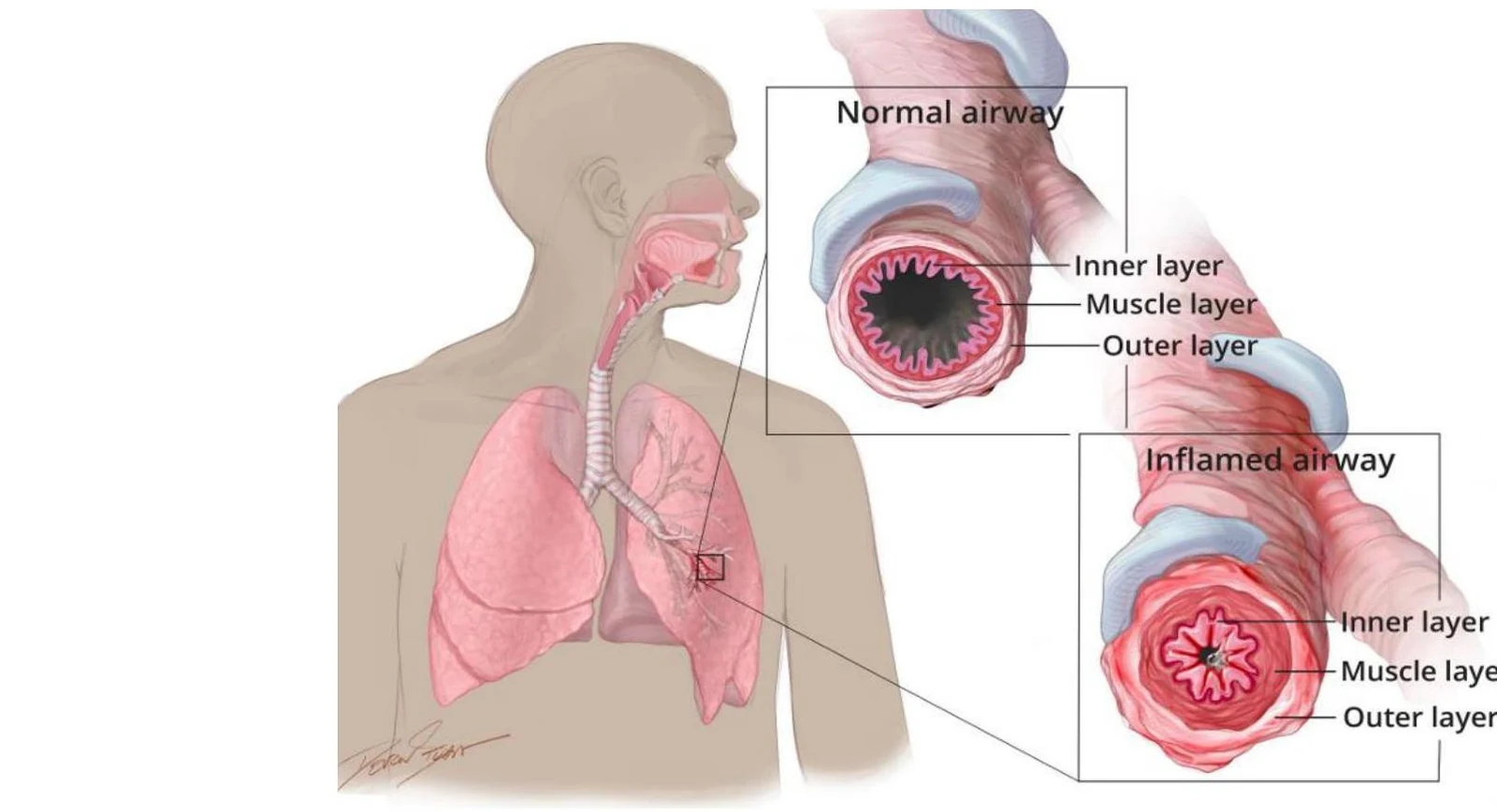
Asthma is a chronic inflammatory condition of the bronchial tubes. During an asthma attack, the airways undergo three primary changes: inflammation (swelling of the lining), constriction (tightening of the smooth muscles), and increased mucus production.
Diagram illustrating the difference between a normal airway and an inflamed airway, showing the layers of the airway wall.
Asthma is often episodic and can be triggered by allergies, smoke, or cold air. In severe cases, it can lead to status asthmaticus, a medical emergency where standard treatments fail to reverse the obstruction.
COPD (Chronic Obstructive Pulmonary Disease)
COPD is a progressive disease that typically includes two main types: Chronic Bronchitis and Emphysema.
This illustration defines COPD, differentiating between chronic bronchitis and emphysema by showing their effects on the lungs, bronchi, and alveoli.
Chronic Bronchitis is characterized by a persistent cough with sputum and excess mucus production.
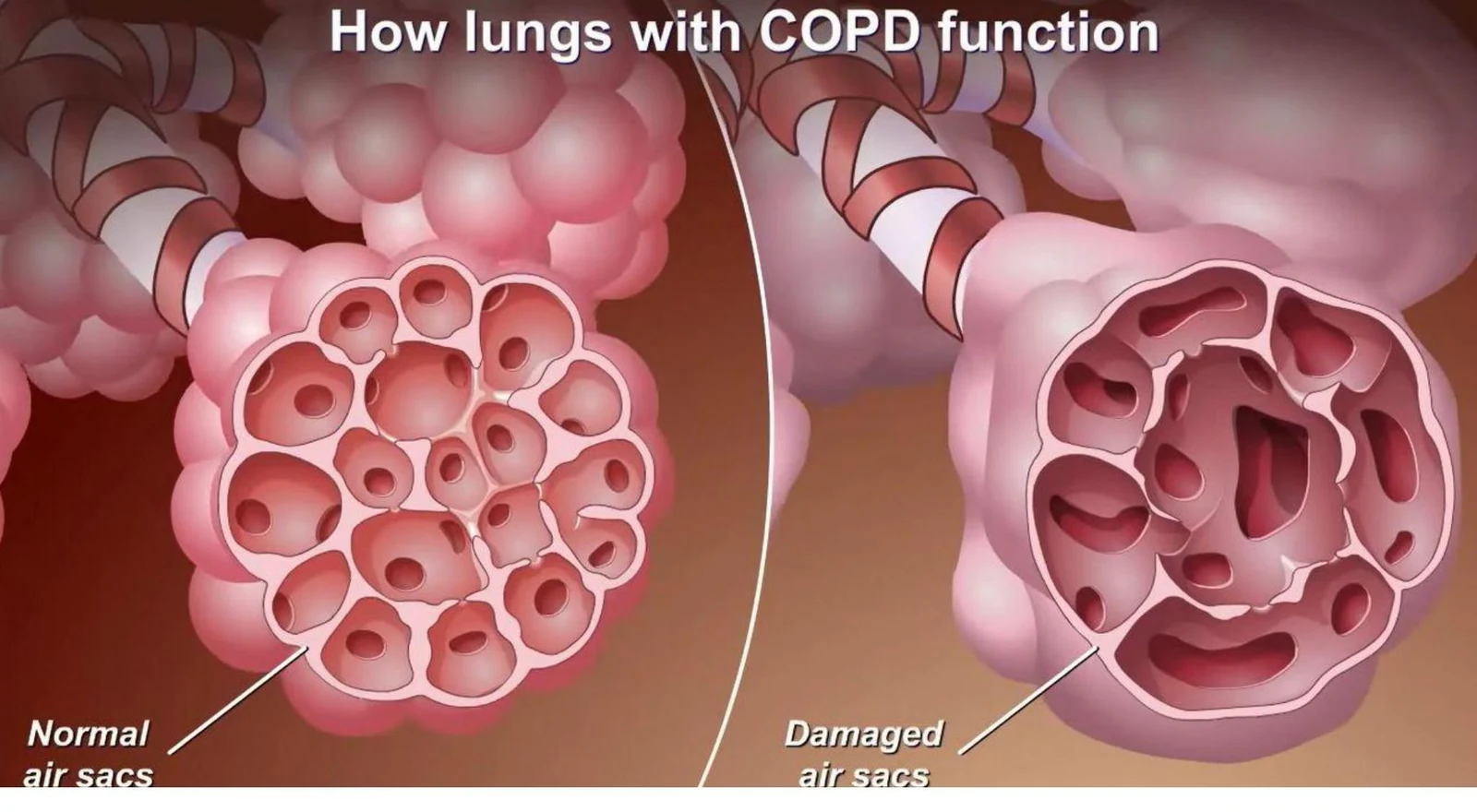
Emphysema involves the destruction of the alveoli (air sacs), leading to enlarged, inefficient air spaces that make it difficult to expel air.
Comparison of normal air sacs in the lungs with air sacs damaged by COPD.
Because COPD patients often struggle with "air trapping" (difficulty pushing air out), they may benefit from specific breathing techniques like pursed-lip breathing during and after medication administration.
The Role of the Spacer
One of the biggest hurdles in MDI use is coordination. To be effective, a patient must press the canister at the exact moment they begin to inhale. For many, especially those in respiratory distress, this timing is difficult.
A spacer is a holding chamber that attaches to the MDI. It acts as a reservoir for the medication, allowing the aerosolized particles to "hang" in the chamber. This eliminates the need for perfect timing; the patient can press the canister and then take a slow, deep breath from the spacer at their own pace. Using a spacer significantly improves lung deposition and reduces the amount of medication wasted in the mouth.
Step-by-Step Medication Administration
To ensure maximum therapeutic benefit, follow this standardized sequence for using an MDI, ideally with a spacer:
1. Preparation and Setup
Shake the Inhaler: Shake the canister vigorously for 5–10 seconds to ensure the medication and propellant are thoroughly mixed.
Check the Device: Verify the expiration date. If the inhaler is new or has not been used for a while, you must prime it by spraying it into the air several times.
Attach the Spacer: Connect the MDI to the spacer and ensure a tight seal.
2. The Inhalation Process
Exhale Fully: Before bringing the mouthpiece to your lips, breathe out completely away from the device. This empties your lungs and creates space for the new medication.
Seal and Actuate: Place the mouthpiece in your mouth and seal your lips tightly around it. Press the canister once while simultaneously beginning to breathe in slowly and deeply.
Hold the Breath: Once the medication is inhaled, remove the device from your mouth. Hold your breath for approximately 10 seconds, or as long as is comfortable. This allows the tiny particles to settle deep into the airways rather than being immediately exhaled.
3. Exhalation and Post-Care
Gentle Exhalation: Breathe out slowly. For COPD patients, using pursed-lip breathing (exhaling through puckered lips) can help manage the air pressure in the lungs.
Rinse and Spit: This is a critical safety step. If your medication contains corticosteroids (anti-inflammatory drugs), you must rinse your mouth with water and spit it out.
Exam Tip: Thrush Prevention
Failing to rinse the mouth after using corticosteroid inhalers can lead to the development of oral thrush, a fungal infection in the mouth and throat. Always emphasize this step in patient education.
Maintenance and Troubleshooting
Effective management extends beyond the moment of inhalation. To ensure your treatment remains reliable, keep the following in mind:
Monitor the Dose Counter: Most MDIs have a built-in counter. Never wait until you feel short of breath to replace an inhaler; replace it when the counter indicates the medication is nearly exhausted.
Clean Regularly: The inhaler and spacer should be cleaned weekly to prevent buildup of medication residue or bacteria.
Coordination Challenges: If you find it impossible to coordinate the "press and breathe" motion, do not struggle—switch to using a spacer immediately.
Feature
Importance
Spacer
Improves medication delivery and eases coordination
Slow Inhalation
Ensures particles reach the lower airways
Breath Holding
Allows particles to settle in the lungs
Mouth Rinsing
Prevents oral thrush from corticosteroids
By following these steps, patients can significantly improve their respiratory health and reduce the frequency of acute exacerbations.
Keep reading for free.
Create an account to finish this reading and make it part of your study routine.