


In the field of Human-Computer Interaction (HCI), successful design goes far beyond making a system look "nice" or "intuitive." While many novice designers rely on vague notions of user-friendliness, professional designers aim for measurable, evidence-based outcomes. To create truly effective interactive systems, designers must move past subjective checklists and instead focus on specific usability goals and the metrics used to evaluate them.
Understanding the User Experience
At the heart of modern design is the User Experience (UX). Great designers are deeply committed to enhancing this experience, which involves more than just functional efficiency. A holistic approach to UX considers emotional responses, such as using animations to attract attention or employing playful elements to surprise and delight the user.
However, UX is not just about "delight"; it is also about meeting the fundamental needs of the user community. Designers must ascertain exactly what tasks and subtasks a user needs to accomplish, including those that are only performed occasionally. If the functionality of a system does not match the actual needs of the user, the product will likely be rejected or underutilized.
Core Usability Goals
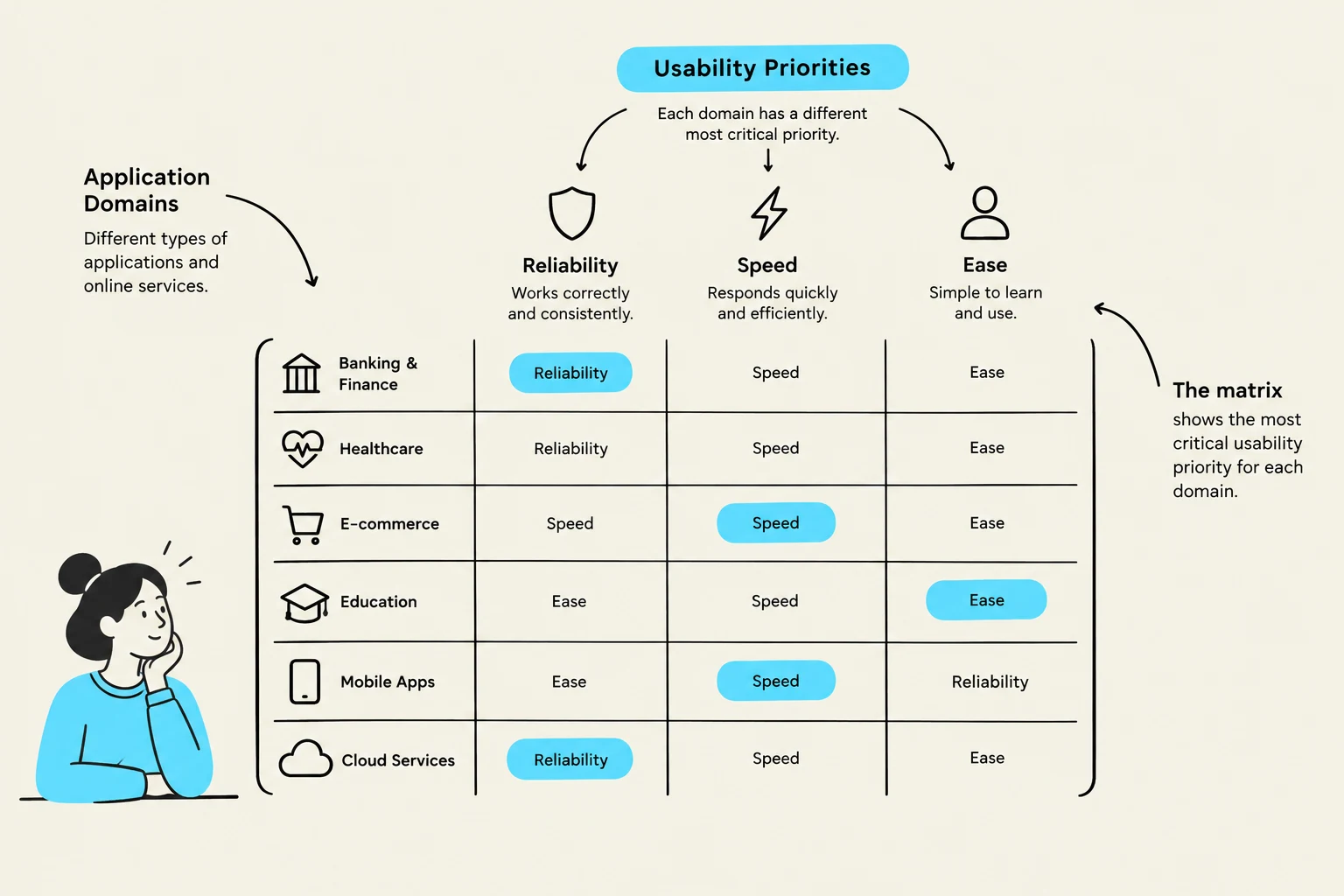
To move from subjective design to objective engineering, designers focus on several key pillars of usability.
Reliability and Security
A system must be reliable to earn and maintain user trust. This means that actions must function exactly as specified and that the data displayed must accurately reflect the underlying database. Furthermore, reliability involves ensuring the system is available when needed and does not introduce errors. In modern computing, reliability is inextricably linked to security: designers must protect user privacy and data against unauthorized access, destruction, or malicious tampering.
Keep reading for free.
Create an account to finish this reading and make it part of your study routine.
Continue reading freeAlready have an account? Log in
Updated