


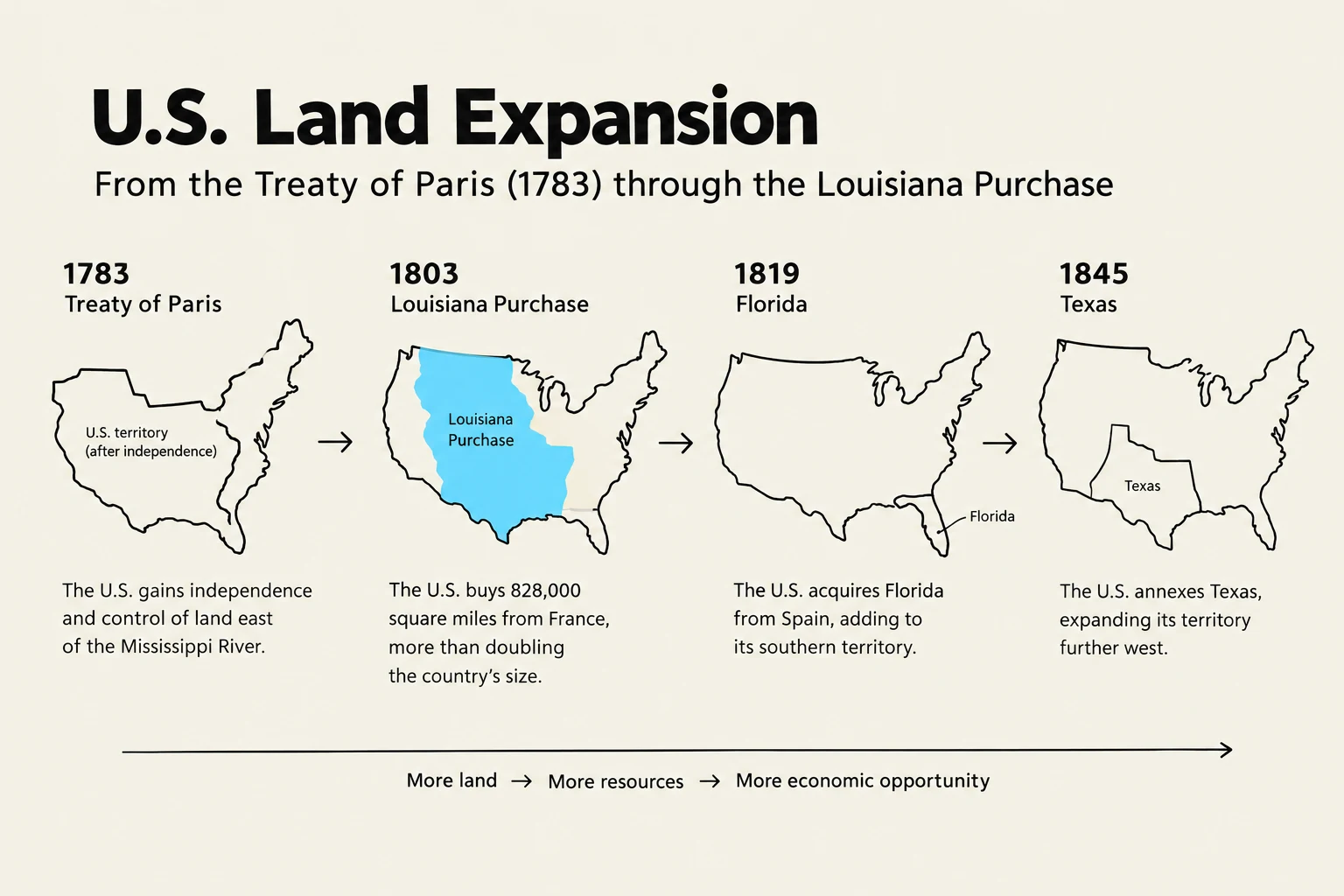
The economic history of the United States is a story of transformation. It began with a focus on extensive growth—expanding the nation's physical footprint through land acquisition—and evolved into a complex system of domestic industry and integrated trade networks. This transition was not accidental; it was driven by a combination of robust legal institutions, strategic responses to international conflict, and massive demographic shifts.
The Constitutional Foundation of Economic Stability
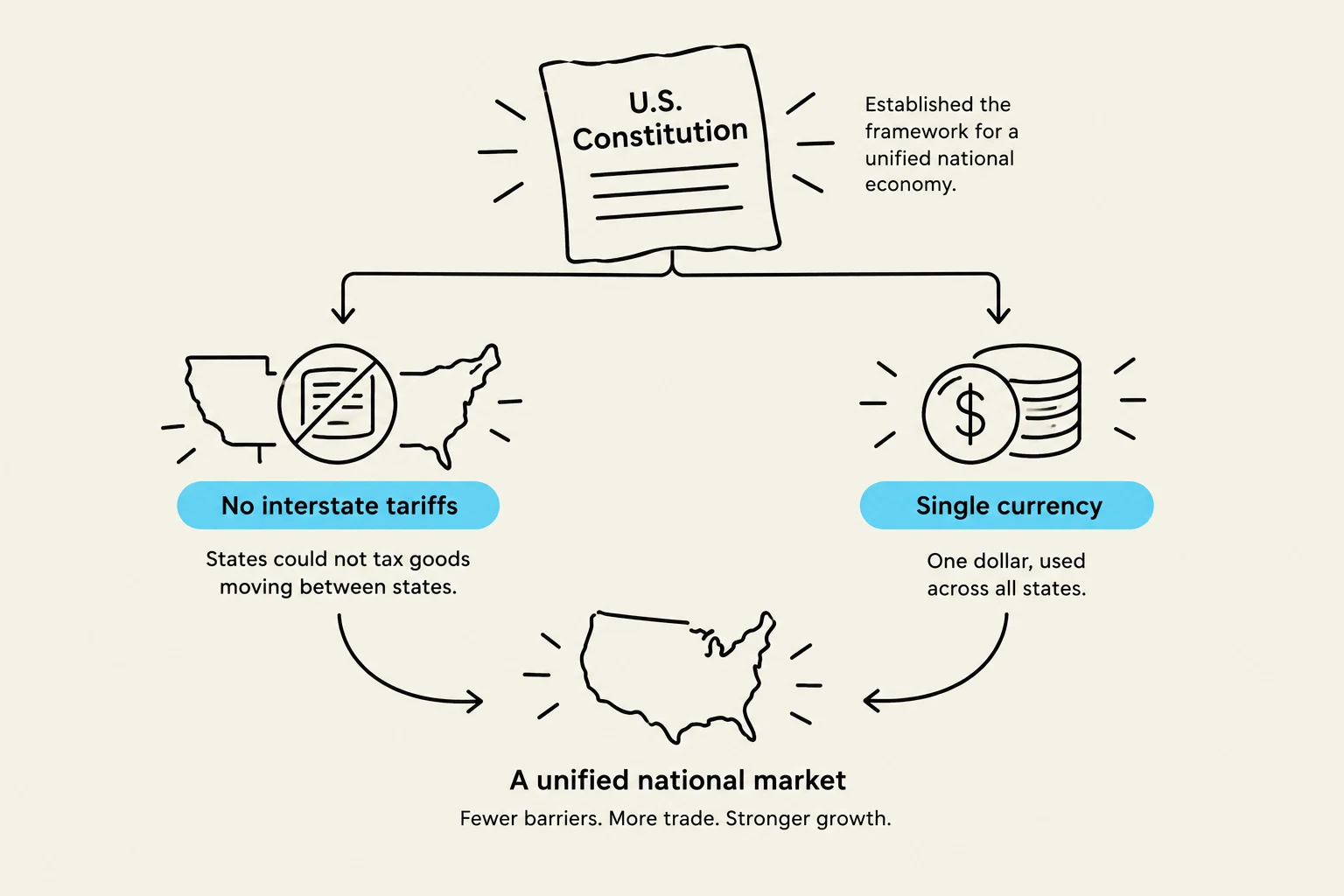
A primary driver of early American economic growth was the establishment of the U.S. Constitution, which provided the institutional framework necessary for a stable and predictable market. Before a unified national economy could flourish, the government had to address the chaos of fragmented state systems.
Key constitutional contributions included:
- Elimination of Tariffs Between States: By preventing states from taxing one another, the Constitution created a unified national market.
- Single Currency: A unified monetary system reduced transaction costs and facilitated trade across state lines.
- Protection of Property Rights: The establishment of reliable courts and a strong military ensured that contracts were honored and property was secure.
- Infrastructure Funding: The provision for funding large-scale projects allowed for the physical connection of distant markets.
Exam Tip: If asked which aspects of the Constitution encouraged growth, remember these four pillars: no interstate tariffs, a single currency, property rights/courts/military, and infrastructure funding.
Trade, Conflict, and the Rise of Domestic Industry
In its early years, the United States capitalized on European geopolitical instability. During various European wars, the U.S. engaged in re-exporting, trading with both Britain and France. This practice led to a massive surge in both imports and exports, which significantly bolstered the American shipping industry. However, this boom came with a cost: the high volume of international trade increased shipping prices for domestic American producers.
Keep reading for free.
Create an account to finish this reading and make it part of your study routine.
Continue reading freeAlready have an account? Log in
Updated