


The upper respiratory tract serves as the critical gateway for air entering the body, encompassing structures from the nasal cavity through the pharynx and larynx. Because these structures are exposed to the external environment, they are highly susceptible to inflammation, infection, and physical obstructions. Understanding the progression from mild inflammation to life-threatening airway obstruction is essential for clinical assessment and rapid intervention.
Nasal Polyps and Sinus Obstruction
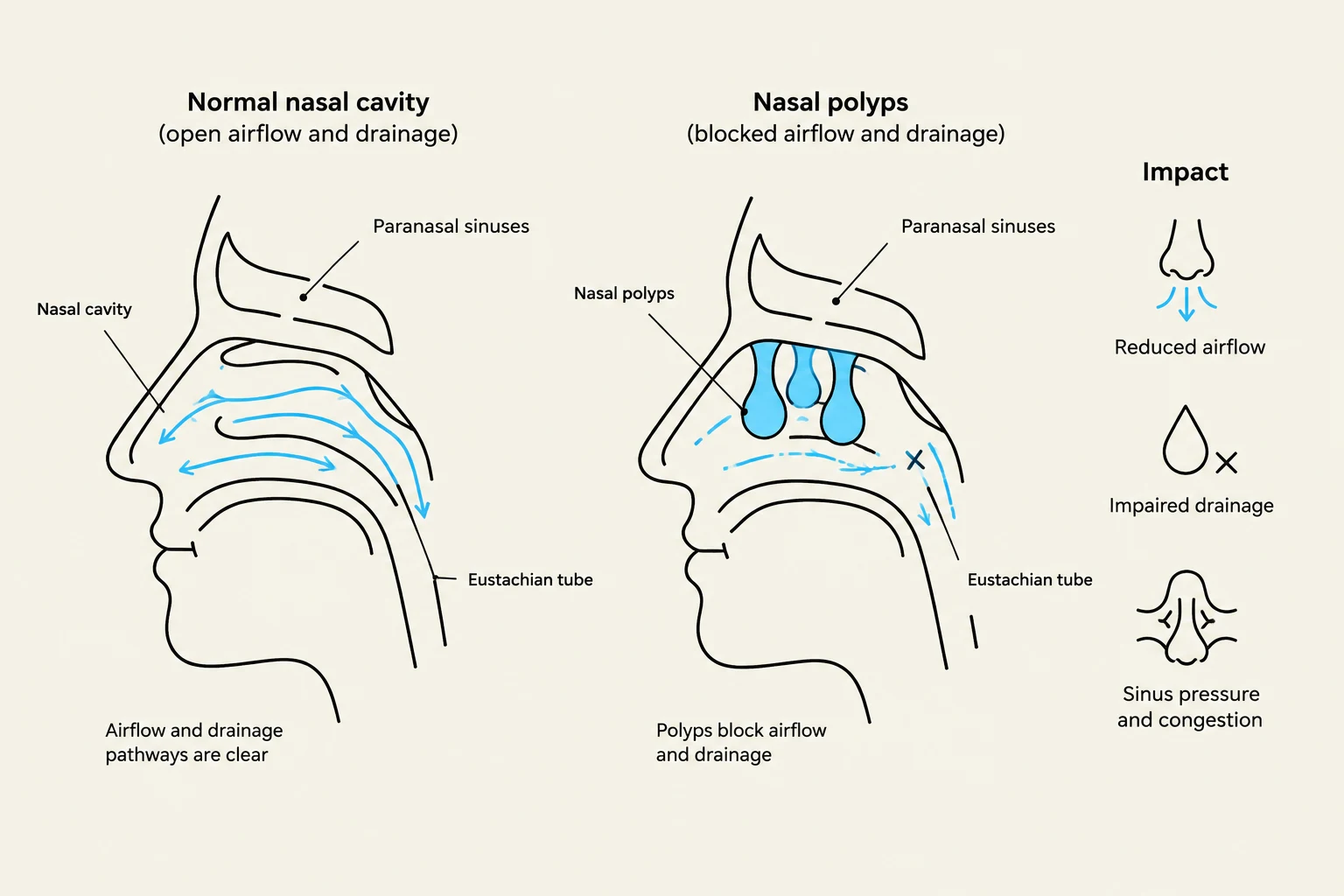
Inflammation of the nasal mucosa can lead to various complications, including the development of nasal polyps. These are benign growths that typically arise from chronic inflammation. While they are not cancerous, their size and location can significantly impact a patient's quality of life and respiratory function.
Large nasal polyps can cause physical obstruction of the nasal passages, leading to persistent discharge, difficulty breathing through the nose, and even speech distortion. Management of these polyps often involves the use of corticosteroids to reduce swelling, though surgical interventions such as endoscopic or laser surgery may be required for larger growths.
Pharyngeal Inflammation: Pharyngitis and Peritonsillar Abscess
The pharynx—comprising the tonsils, palate, and uvula—is a frequent site of inflammation known as pharyngitis. The etiology of pharyngitis is diverse: approximately 90% of cases are viral, while others may be bacterial (such as "strep throat"), fungal (candidiasis), or caused by environmental irritants like dry air, smoking, or GERD.
Clinical manifestations vary based on the cause:
- Bacterial Pharyngitis: Often presents with a fever greater than 38∘C, enlarged cervical lymph nodes, and pharyngeal exudate, notably without a cough.
- Fungal Pharyngitis: Characterized by the presence of white patches in the throat.
If left untreated, particularly in cases of bacterial infection caused by group A β-hemolytic streptococci, a more severe complication can occur: the peritonsillar abscess. This is a collection of pus that causes intense pain, swelling, and potential blockage of the throat. Patients may present with a "muffled voice," high fever, and difficulty swallowing. This condition is a serious escalation that may require needle aspiration, drainage, or even an emergency tonsillectomy.
Clinical Note: When managing pharyngitis, it is vital to distinguish between viral and bacterial causes. Viral cases require only symptom relief (e.g., warm saltwater gargles, lozenges), whereas bacterial cases require targeted antibiotics, such as penicillin for strep throat.
Laryngeal Issues: Polyps and Laryngitis
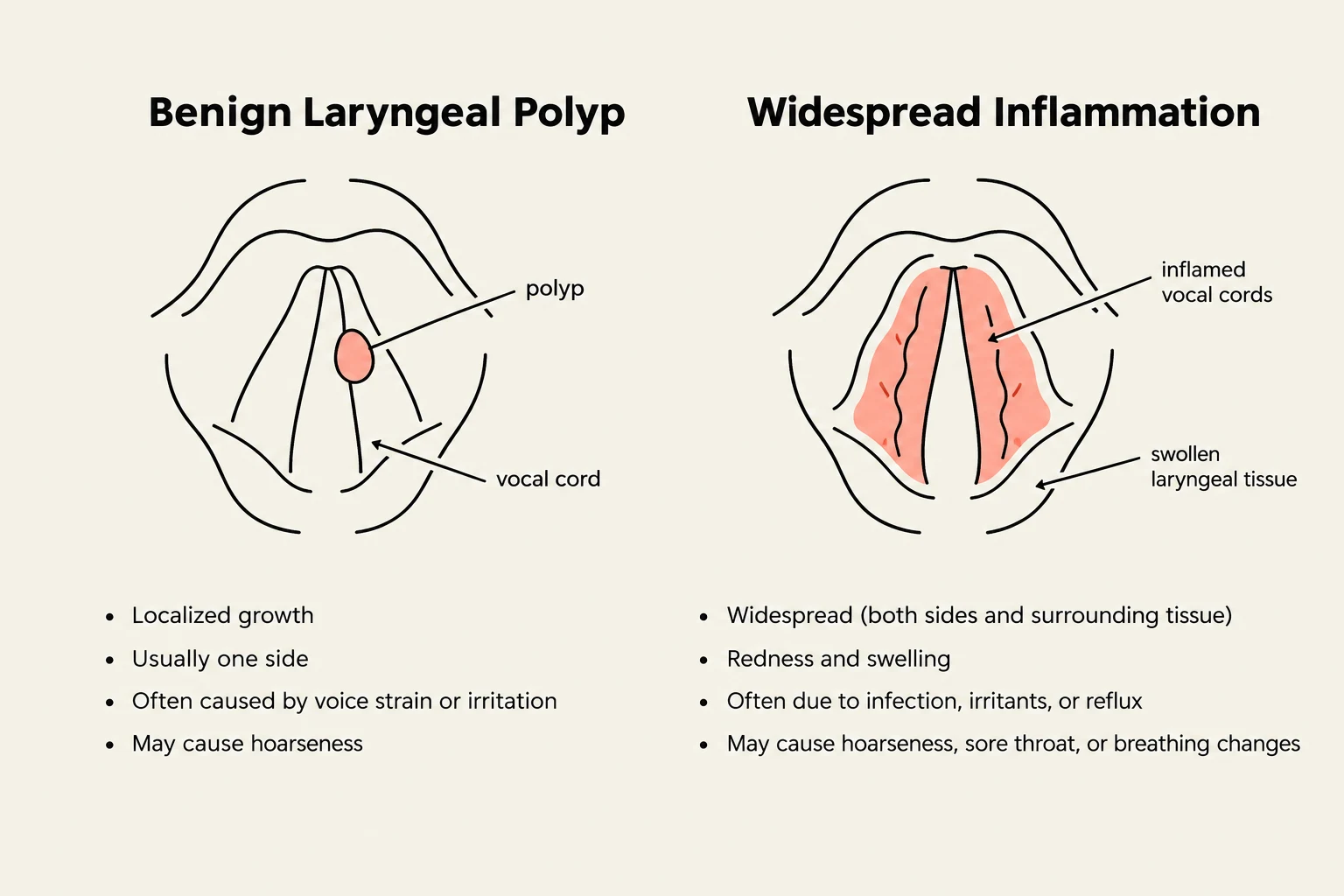
The larynx, or voice box, is highly sensitive to both infection and mechanical irritation. Laryngeal polyps are benign growths on the vocal cords often resulting from vocal abuse or chronic irritation. The most common symptom is hoarseness, but larger polyps can progress to cause dysphagia (difficulty swallowing), dyspnea (difficulty breathing), and stridor.
Acute laryngitis involves the inflammation of the larynx itself, often triggered by viruses, upper respiratory infections, or the inhalation of smoke and chemicals. Patients typically report a tingling or burning sensation in the back of the throat, a constant need to clear the throat, and a loss of voice.
Treatment for acute laryngitis focuses on vocal rest—specifically avoiding whispering, which can actually increase strain—and hydration.
Airway Obstruction: A Medical Emergency
The most critical complication of upper respiratory inflammation or growth is airway obstruction. This can be a partial or complete blockage of the respiratory passage and represents a profound medical emergency.
A patient experiencing airway obstruction may exhibit:
- Stridor (a high-pitched wheezing sound)
- Use of accessory muscles for breathing
- Suprasternal and intercostal retractions
- Nasal flaring and cyanosis (bluish skin discoloration)
- Restlessness and changes in the level of consciousness (LOC)
CRITICAL ALERT: Airway obstruction can lead to brain damage or death within 3 to 5 minutes. Immediate intervention is mandatory.
Interventions to establish a patent (open) airway include the Heimlich maneuver for foreign body obstruction, or more invasive medical procedures such as endotracheal (ET) intubation, cricothyroidectomy, or a tracheostomy.
![A flowchart depicting the emergency escalation of airway management, from the Heimlich maneuver to invasive procedures like tracheostomy](sf-read-illust:wjnrvddxiyi5jrhirjrtymavlw4fuxhirjrtymavlw4fuxhirjrtymavlw4fuxhirjrtymavlw4fuxhirjrtymavlw4fuxhirjrtymavlw4fuxhirjrtymavlw4fuxhirjrtymavlw4fuxhirjrtymavlw4fuxhirjrtymavlw4fuxhirjrtymavlw4fuxhirjrtymavlw4fuxhirjrtymavlw4fuxhirjrtymavlw4fuxhirjrtymavlw4fuxhirjrtymavlw4fuxhirjrtymavlw4fuxhirjrtymavlw4fuxhirjrtymavlw4fuxhirjrtymavlw4fuxhirjrtymavlw4fuxhirjrtymavlw4fuxhirjrtymavlw4fuxhirjrtymavlw4fuxhirjrtymavlw4fuxhirjrtymavlw4fuxhirjrtymavlw4fuxhirjrtymavlw4fuxhirjrtymavlw4fuxhirjrtymavlw4fuxhirjrtymavlw4fuxhirjrtymavlw4fuxhirjrtymavlw4fuxhirjrtymavlw4fuxhirjrtymavlw4fuxhirjrtymavlw4fuxhirjrtymavlw4fuxhirjrtymavlw4fuxhirjrtymavlw4fuxhirjrtymavlw4fuxhirjrtymavlw4fuxhirjrtymavlw4fuxhirjrtymavlw4fuxhirjrtymavlw4fuxhirjrtymavlw4fuxhirjrtymavlw4fuxhirjrtymavlw4fuxhirjrtymavlw4fuxhirjrtymavlw4fuxhirjrtymavlw4fuxhirjrtymavlw4fuxhirjrtymavlw4fuxhirjrtymavlw4fuxhirjrtymavlw4fuxhirjrtymavlw4fuxhirjrtymavlw4fuxhirjrtymavlw4fuxhirjrtymavlw4fuxhirjrtymavlw4fuxhirjrtymavlw4fuxhirjrtymavlw4fuxhirjrtymavlw4fuxhirjrtymavlw4fuxhirjrtymavlw4fuxhirjrtymavlw4fuxhirjrtymavlw4fuxhirjrtymavlw4fuxhirjrtymavlw4fuxhirjrtymavlw4fuxhirjrtymavlw4fuxhirjrtymavlw4fuxhirjrtymavlw4fuxhirjrtymavlw4fuxhirjrtymavlw4fuxhirjrtymavlw4fuxhirjrtymavlw4fuxhirjrtymavlw4fuxhirjrtymavlw4fuxhirjrtymavlw4fuxhirjrtymavlw4fuxhirjrtymavlw4fuxhirjrtymavlw4fuxhirjrtymavlw4fuxhirjrtymavlw4fuxhirjrtymavlw4fuxhirjrtymavlw4fuxhirjrtymavlw4fuxhirjrtymavlw4fuxhirjrtymavlw4fuxhirjrtymavlw4fuxhirjrtymavlw4fuxhirjrtymavlw4fuxhirjrtymavlw4fuxhirjrtymavlw4fuxhirjrtymavlw4fuxhirjrtymavlw4fuxhirjrtymavlw4fuxhirjrtymavlw4fuxhirjrtymavlw4fuxhirjrtymavlw4fuxhirjrtymavlw4fuxhirjrtymavlw4fuxhirjrtymavlw4fuxhirjrtymavlw4fuxhirjrtymavlw4fuxhirjrtymavlw4fuxhirjrtymavlw4fuxhirjrtymavlw4fuxhirjrtymavlw4fuxhirjrtymavlw4fuxhirjrtymavlw4fuxhirjrtymavlw4fuxhirjrtymavlw4fuxhirjrtymavlw4fuxhirjrtymavlw4fuxhirjrtymavlw4fuxhirjrtymavlw4fuxhirjrtymavlw4fuxhirjrtymavlw4fuxhirjrtymavlw4fuxhirjrtymavlw4fuxhirjrtymavlw4fuxhirjrtymavlw4fuxhirjrtymavlw4fuxhirjrtymavlw4fuxhirjrtymavlw4fuxhirjrtymavlw4fuxhirjrtymavlw4fuxhirjrtymavlw4fuxhirjrtymavlw4fuxhirjrtymavlw4fuxhirjrtymavlw4fuxhirjrtymavlw4fuxhirjrtymavlw4fuxhirjrtymavlw4fuxhirjrtymavlw4fuxhirjrtymavlw4fuxhirjrtymavlw4fuxhirjrtymavlw4fuxhirjrtymavlw4fuxhirjrtymavlw4fuxhirjrtymavlw4fuxhirjrtymavlw4fuxhirjrtymavlw4fuxhirjrtymavlw4fuxhirjrtymavlw4fuxhirjrtymavlw4fuxhirjrtymavlw4fuxhirjrtymavlw4fuxhirjrtymavlw4fuxhirjrtymavlw4fuxhirjrtymavlw4fuxhirjrtymavlw4fuxhirjrtymavlw4fuxhirjrtymavlw4fuxhirjrtymavlw4fuxhirjrtymavlw4fuxhirjrtymavlw4fuxhirjrtymavlw4fuxhirjrtymavlw4fuxhirjrtymavlw4fuxhirjrtymavlw4fuxhirjrtymavlw4fuxhirjrtymavlw4fuxhirjrtymavlw4fuxhirjrtymavlw4fuxhirjrtymavlw4fuxhirjrtymavlw4fuxhirjrtymavlw4fuxhirjrtymavlw4fuxhirjrtymavlw4fuxhirjrtymavlw4fuxhirjrtymavlw4fuxhirjrtymavlw4fuxhirjrtymavlw4fuxhirjrtymavlw4fuxhirjrtymavlw4fuxhirjrtymavlw4fuxhirjrtymavlw4fuxhirjrtymavlw4fuxhirjrtymavlw4fuxhirjrtymavlw4fuxhirjrtymavlw4fuxhirjrtymavlw4fuxhirjrtymavlw4fuxhirjrtymavlw4fuxhirjrtymavlw4fuxhirjrtymavlw4fuxhirjrtymavlw4fuxhirjrtymavlw4fuxhirjrtymavlw4fuxhirjrtymavlw4fuxhirjrtymavlw4fuxhirjrtymavlw4fuxhirjrtymavlw4fuxhirjrtymavlw4fuxhirjrtymavlw4fuxhirjrtymavlw4fuxhirjrtymavlw4fuxhirjrtymavlw4fuxhirjrtymavlw4fuxhirjrtymavlw4fuxhirjrtymavlw4fuxhirjrtymavlw4fuxhirjrtymavlw4fuxhirjrtymavlw4fuxhirjrtymavlw4fuxhirjrtymavlw4fuxhirjrtymavlw4fuxhirjrtymavlw4fuxhirjrtymavlw4fuxhirjrtymavlw4fuxhirjrtymavlw4fuxhirjrtymavlw4fuxhirjrtymavlw4fuxhirjrtymavlw4fuxhirjrtymavlw4fuxhirjrtymavlw4fuxhirjrtymavlw4fuxhirjrtymavlw4fuxhirjrtymavlw4fuxhirjrtymavlw4fuxhirjrtymavlw4fuxhirjrtymavlw4fuxhirjrtymavlw4fuxhirjrtymavlw4fuxhirjrtymavlw4fuxhirjrtymavlw4fuxhirjrtymavlw4fuxhirjrtymavlw4fuxhirjrtymavlw4fuxhirjrtymavlw4fuxhirjrtymavlw4fuxhirjrtymavlw4fuxhirjrtymavlw4fuxhirjrtymavlw4fuxhirjrtymavlw4fuxhirjrtymavlw4fuxhirjrtymavlw4fuxhirjrtymavlw4fuxhirjrtymavlw4fuxhirjrtymavlw4fuxhirjrtymavlw4fuxhirjrtymavlw4fuxhirjrtymavlw4fuxhirjrtymavlw4fuxhirjrtymavlw4fuxhirjrtymavlw4fuxhirjrtymavlw4fuxhirjrtymavlw4fuxhirjrtymavlw4fuxhirjrtymavlw4fuxhirjrtymavlw4fuxhirjrtymavlw4fuxhirjrtymavlw4fuxhirjrtymavlw4fuxhirjrtymavlw4fuxhirjrtymavlw4fuxhirjrtymavlw4fuxhirjrtymavlw4fuxhirjrtymavlw4fuxhirjrtymavlw4fuxhirjrtymavlw4fuxhirjrtymavlw4fuxhirjrtymavlw4fuxhirjrtymavlw4fuxhirjrtymavlw4fuxhirjrtymavlw4fuxhirjrtymavlw4fuxhirjrtymavlw4fuxhirjrtymavlw4fuxhirjrtymavlw4fuxhirjrtymavlw4fuxhirjrtymavlw4fuxhirjrtymavlw4fuxhirjrtymavlw4fuxhirjrtymavlw4fuxhirjrtymavlw4fuxhirjrtymavlw4fuxhirjrtymavlw4fuxhirjrtymavlw4fuxhirjrtymavlw4fuxhirjrtymavlw4fuxhirjrtymavlw4fuxhirjrtymavlw4fuxhirjrtymavlw4fuxhirjrtymavlw4fuxhirjrtymavlw4fuxhirjrtymavlw4fuxhirjrtymavlw4fuxhirjrtymavlw4fuxhirjrtymavlw4fuxhirjrtymavlw4fuxhirjrtymavlw4fuxhirjrtymavlw4fuxhirjrtymavlw4fuxhirjrtymavlw4fuxhirjrtymavlw4fuxhirjrtymavlw4fuxhirjrtymavlw4fuxhirjrtymavlw4fuxhirjrtymavlw4fuxhirjrtymavlw4fuxhirjrtymavlw4fuxhirjrtymavlw4fuxhirjrtymavlw4fuxhirjrtymavlw4fuxhirjrtymavlw4fuxhirjrtymavlw4fuxhirjrtymavlw4fuxhirjrtymavlw4fuxhirjrtymavlw4fuxhirjrtymavlw4fuxhirjrtymavlw4fuxhirjrtymavlw4fuxhirjrtymavlw4fuxhirjrtymavlw4fuxhirjrtymavlw4fuxhirjrtymavlw4fuxhirjrtymavlw4fuxhirjrtymavlw4fuxhirjrtymavlw4fuxhirjrtymavlw4fuxhirjrtymavlw4fuxhirjrtymavlw4fuxhirjrtymavlw4fuxhirjrtymavlw4fuxhirjrtymavlw4fuxhirjrtymavlw4fuxhirjrtymavlw4fuxhirjrtymavlw4fuxhirjrtymavlw4fuxhirjrtymavlw4fuxhirjrtymavlw4fuxhirjrtymavlw4fuxhirjrtymavlw4fuxhirjrtymavlw4fuxhirjrtymavlw4fuxhirjrtymavlw4fuxhirjrtymavlw4fuxhirjrtymavlw4fuxhirjrtymavlw4fuxhirjrtymavlw4fuxhirjrtymavlw4fuxhirjrtymavlw4fuxhirjrtymavlw4fuxhirjrtymavlw4fuxhirjrtymavlw4fuxhirjrtymavlw4fuxhirjrtymavlw4fuxhirjrtymavlw4fuxhirjrtymavlw4fuxhirjrtymavlw4fuxhirjrtymavlw4fuxhirjrtymavlw4fuxhirjrtymavlw4fuxhirjrtymavlw4fuxhirjrtymavlw4fuxhirjrtymavlw4fuxhirjrtymavlw4fuxhirjrtymavlw4fuxhirjrtymavlw4fuxhirjrtymavlw4fuxhirjrtymavlw4fuxhirjrtymavlw4fuxhirjrtymavlw4fuxhirjrtymavlw4fuxhirjrtymavlw4fuxhirjrtymavlw4fuxhirjrtymavlw4fuxhirjrtymavlw4fuxhirjrtymavlw4fuxhirjrtymavlw4fuxhirjrtymavlw4fuxhirjrtymavlw4fuxhirjrtymavlw4fuxhirjrtymavlw4fuxhirjrtymavlw4fuxhirjrtymavlw4fuxhirjrtymavlw4fuxhirjrtymavlw4fuxhirjrtymavlw4fuxhirjrtymavlw4fuxhirjrtymavlw4fuxhirjrtymavlw4fuxhirjrtymavlw4fuxhirjrtymavlw4fuxhirjrtymavlw4fuxhirjrtymavlw4fuxhirjrtymavlw4fuxhirjrtymavlw4fuxhirjrtymavlw4fuxhirjrtymavlw4fuxhirjrtymavlw4fuxhirjrtymavlw4fuxhirjrtymavlw4fuxhirjrtymavlw4fuxhirjrtymavlw4fuxhirjrtymavlw4fuxhirjrtymavlw4fuxhirjrtymavlw4fuxhirjrtymavlw4fuxhirjrtymavlw4fuxhirjrtymavlw4fuxhirjrtymavlw4fuxhirjrtymavlw4fuxhirjrtymavlw4fuxhirjrtymavlw4fuxhirjrtymavlw4fuxhirjrtymavlw4fuxhirjrtymavlw4fuxhirjrtymavlw4fuxhirjrtymavlw4fuxhirjrtymavlw4fuxhirjrtymavlw4fuxhirjrtymavlw4fuxhirjrtymavlw4fuxhirjrtymavlw4fuxhirjrtymavlw4fuxhirjrtymavlw4fuxhirjrtymavlw4fuxhirjrtymavlw4fuxhirjrtymavlw4fuxhirjrtymavlw4fuxhirjrtymavlw4fuxhirjrtymavlw4fuxhirjrtymavlw4fuxhirjrtymavlw4fuxhirjrtymavlw4fuxhirjrtymavlw4fuxhirjrtymavlw4fuxhirjrtymavlw4fuxhirjrtymavlw4fuxhirjrtymavlw4fuxhirjrtymavlw4fuxhirjrtymavlw4fuxhirjrtymavlw4fuxhirjrtymavlw4fuxhirjrtymavlw4fuxhirjrtymavlw4fuxhirjrtymavlw4fuxhirjrtymavlw4fuxhirjrtymavlw4fuxhirjrtymavlw4fuxhirjrtymavlw4fuxhirjrtymavlw4fuxhirjrtymavlw4fuxhirjrtymavlw4fuxhirjrtymavlw4fuxhirjrtymavlw4fuxhirjrtymavlw4fuxhirjrtymavlw4fuxhirjrtymavlw4fuxhirjrtymavlw4fuxhirjrtymavlw4fuxhirjrtymavlw4fuxhirjrtymavlw4fuxhirjrtymavlw4fuxhirjrtymavlw4fuxhirjrtymavlw4fuxhirjrtymavlw4fuxhirjrtymavlw4fuxhirjrtymavlw4fuxhirjrtymavlw4fuxhirjrtymavlw4fuxhirjrtymavlw4fuxhirjrtymavlw4fuxhirjrtymavlw4fuxhirjrtymavlw4fuxhirjrtymavlw4fuxhirjrtymavlw4fuxhirjrtymavlw4fuxhirjrtymavlw4fuxhirjrtymavlw4fuxhirjrtymavlw4fuxhirjrtymavlw4fuxhirjrtymavlw4fuxhirjrtymavlw4fuxhirjrtymavlw4fuxhirjrtymavlw4fuxhirjrtymavlw4fuxhirjrtymavlw4fuxhirjrtymavlw4fuxhirjrtymavlw4fuxhirjrtymavlw4fuxhirjrtymavlw4fuxhirjrtymavlw4fuxhirjrtymavlw4fuxhirjrtymavlw4fuxhirjrtymavlw4fuxhirjrtymavlw4fuxhirjrtymavlw4fuxhirjrtymavlw4fuxhirjrtymavlw4fuxhirjrtymavlw4fuxhirjrtymavlw4fuxhirjrtymavlw4fuxhirjrtymavlw4fuxhirjrtymavlw4fuxhirjrtymavlw4fuxhirjrtymavlw4fuxhirjrtymavlw4fuxhirjrtymavlw4fuxhirjrtymavlw4fuxhirjrtymavlw4fuxhirjrtymavlw4fuxhirjrtymavlw4fuxhirjrtymavlw4fuxhirjrtymavlw4fuxhirjrtymavlw4fuxhirjrtymavlw4fuxhirjrtymavlw4fuxhirjrtymavlw4fuxhirjrtymavlw4fuxhirjrtymavlw4fuxhirjrtymavlw4fuxhirjrtymavlw4fuxhirjrtymavlw4fuxhirjrtymavlw4fuxhirjrtymavlw4fuxhirjrtymavlw4fuxhirjrtymavlw4fuxhirjrtymavlw4fuxhirjrtymavlw4fuxhirjrtymavlw4fuxhirjrtymavlw4fuxhirjrtymavlw4fuxhirjrtymavlw4fuxhirjrtymavlw4fuxhirjrtymavlw4fuxhirjrtymavlw4fuxhirjrtymavlw4fuxhirjrtymavlw4fuxhirjrtymavlw4fuxhirjrtymavlw4fuxhirjrtymavlw4fuxhirjrtymavlw4fuxhirjrtymavlw4fuxhirjrtymavlw4fuxhirjrtymavlw4fuxhirjrtymavlw4fuxhirjrtymavlw4fuxhirjrtymavlw4fuxhirjrtymavlw4fuxhirjrtymavlw4fuxhirjrtymavlw4fuxhirjrtymavlw4fuxhirjrtymavlw4fuxhirjrtymavlw4fuxhirjrtymavlw4fuxhirjrtymavlw4fuxhirjrtymavlw4fuxhirjrtymavlw4fuxhirjrtymavlw4fuxhirjrtymavlw4fuxhirjrtymavlw4fuxhirjrtymavlw4fuxhirjrtymavlw4fuxhirjrtymavlw4fuxhirjrtymavlw4fuxhirjrtymavlw4fuxhirjrtymavlw4fuxhirjrtymavlw4fuxhirjrtymavlw4fuxhirjrtymavlw4fuxhirjrtymavlw4fuxhirjrtymavlw4fuxhirjrtymavlw4fuxhirjrtymavlw4fuxhirjrtymavlw4fuxhirjrtymavlw4fuxhirjrtymavlw4fuxhirjrtymavlw4fuxhirjrtymavlw4fuxhirjrtymavlw4fuxhirjrtymavlw4fuxhirjrtymavlw4fuxhirjrtymavlw4fuxhirjrtymavlw4fuxhirjrtymavlw4fuxhirjrtymavlw4fuxhirjrtymavlw4fuxhirjrtymavlw4fuxhirjrtymavlw4fuxhirjrtymavlw4fuxhirjrtymavlw4fuxhirjrtymavlw4fuxhirjrtymavlw4fuxhirjrtymavlw4fuxhirjrtymavlw4fuxhirjrtymavlw4fuxhirjrtymavlw4fuxhirjrtymavlw4fuxhirjrtymavlw4fuxhirjrtymavlw4fuxhirjrtymavlw4fuxhirjrtymavlw4fuxhirjrtymavlw4fuxhirjrtymavlw4fuxhirjrtymavlw4fuxhirjrtymavlw4fuxhirjrtymavlw4fuxhirjrtymavlw4fuxhirjrtymavlw4fuxhirjrtymavlw4fuxhirjrtymavlw4fuxhirjrtymavlw4fuxhirjrtymavlw4fuxhirjrtymavlw4fuxhirjrtymavlw4fuxhirjrtymavlw4fuxhirjrtymavlw4fuxhirjrtymavlw4fuxhirjrtymavlw4fuxhirjrtymavlw4fuxhirjrtymavlw4fuxhirjrtymavlw4fuxhirjrtymavlw4fuxhirjrtymavlw4fuxhirjrtymavlw4fuxhirjrtymavlw4fuxhirjrtymavlw4fuxhirjrtymavlw4fuxhirjrtymavlw4fuxhirjrtymavlw4fuxhirjrtymavlw4fuxhirjrtymavlw4fuxhirjrtymavlw4fuxhirjrtymavlw4fuxhirjrtymavlw4fuxhirjrtymavlw4fuxhirjrtymavlw4fuxhirjrtymavlw4fuxhirjrtymavlw4fuxhirjrtymavlw4fuxhirjrtymavlw4fuxhirjrtymavlw4fuxhirjrtymavlw4fuxhirjrtymavlw4fuxhirjrtymavlw4fuxhirjrtymavlw4fuxhirjrtymavlw4fuxhirjrtymavlw4fuxhirjrtymavlw4fuxhirjrtymavlw4fuxhirjrtymavlw4fuxhirjrtymavlw4fuxhirjrtymavlw4fuxhirjrtymavlw4fuxhirjrtymavlw4fuxhirjrtymavlw4fuxhirjrtymavlw4fuxhirjrtymavlw4fuxhirjrtymavlw4fuxhirjrtymavlw4fuxhirjrtymavlw4fuxhirjrtymavlw4fuxhirjrtymavlw4fuxhirjrtymavlw4fuxhirjrtymavlw4fuxhirjrtymavlw4fuxhirjrtymavlw4fuxhirjrtymavlw4fuxhirjrtymavlw4fuxhirjrtymavlw4fuxhirjrtymavlw4fuxhirjrtymavlw4fuxhirjrtymavlw4fuxhirjrtymavlw4fuxhirjrtymavlw4fuxhirjrtymavlw4fuxhirjrtymavlw4fuxhirjrtymavlw4fuxhirjrtymavlw4fuxhirjrtymavlw4fuxhirjrtymavlw4fuxhirjrtymavlw4fuxhirjrtymavlw4fuxhirjrtymavlw4fuxhirjrtymavlw4fuxhirjrtymavlw4fuxhirjrtymavlw4fuxhirjrtymavlw4fuxhirjrtymavlw4fuxhirjrtymavlw4fuxhirjrtymavlw4fuxhirjrtymavlw4fuxhirjrtymavlw4fuxhirjrtymavlw4fuxhirjrtymavlw4fuxhirjrtymavlw4fuxhirjrtymavlw4fuxhirjrtymavlw4fuxhirjrtymavlw4fuxhirjrtymavlw4fuxhirjrtymavlw4fuxhirjrtymavlw4fuxhirjrtymavlw4fuxhirjrtymavlw4fuxhirjrtymavlw4fuxhirjrtymavlw4fuxhirjrtymavlw4fuxhirjrtymavlw4fuxhirjrtymavlw4fuxhirjrtymavlw4fuxhirjrtymavlw4fuxhirjrtymavlw4fuxhirjrtymavlw4fuxhirjrtymavlw4fuxhirjrtymavlw4fuxhirjrtymavlw4fuxhirjrtymavlw4fuxhirjrtymavlw4fuxhirjrtymavlw4fuxhirjrtymavlw4fuxhirjrtymavlw4fuxhirjrtymavlw4fuxhirjrtymavlw4fuxhirjrtymavlw4fuxhirjrtymavlw4fuxhirjrtymavlw4fuxhirjrtymavlw4fuxhirjrtymavlw4fuxhirjrtymavlw4fuxhirjrtymavlw4fuxhirjrtymavlw4fuxhirjrtymavlw4fuxhirjrtymavlw4fuxhirjrtymavlw4fuxhirjrtymavlw4fuxhirjrtymavlw4fuxhirjrtymavlw4fuxhirjrtymavlw4fuxhirjrtymavlw4fuxhirjrtymavlw4fuxhirjrtymavlw4fuxhirjrtymavlw4fuxhirjrtymavlw4fuxhirjrtymavlw4fuxhirjrtymavlw4fuxhirjrtymavlw4fuxhirjrtymavlw4fuxhirjrtymavlw4fuxhirjrtymavlw4fuxhirjrtymavlw4fuxhirjrtymavlw4fuxhirjrtymavlw4fuxhirjrtymavlw4fuxhirjrtymavlw4fuxhirjrtymavlw4fuxhirjrtymavlw4fuxhirjrtymavlw4fuxhirjrtymavlw4fuxhirjrtymavlw4fuxhirjrtymavlw4fuxhirjrtymavlw4fuxhirjrtymavlw4fuxhirjrtymavlw4fuxhirjrtymavlw4fuxhirjrtymavlw4fuxhirjrtymavlw4fuxhirjrtymavlw4fuxhirjrtymavlw4fuxhirjrtymavlw4fuxhirjrtymavlw4fuxhirjrtymavlw4fuxhirjrtymavlw4fuxhirjrtymavlw4fuxhirjrtymavlw4fuxhirjrtymavlw4fuxhirjrtymavlw4fuxhirjrtymavlw4fuxhirjrtymavlw4fuxhirjrtymavlw4fuxhirjrtymavlw4fuxhirjrtymavlw4fuxhirjrtymavlw4fuxhirjrtymavlw4fuxhirjrtymavlw4fuxhirjrtymavlw4fuxhirjrtymavlw4fuxhirjrtymavlw4fuxhirjrtymavlw4fuxhirjrtymavlw4fuxhirjrtymavlw4fuxhirjrtymavlw4fuxhirjrtymavlw4fuxhirjrtymavlw4fuxhirjrtymavlw4fuxhirjrtymavlw4fuxhirjrtymavlw4fuxhirjrtymavlw4fuxhirjrtymavlw4fuxhirjrtymavlw4fuxhirjrtymavlw4fuxhirjrtymavlw4fuxhirjrtymavlw4fuxhirjrtymavlw4fuxhirjrtymavlw4fuxhirjrtymavlw4fuxhirjrtymavlw4fuxhirjrtymavlw4fuxhirjrtymavlw4fuxhirjrtymavlw4fuxhirjrtymavlw4fuxhirjrtymavlw4fuxhirjrtymavlw4fuxhirjrtymavlw4fuxhirjrtymavlw4fuxhirjrtymavlw4fuxhirjrtymavlw4fuxhirjrtymavlw4fuxhirjrtymavlw4fuxhirjrtymavlw4fuxhirjrtymavlw4fuxhirjrtymavlw4fuxhirjrtymavlw4fuxhirjrtymavlw4fuxhirjrtymavlw4fuxhirjrtymavlw4fuxhirjrtymavlw4fuxhirjrtymavlw4fuxhirjrtymavlw4fuxhirjrtymavlw4fuxhirjrtymavlw4fuxhirjrtymavlw4fuxhirjrtymavlw4fuxhirjrtymavlw4fuxhirjrtymavlw4fuxhirjrtymavlw4fuxhirjrtymavlw4fuxhirjrtymavlw4fuxhirjrtymavlw4fuxhirjrtymavlw4fuxhirjrtymavlw4fuxhirjrtymavlw4fuxhirjrtymavlw4fuxhirjrtymavlw4fuxhirjrtymavlw4fuxhirjrtymavlw4fuxhirjrtymavlw4fuxhirjrtymavlw4fuxhirjrtymavlw4fuxhirjrtymavlw4fuxhirjrtymavlw4fuxhirjrtymavlw4fuxhirjrtymavlw4fuxhirjrtymavlw4fuxhirjrtymavlw4fuxhirjrtymavlw4fuxhirjrtymavlw4fuxhirjrtymavlw4fuxhirjrtymavlw4fuxhirjrtymavlw4fuxhirjrtymavlw4fuxhirjrtymavlw4fuxhirjrtymavlw4fuxhirjrtymavlw4fuxhirjrtymavlw4fuxhirjrtymavlw4fuxhirjrtymavlw4fuxhirjrtymavlw4fuxhirjrtymavlw4fuxhirjrtymavlw4fuxhirjrtymavlw4fuxhirjrtymavlw4fuxhirjrtymavlw4fuxhirjrtymavlw4fuxhirjrtymavlw4fuxhirjrtymavlw4fuxhirjrtymavlw4fuxhirjrtymavlw4fuxhirjrtymavlw4fuxhirjrtymavlw4fuxhirjrtymavlw4fuxhirjrtymavlw4fuxhirjrtymavlw4fuxhirjrtymavlw4fuxhirjrtymavlw4fuxhirjrtymavlw4fuxhirjrtymavlw4fuxhirjrtymavlw4fuxhirjrtymavlw4fuxhirjrtymavlw4fuxhirjrtymavlw4fuxhirjrtymavlw4fuxhirjrtymavlw4fuxhirjrtymavlw4fuxhirjrtymavlw4fuxhirjrtymavlw4fuxhirjrtymavlw4fuxhirjrtymavlw4fuxhirjrtymavlw4fuxhirjrtymavlw4fuxhirjrtymavlw4fuxhirjrtymavlw4fuxhirjrtymavlw4fuxhirjrtymavlw4fuxhirjrtymavlw4fuxhirjrtymavlw4fuxhirjrtymavlw4fuxhirjrtymavlw4fuxhirjrtymavlw4fuxhirjrtymavlw4fuxhirjrtymavlw4fuxhirjrtymavlw4fuxhirjrtymavlw4fuxhirjrtymavlw4fuxhirjrtymavlw4fuxhirjrtymavlw4fuxhirjrtymavlw4fuxhirjrtymavlw4fuxhirjrtymavlw4fuxhirjrtymavlw4fuxhirjrtymavlw4fuxhirjrtymavlw4fuxhirjrtymavlw4fuxhirjrtymavlw4fuxhirjrtymavlw4fuxhirjrtymavlw4fuxhirjrtymavlw4fuxhirjrtymavlw4fuxhirjrtymavlw4fuxhirjrtymavlw4fuxhirjrtymavlw4fuxhirjrtymavlw4fuxhirjrtymavlw4fuxhirjrtymavlw4fuxhirjrtymavlw4fuxhirjrtymavlw4fuxhirjrtymavlw4fuxhirjrtymavlw4fuxhirjrtymavlw4fuxhirjrtymavlw4fuxhirjrtymavlw4fuxhirjrtymavlw4fuxhirjrtymavlw4fuxhirjrtymavlw4fuxhirjrtymavlw4fuxhirjrtymavlw4fuxhirjrtymavlw4fuxhirjrtymavlw4fuxhirjrtymavlw4fuxhirjrtymavlw4fuxhirjrtymavlw4fuxhirjrtymavlw4fuxhirjrtymavlw4fuxhirjrtymavlw4fuxhirjrtymavlw4fuxhirjrtymavlw4fuxhirjrtymavlw4fuxhirjrtymavlw4fuxhirjrtymavlw4fuxhirjrtymavlw4fuxhirjrtymavlw4fuxhirjrtymavlw4fuxhirjrtymavlw4fuxhirjrtymavlw4fuxhirjrtymavlw4fuxhirjrtymavlw4fuxhirjrtymavlw4fuxhirjrtymavlw4fuxhirjrtymavlw4fuxhirjrtymavlw4fuxhirjrtymavlw4fuxhirjrtymavlw4fuxhirjrtymavlw4fuxhirjrtymavlw4fuxhirjrtymavlw4fuxhirjrtymavlw4fuxhirjrtymavlw4fuxhirjrtymavlw4fuxhirjrtymavlw4fuxhirjrtymavlw4fuxhirjrtymavlw4fuxhirjrtymavlw4fuxhirjrtymavlw4fuxhirjrtymavlw4fuxhirjrtymavlw4fuxhirjrtymavlw4fuxhirjrtymavlw4fuxhirjrtymavlw4fuxhirjrtymavlw4fuxhirjrtymavlw4fuxhirjrtymavlw4fuxhirjrtymavlw4fuxhirjrtymavlw4fuxhirjrtymavlw4fuxhirjrtymavlw4fuxhirjrtymavlw4fuxhirjrtymavlw4fuxhirjrtymavlw4fuxhirjrtymavlw4fuxhirjrtymavlw4fuxhirjrtymavlw4fuxhirjrtymavlw4fuxhirjrtymavlw4fuxhirjrtymavlw4fuxhirjrtymavlw4fuxhirjrtymavlw4fuxhirjrtymavlw4fuxhirjrtymavlw4fuxhirjrtymavlw4fuxhirjrtymavlw4fuxhirjrtymavlw4fuxhirjrtymavlw4fuxhirjrtymavlw4fuxhirjrtymavlw4fuxhirjrtymavlw4fuxhirjrtymavlw4fuxhirjrtymavlw4fuxhirjrtymavlw4fuxhirjrtymavlw4fuxhirjrtymavlw4fuxhirjrtymavlw4fuxhirjrtymavlw4fuxhirjrtymavlw4fuxhirjrtymavlw4fuxhirjrtymavlw4fuxhirjrtymavlw4fuxhirjrtymavlw4fuxhirjrtymavlw4fuxhirjrtymavlw4fuxhirjrtymavlw4fuxhirjrtymavlw4fuxhirjrtymavlw4fuxhirjrtymavlw4fuxhirjrtymavlw4fuxhirjrtymavlw4fuxhirjrtymavlw4fuxhirjrtymavlw4fuxhirjrtymavlw4fuxhirjrtymavlw4fuxhirjrtymavlw4fuxhirjrtymavlw4fuxhirjrtymavlw4fuxhirjrtymavlw4fuxhirjrtymavlw4fuxhirjrtymavlw4fuxhirjrtymavlw4fuxhirjrtymavlw4fuxhirjrtymavlw4fuxhirjrtymavlw4fuxhirjrtymavlw4fuxhirjrtymavlw4fuxhirjrtymavlw4fuxhirjrtymavlw4fuxhirjrtymavlw4fuxhirjrtymavlw4fuxhirjrtymavlw4fuxhirjrtymavlw4fuxhirjrtymavlw4fuxhirjrtymavlw4fuxhirjrtymavlw4fuxhirjrtymavlw4fuxhirjrtymavlw4fuxhirjrtymavlw4fuxhirjrtymavlw4fuxhirjrtymavlw4fuxhirjrtymavlw4fuxhirjrtymavlw4fuxhirjrtymavlw4fuxhirjrtymavlw4fuxhirjrtymavlw4fuxhirjrtymavlw4fuxhirjrtymavlw4fuxhirjrtymavlw4fuxhirjrtymavlw4fuxhirjrtymavlw4fuxhirjrtymavlw4fuxhirjrtymavlw4fuxhirjrtymavlw4fuxhirjrtymavlw4fuxhirjrtymavlw4fuxhirjrtymavlw4fuxhirjrtymavlw4fuxhirjrtymavlw4fuxhirjrtymavlw4fuxhirjrtymavlw4fuxhirjrtymavlw4fuxhirjrtymavlw4fuxhirjrtymavlw4fuxhirjrtymavlw4fuxhirjrtymavlw4fuxhirjrtymavlw4fuxhirjrtymavlw4fuxhirjrtymavlw4fuxhirjrtymavlw4fuxhirjrtymavlw4fuxhirjrtymavlw4fuxhirjrtymavlw4fuxhirjrtymavlw4fuxhirjrtymavlw4fuxhirjrtymavlw4fuxhirjrtymavlw4fuxhirjrtymavlw4fuxhirjrtymavlw4fuxhirjrtymavlw4fuxhirjrtymavlw4fuxhirjrtymavlw4fuxhirjrtymavlw4fuxhirjrtymavlw4fuxhirjrtymavlw4fuxhirjrtymavlw4fuxhirjrtymavlw4fuxhirjrtymavlw4fuxhirjrtymavlw4fuxhirjrtymavlw4fuxhirjrtymavlw4fuxhirjrtymavlw4fuxhirjrtymavlw4fuxhirjrtymavlw4fuxhirjrtymavlw4fuxhirjrtymavlw4fuxhirjrtymavlw4fuxhirjrtymavlw4fuxhirjrtymavlw4fuxhirjrtymavlw4fuxhirjrtymavlw4fuxhirjrtymavlw4fuxhirjrtymavlw4fuxhirjrtymavlw4fuxhirjrtymavlw4fuxhirjrtymavlw4fuxhirjrtymavlw4fuxhirjrtymavlw4fuxhirjrtymavlw4fuxhirjrtymavlw4fuxhirjrtymavlw4fuxhirjrtymavlw4fuxhirjrtymavlw4fuxhirjrtymavlw4fuxhirjrtymavlw4fuxhirjrtymavlw4fuxhirjrtymavlw4fuxhirjrtymavlw4fuxhirjrtymavlw4fuxhirjrtymavlw4fuxhirjrtymavlw4fuxhirjrtymavlw4fuxhirjrtymavlw4fuxhirjrtymavlw4fuxhirjrtymavlw4fuxhirjrtymavlw4fuxhirjrtymavlw4fuxhirjrtymavlw4fuxhirjrtymavlw4fuxhirjrtymavlw4fuxhirjrtymavlw4fuxhirjrtymavlw4fuxhirjrtymavlw4fuxhirjrtymavlw4fuxhirjrtymavlw4fuxhirjrtymavlw4fuxhirjrtymavlw4fuxhirjrtymavlw4fuxhirjrtymavlw4fuxhirjrtymavlw4fuxhirjrtymavlw4fuxhirjrtymavlw4fuxhirjrtymavlw4fuxhirjrtymavlw4fuxhirjrtymavlw4fuxhirjrtymavlw4fuxhirjrtymavlw4fuxhirjrtymavlw4fuxhirjrtymavlw4fuxhirjrtymavlw4fuxhirjrtymavlw4fuxhirjrtymavlw4fuxhirjrtymavlw4fuxhirjrtymavlw4fuxhirjrtymavlw4fuxhirjrtymavlw4fuxhirjrtymavlw4fuxhirjrtymavlw4fuxhirjrtymavlw4fuxhirjrtymavlw4fuxhirjrtymavlw4fuxhirjrtymavlw4fuxhirjrtymavlw4fuxhirjrtymavlw4fuxhirjrtymavlw4fuxhirjrtymavlw4fuxhirjrtymavlw4fuxhirjrtymavlw4fuxhirjrtymavlw4fuxhirjrtymavlw4fuxhirjrtymavlw4fuxhirjrtymavlw4fuxhirjrtymavlw4fuxhirjrtymavlw4fuxhirjrtymavlw4fuxhirjrtymavlw4fuxhirjrtymavlw4fuxhirjrtymavlw4fuxhirjrtymavlw4fuxhirjrtymavlw4fuxhirjrtymavlw4fuxhirjrtymavlw4fuxhirjrtymavlw4fuxhirjrtymavlw4fuxhirjrtymavlw4fuxhirjrtymavlw4fuxhirjrtymavlw4fuxhirjrtymavlw4fuxhirjrtymavlw4fuxhirjrtymavlw4fuxhirjrtymavlw4fuxhirjrtymavlw4fuxhirjrtymavlw4fuxhirjrtymavlw4fuxhirjrtymavlw4fuxhirjrtymavlw4fuxhirjrtymavlw4fuxhirjrtymavlw4fuxhirjrtymavlw4fuxhirjrtymavlw4fuxhirjrtymavlw4fuxhirjrtymavlw4fuxhirjrtymavlw4fuxhirjrtymavlw4fuxhirjrtymavlw4fuxhirjrtymavlw4fuxhirjrtymavlw4fuxhirjrtymavlw4fuxhirjrtymavlw4fuxhirjrtymavlw4fuxhirjrtymavlw4fuxhirjrtymavlw4fuxhirjrtymavlw4fuxhirjrtymavlw4fuxhirjrtymavlw4fuxhirjrtymavlw4fuxhirjrtymavlw4fuxhirjrtymavlw4fuxhirjrtymavlw4fuxhirjrtymavlw4fuxhirjrtymavlw4fuxhirjrtymavlw4fuxhirjrtymavlw4fuxhirjrtymavlw4fuxhirjrtymavlw4fuxhirjrtymavlw4fuxhirjrtymavlw4fuxhirjrtymavlw4fuxhirjrtymavlw4fuxhirjrtymavlw4fuxhirjrtymavlw4fuxhirjrtymavlw4fuxhirjrtymavlw4fuxhirjrtymavlw4fuxhirjrtymavlw4fuxhirjrtymavlw4fuxhirjrtymavlw4fuxhirjrtymavlw4fuxhirjrtymavlw4fuxhirjrtymavlw4fuxhirjrtymavlw4fuxhirjrtymavlw4fuxhirjrtymavlw4fuxhirjrtymavlw4fuxhirjrtymavlw4fuxhirjrtymavlw4fuxhirjrtymavlw4fuxhirjrtymavlw4fuxhirjrtymavlw4fuxhirjrtymavlw4fuxhirjrtymavlw4fuxhirjrtymavlw4fuxhirjrtymavlw4fuxhirjrtymavlw4fuxhirjrtymavlw4fuxhirjrtymavlw4fuxhirjrtymavlw4fuxhirjrtymavlw4fuxhirjrtymavlw4fuxhirjrtymavlw4fuxhirjrtymavlw4fuxhirjrtymavlw4fuxhirjrtymavlw4fuxhirjrtymavlw4fuxhirjrtymavlw4fuxhirjrtymavlw4fuxhirjrtymavlw4fuxhirjrtymavlw4fuxhirjrtymavlw4fuxhirjrtymavlw4fuxhirjrtymavlw4fuxhirjrtymavlw4fuxhirjrtymavlw4fuxhirjrtymavlw4fuxhirjrtymavlw4fuxhirjrtymavlw4fuxhirjrtymavlw4fuxhirjrtymavlw4fuxhirjrtymavlw4fuxhirjrtymavlw4fuxhirjrtymavlw4fuxhirjrtymavlw4fuxhirjrtymavlw4fuxhirjrtymavlw4fuxhirjrtymavlw4fuxhirjrtymavlw4fuxhirjrtymavlw4fuxhirjrtymavlw4fuxhirjrtymavlw4fuxhirjrtymavlw4fuxhirjrtymavlw4fuxhirjrtymavlw4fuxhirjrtymavlw4fuxhirjrtymavlw4fuxhirjrtymavlw4fuxhirjrtymavlw4fuxhirjrtymavlw4fuxhirjrtymavlw4fuxhirjrtymavlw4fuxhirjrtymavlw4fuxhirjrtymavlw4fuxhirjrtymavlw4fuxhirjrtymavlw4fuxhirjrtymavlw4fuxhirjrtymavlw4fuxhirjrtymavlw4fuxhirjrtymavlw4fuxhirjrtymavlw4fuxhirjrtymavlw4fuxhirjrtymavlw4fuxhirjrtymavlw4fuxhirjrtymavlw4fuxhirjrtymavlw4fuxhirjrtymavlw4fuxhirjrtymavlw4fuxhirjrtymavlw4fuxhirjrtymavlw4fuxhirjrtymavlw4fuxhirjrtymavlw4fuxhirjrtymavlw4fuxhirjrtymavlw4fuxhirjrtymavlw4fuxhirjrtymavlw4fuxhirjrtymavlw4fuxhirjrtymavlw4fuxhirjrtymavlw4fuxhirjrtymavlw4fuxhirjrtymavlw4fuxhirjrtymavlw4fuxhirjrtymavlw4fuxhirjrtymavlw4fuxhirjrtymavlw4fuxhirjrtymavlw4fuxhirjrtymavlw4fuxhirjrtymavlw4fuxhirjrtymavlw4fuxhirjrtymavlw4fuxhirjrtymavlw4fuxhirjrtymavlw4fuxhirjrtymavlw4fuxhirjrtymavlw4fuxhirjrtymavlw4fuxhirjrtymavlw4fuxhirjrtymavlw4fuxhirjrtymavlw4fuxhirjrtymavlw4fuxhirjrtymavlw4fuxhirjrtymavlw4fuxhirjrtymavlw4fuxhirjrtymavlw4fuxhirjrtymavlw4fuxhirjrtymavlw4fuxhirjrtymavlw4fuxhirjrtymavlw4fuxhirjrtymavlw4fuxhirjrtymavlw4fuxhirjrtymavlw4fuxhirjrtymavlw4fuxhirjrtymavlw4fuxhirjrtymavlw4fuxhirjrtymavlw4fuxhirjrtymavlw4fuxhirjrtymavlw4fuxhirjrtymavlw4fuxhirjrtymavlw4fuxhirjrtymavlw4fuxhirjrtymavlw4fuxhirjrtymavlw4fuxhirjrtymavlw4fuxhirjrtymavlw4fuxhirjrtymavlw4fuxhirjrtymavlw4fuxhirjrtymavlw4fuxhirjrtymavlw4fuxhirjrtymavlw4fuxhirjrtymavlw4fuxhirjrtymavlw4fuxhirjrtymavlw4fuxhirjrtymavlw4fuxhirjrtymavlw4fuxhirjrtymavlw4fuxhirjrtymavlw4fuxhirjrtymavlw4fuxhirjrtymavlw4fuxhirjrtymavlw4fuxhirjrtymavlw4fuxhirjrtymavlw4fuxhirjrtymavlw4fuxhirjrtymavlw4fuxhirjrtymavlw4fuxhirjrtymavlw4fuxhirjrtymavlw4fuxhirjrtymavlw4fuxhirjrtymavlw4fuxhirjrtymavlw4fuxhirjrtymavlw4fuxhirjrtymavlw4fuxhirjrtymavlw4fuxhirjrtymavlw4fuxhirjrtymavlw4fuxhirjrtymavlw4fuxhirjrtymavlw4fuxhirjrtymavlw4fuxhirjrtymavlw4fuxhirjrtymavlw4fuxhirjrtymavlw4fuxhirjrtymavlw4fuxhirjrtymavlw4fuxhirjrtymavlw4fuxhirjrtymavlw4fuxhirjrtymavlw4fuxhirjrtymavlw4fuxhirjrtymavlw4fuxhirjrtymavlw4fuxhirjrtymavlw4fuxhirjrtymavlw4fuxhirjrtymavlw4fuxhirjrtymavlw4fuxhirjrtymavlw4fuxhirjrtymavlw4fuxhirjrtymavlw4fuxhirjrtymavlw4fuxhirjrtymavlw4fuxhirjrtymavlw4fuxhirjrtymavlw4fuxhirjrtymavlw4fuxhirjrtymavlw4fuxhirjrtymavlw4fuxhirjrtymavlw4fuxhirjrtymavlw4fuxhirjrtymavlw4fuxhirjrtymavlw4fuxhirjrtymavlw4fuxhirjrtymavlw4fuxhirjrtymavlw4fuxhirjrtymavlw4fuxhirjrtymavlw4fuxhirjrtymavlw4fuxhirjrtymavlw4fuxhirjrtymavlw4fuxhirjrtymavlw4fuxhirjrtymavlw4fuxhirjrtymavlw4fuxhirjrtymavlw4fuxhirjrtymavlw4fuxhirjrtymavlw4fuxhirjrtymavlw4fuxhirjrtymavlw4fuxhirjrtymavlw4fuxhirjrtymavlw4fuxhirjrtymavlw4fuxhirjrtymavlw4fuxhirjrtymavlw4fuxhirjrtymavlw4fuxhirjrtymavlw4fuxhirjrtymavlw4fuxhirjrtymavlw4fuxhirjrtymavlw4fuxhirjrtymavlw4fuxhirjrtymav
Keep reading for free.
Create an account to finish this reading and make it part of your study routine.
Continue reading freeAlready have an account? Log in
Updated