


The human upper limb is a masterpiece of biological engineering, designed to balance the competing needs of stability and extreme mobility. From the powerful movements of the shoulder to the delicate precision of the fingers, the limb relies on a sophisticated arrangement of bones, joints, and ligaments. This article explores the osteology and arthrology of the upper limb, moving from the axial connection at the shoulder through the forearm and into the intricate structure of the hand.
The Shoulder Girdle and Proximal Articulations
The connection between the upper limb and the axial skeleton is established through the clavicle (collarbone) and the scapula (shoulder blade).
The Sternoclavicular Joint
The sternoclavicular joint is the primary attachment point for the upper limb to the trunk. It is classified as a saddle-type, irregular joint. This articulation is formed by the meeting of the sternal end of the clavicle and the clavicular notch of the sternum. To improve stability and facilitate smooth movement, an (inter)articular disc is present within the joint.
The stability of this joint is maintained by a network of ligaments:
- Costoclavicular ligament
- Anterior sternoclavicular ligament
- Posterior sternoclavicular ligament
- Interclavicular ligament
The clavicle moves at this joint across three distinct axes:
- Sagittal axis: Responsible for raising and lowering the clavicle.
- Vertical axis: Facilitates forward and backward movements.
- Horizontal axis: Enables the rotation of the clavicle.
Clinical Note: Sternoclavicular Joint Dislocation Dislocation of this joint can be a serious medical event, often requiring imaging such as CT reconstructions or X-rays to assess the displacement of the bone fragments.
The Acromioclavicular Joint
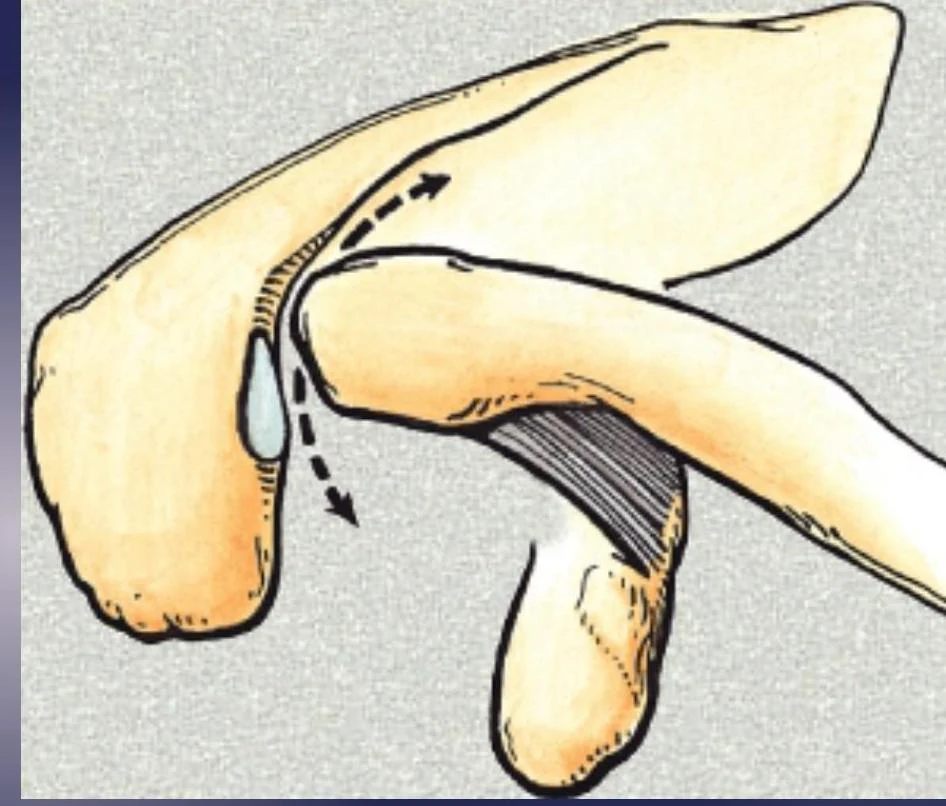
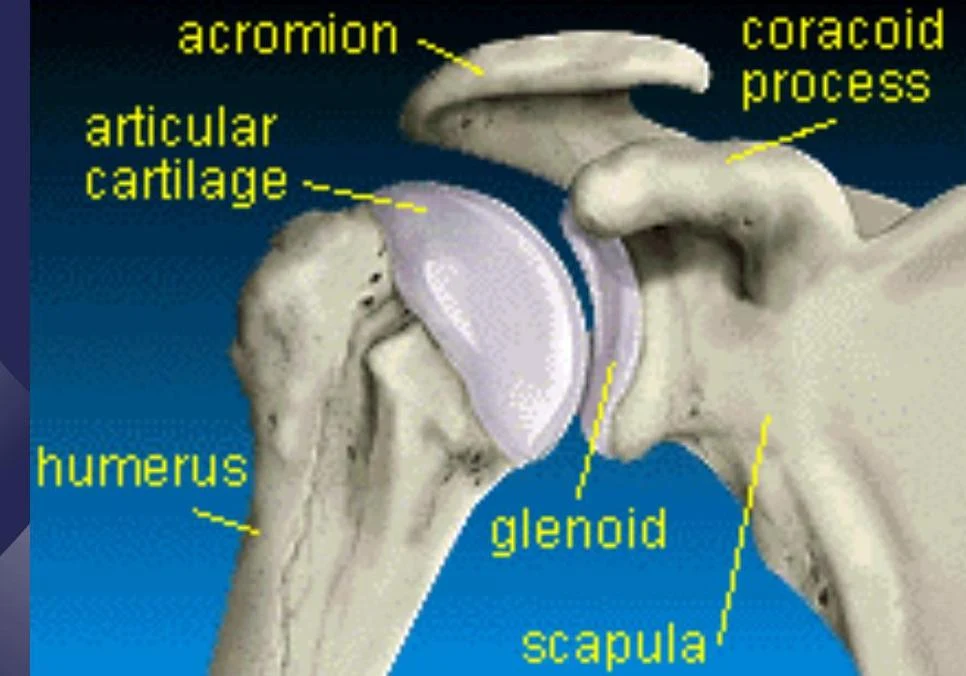
Moving laterally along the clavicle, we encounter the acromioclavicular (AC) joint. This is a spheroid joint formed by the junction of the acromial end of the clavicle and the acromion of the scapula.
Keep reading for free.
Create an account to finish this reading and make it part of your study routine.
Continue reading freeAlready have an account? Log in
Updated