Understanding World Heritage Sites and UNESCO's Role in Tourism
An exploration of World Heritage Sites, their classification into natural and cultural heritage, the functions of UNESCO in their designation and protection, and their significant economic impact on the tourism industry, particularly in South Africa.
The world is filled with breathtaking landscapes and profound historical monuments that tell the story of our shared human journey. However, these treasures are often fragile and susceptible to the pressures of time, climate change, and human activity. To ensure that these landmarks survive for future generations, an international system of recognition and protection exists. This article explores the concept of World Heritage Sites, the pivotal role played by UNESCO, and how these designations serve as a powerful engine for the tourism industry, particularly in South Africa.
Understanding the World Heritage Site
A World Heritage Site is defined as a location of outstanding value to all people globally. Unlike local or national landmarks that might only hold significance for a specific culture or country, a World Heritage Site possesses "Universal Value." This means the site is so important that its loss would be a loss to all of humanity, regardless of where it is located on the map.
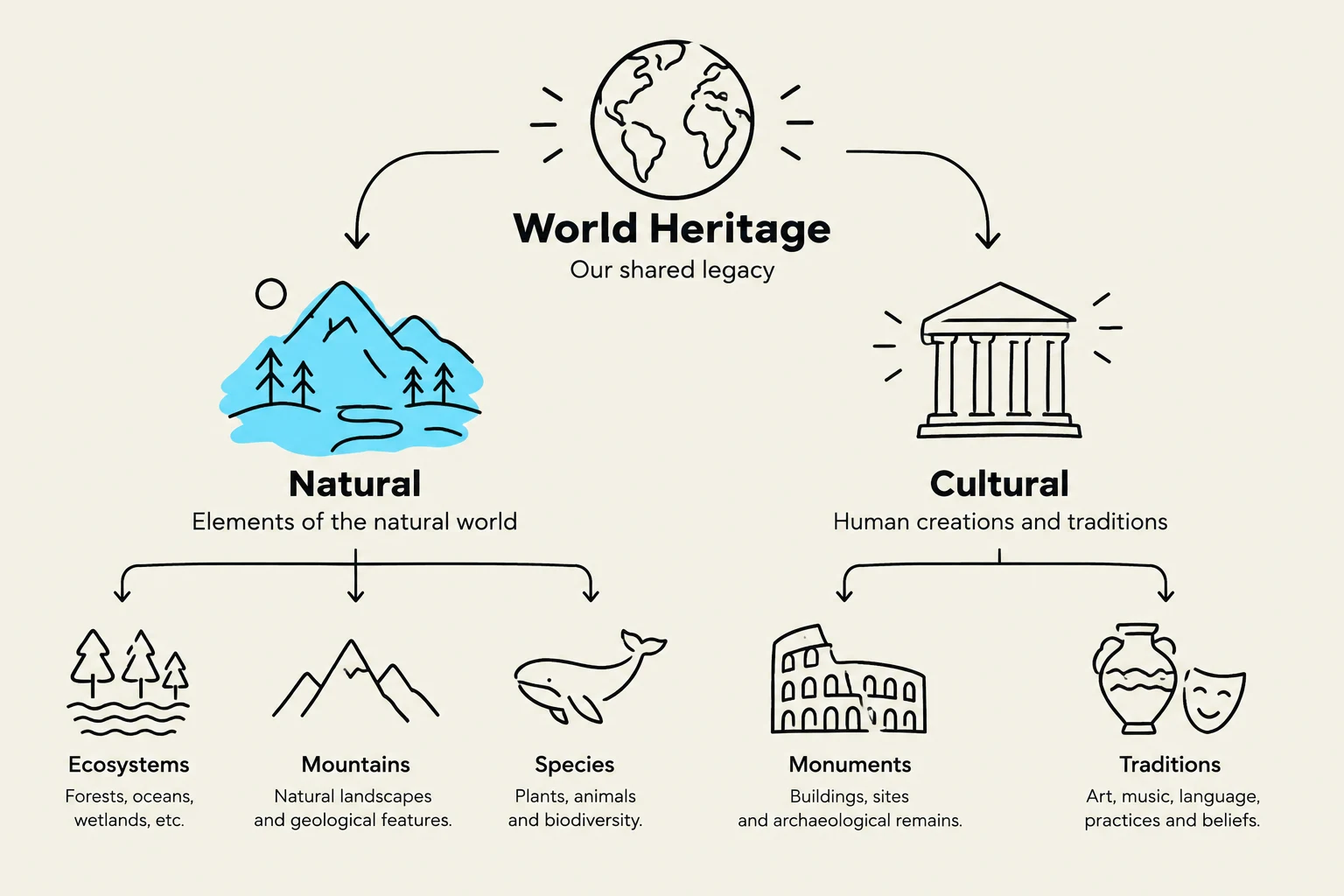
These sites are generally categorized into two main types:
Natural Heritage: These include physical, biological, or geological formations, such as national parks, mountains, or ecosystems that are home to endangered species.
Cultural Heritage: These include man-made structures, archaeological sites, and historical monuments that represent human creativity, ingenuity, or historical events.
This diagram illustrates the two main categories of World Heritage sites: Natural and Cultural. Natural heritage includes ecosystems, mountains, and species, while cultural heritage encompasses monuments and traditions.
The Role of UNESCO
The United Nations Educational, Scientific and Cultural Organization (UNESCO) is the international body responsible for designating and protecting these sites. The UNESCO logo, which features a Greek Temple, serves as a symbol of science, learning, and culture.
The primary mission of UNESCO is to declare and protect sites of significant importance to humanity. To achieve this, the organization performs several core functions:
Convention Advocacy: Encouraging nations to sign heritage conventions to commit to international standards of protection.
Heritage Conservation: Ensuring the active protection of both natural and cultural heritage.
Education and Research: Improving education in developing countries through scientific research and specialized training.
Information Access: Promoting universal access to information regarding global heritage.
Emergency Aid: Providing critical assistance to sites that are in immediate danger of extinction or destruction.
Resource Management: Promoting the conservation of water and other vital natural resources and spreading knowledge about sustainability.
Exam Tip: When asked about the functions of UNESCO, remember that their role is not just about "naming" sites, but about active "protection," "education," and "aid" for sites in danger.
The Economic Value of Heritage to Tourism
For many nations, the designation of a World Heritage Site is more than just a badge of honor; it is a vital economic asset. In the context of the tourism industry, these sites act as "magnets" that draw international visitors, which in turn stimulates the local and national economy.
The presence of these sites provides several layers of value:
1. Prestige and National Identity
A UNESCO designation brings international prestige. It enhances national pride and serves as a powerful marketing tool to attract global travelers who seek "bucket list" experiences.
2. Economic Growth and the Multiplier Effect
When tourists visit a World Heritage Site, they spend money on flights, accommodation, food, and souvenirs. This spending creates a "multiplier effect". This means that the initial money spent by a tourist filters down through the economy, benefiting various sectors.
For example, a tourist staying at a hotel near a heritage site creates:
Direct Effects: Income for the hotel owner and wages for the hotel staff.
Indirect Effects: Income for the local farmer who supplies the hotel with vegetables, the laundry service, and the transport companies.
3. Infrastructure and Development
To accommodate the influx of tourists, governments often invest in improving roads, airports, and public utilities. This infrastructural development can uplift the overall standard of living in the surrounding areas.
4. Conservation Awareness
The economic value of the site provides a financial incentive for the government and citizens to practice heritage conservation. When people see that a site provides jobs and revenue, they are more likely to support efforts to preserve it for future generations.
South Africa's Heritage and Tourism
South Africa is home to several significant World Heritage Sites that play a crucial role in its tourism sector. These sites contribute heavily to the country's Gross Domestic Product (GDP), which is the total value of all goods and services produced in a country in one year.
A healthy GDP, supported by tourism revenue from these sites, leads to:
Increased foreign revenue.
Job creation and skills development.
Increased investment opportunities.
However, it is important to note that tourism is sensitive to external factors. Just as global events (like sporting events or summits) can impact tourism, the economic health of South Africa's tourism industry is also influenced by the strength of the Rand.
The Impact of Currency Fluctuations
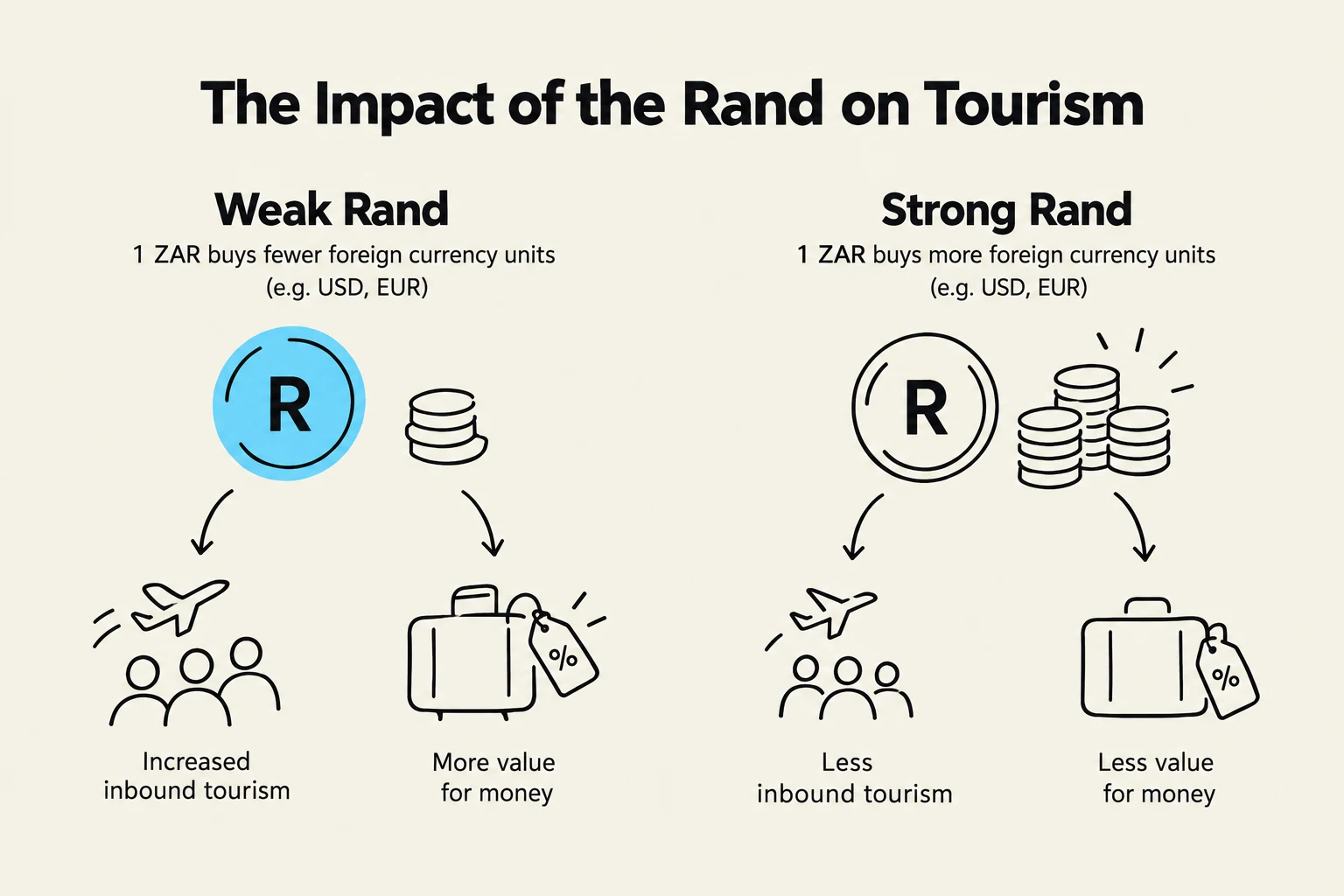
The "buying power" of the Rand significantly affects how many people visit South Africa's heritage sites:
A Weak Rand: This means the Rand has decreased in value compared to other currencies. While this makes it more expensive for South Africans to travel abroad, it makes South Africa a "bargain" for international tourists. A weak Rand often leads to an increase in inbound tourism and increased spending by foreign visitors.
A Strong Rand: This means the Rand has more buying power. While South Africans can travel more easily, international tourists may find South Africa too expensive, which can decrease inbound tourism.
This diagram illustrates how a weak Rand can increase inbound tourism and offer more value for money, while a strong Rand can decrease inbound tourism and offer less value for money.
Conclusion
World Heritage Sites represent the pinnacle of human and natural achievement. Through the guidance of UNESCO, these sites are protected not just as monuments of the past, but as living assets for the future. For countries like South Africa, these sites are essential pillars of the tourism industry, driving economic growth, fostering national pride, and ensuring that the beauty of the natural and cultural world is preserved for all.
Keep reading for free.
Create an account to finish this reading and make it part of your study routine.