


In the framework of labour law, the freedom of association is a fundamental right. This right allows workers to form and join trade unions to protect their social and economic interests. This principle is not merely a local regulation but is anchored in international standards, including the UN Declaration of Human Rights, the European Convention on Human Rights, and the Charter of Fundamental Rights of the EU.
While the right to associate is broad, it is not absolute. For instance, members of the Armed Forces and certain judicial officials (such as Judges and Magistrates) are excluded from exercising union rights to maintain institutional neutrality and discipline.
The Concept of Union Representativity
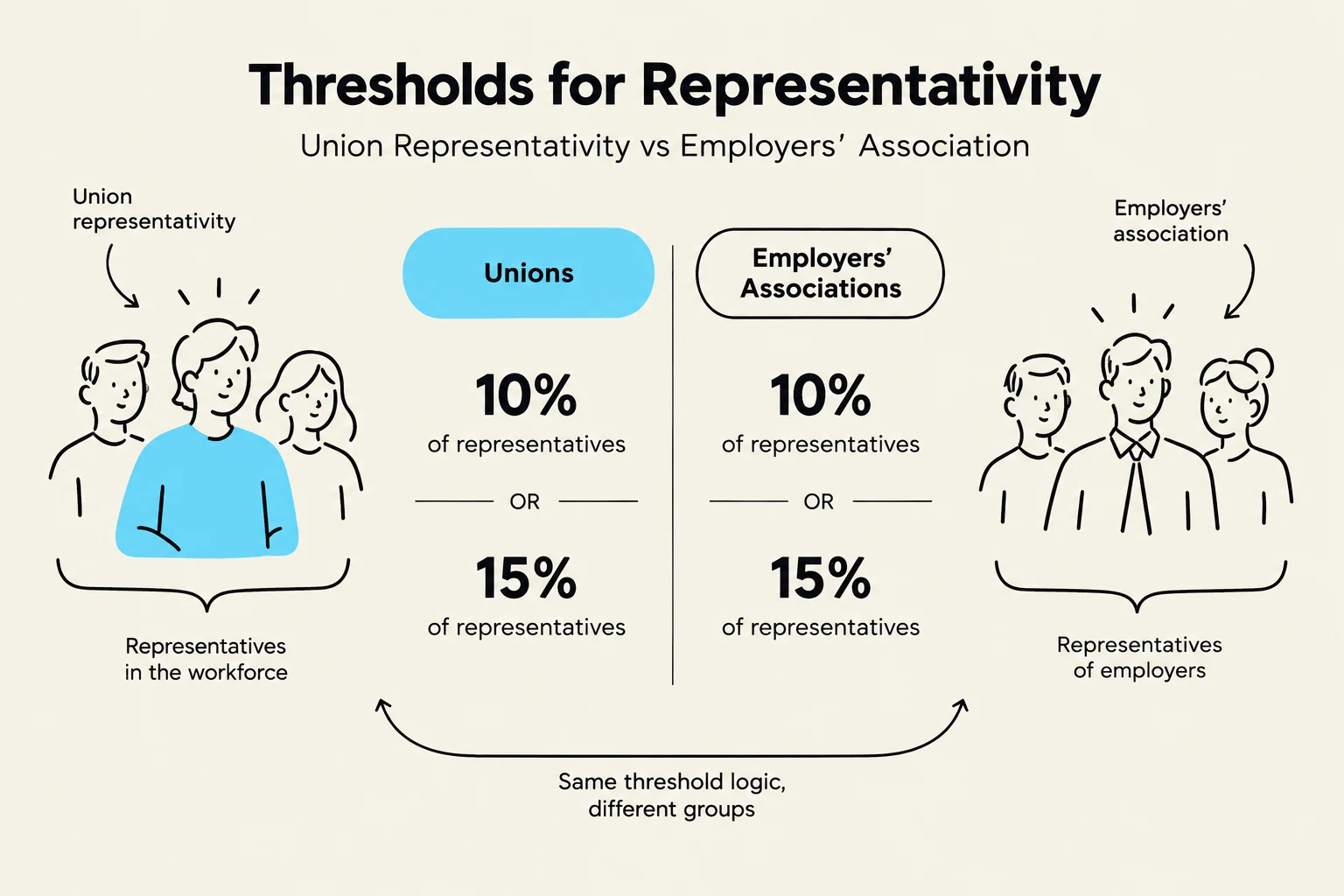
A common misconception among students is that a union's power is determined solely by the total number of its members. In labour law, however, representativity is a technical legal status determined by the percentage of workers' representatives elected in companies.
This distinction is crucial for determining which organizations have the legal standing to engage in high-level negotiations. Representativity is categorized into different levels based on the scope of their influence:
- Most Representative Unions: These are the heavyweights of the labour landscape. To achieve this status, a union must hold more than 10% of the workers' representatives.
- Regional Level Unions: These operate within specific territories. They must hold more than 15% of workers' representatives in that territory and possess at least 1,500 representatives.
- Functional or Territorial Level Unions: These unions represent specific industries or territories and must hold more than 10% of representatives in that specific sector or area.


Keep reading for free.
Create an account to finish this reading and make it part of your study routine.
Continue reading freeAlready have an account? Log in
Updated