This content provides a comprehensive overview of various types of abuse, including physical, sexual, emotional, and neglect. It details manifestations in vulnerable populations such as children, intimate partners, and the elderly, and discusses etiological factors and nursing management strategies.
Abuse is a critical public health problem in the United States that affects individuals across the entire lifespan. Because of the intense shame and fear associated with being a victim, abuse is frequently underreported, making it a significant challenge for healthcare providers to identify and intervene. Understanding the various types of abuse, their underlying causes, and the specific ways they manifest in different populations is essential for effective nursing care and prevention.
Core Types of Abuse
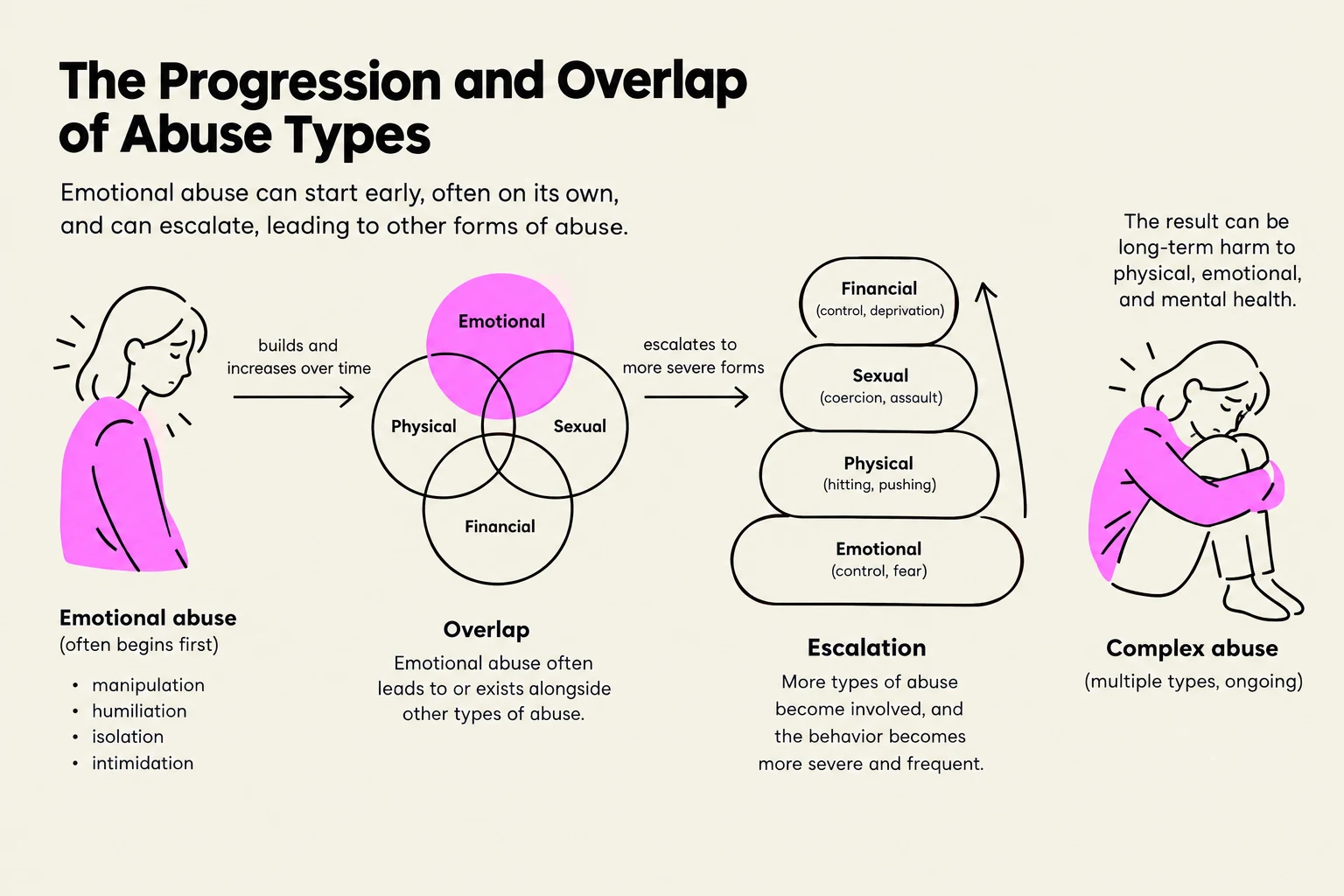
Abuse is rarely a single, isolated event; different types can coexist, and one form often escalates into another. For example, a relationship may begin with emotional abuse, which then progresses into physical or sexual violence.
The four primary categories of abuse include:
Physical Abuse: The use of physical force that results in injury or pain.
Sexual Abuse: Defined as any unwanted sexual activity forced upon another person. This includes threats, sexual activity with individuals unable to give consent, and exposing children to sexual violence.
Emotional Abuse: Psychological attacks intended to undermine a person's sense of self-worth.
Neglect: The failure to provide necessary care, such as food, shelter, medical attention, or supervision.
This diagram illustrates the progression and overlap of different types of abuse, including emotional, physical, financial, and sexual abuse, and their escalation to complex abuse.
Vulnerable Populations
Abuse manifests differently depending on the age and relationship of the individuals involved.
Child Abuse and Neglect
Child abuse is defined as any recent act or failure to act by a parent or caretaker that results in death, serious physical or emotional harm, or sexual exploitation. It also includes any act or failure to act that presents an imminent risk of serious harm. Statistics show that 1 in 7 children experience abuse or neglect, which contributes to approximately 1,770 deaths annually—a number likely higher due to underreporting.
Manifestations in Children:
Physical Abuse: Visible signs include bruises, fractures, and burns.
Neglect: Indicators include poor hygiene, dirty or ill-fitting clothing, appearing hungry, untreated medical or dental issues, and failure to reach developmental milestones.
Long-term effects: Children may experience "failure to thrive," poor eye contact, detachment, or visual/motor impairments.
Intimate Partner Violence (IPV)
IPV involves inflicting sexual, emotional, or physical harm on a current or previous spouse or partner. Stalking is also considered a form of IPV. It can happen to any couple, affecting 1 in 4 women and 1 in 10 men. Notably, the first instance of IPV often occurs before the age of 18.
Elder Abuse
Elder abuse affects individuals aged 60 and older and includes physical, emotional, and sexual abuse, as well as confinement, financial exploitation, and neglect. Approximately 1 in 10 older adults experience abuse. Reporting is often hindered because victims may be unwilling to report family members, may be physically or mentally unable to report, or may fear retaliation.
Manifestations of Neglect in Older Adults:
Common signs include unexplained weight loss, dehydration, poor hygiene, unsanitary living conditions, untreated medical issues, decubitus ulcers (bedsores), and unsafe living environments.
Exam Tip: When assessing for elder neglect, always look for "unexplained" changes, such as sudden weight loss or the presence of pressure ulcers (decubitus ulcers) in a patient who should be receiving regular repositioning.
Etiology and Risk Factors
To understand why abuse occurs, we look at several theoretical frameworks and biological factors.
Theoretical Frameworks
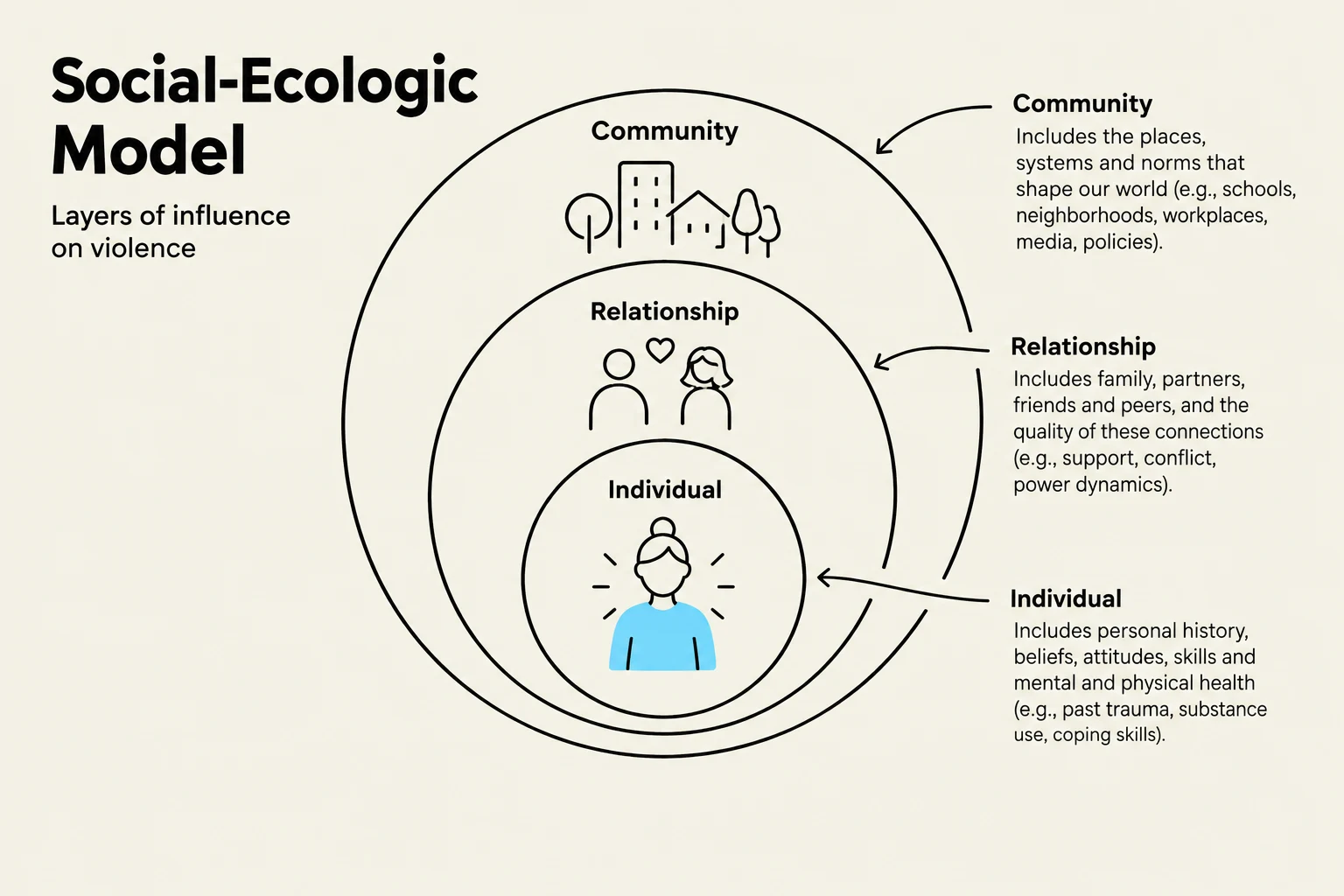
Social-Ecologic Model: This model suggests that interpersonal violence is the result of complex interactions among individual, relationship, community, and societal factors.
Social Learning Theory: This theory posits that individuals learn abusive behaviors by observing and imitating others.
Neurobiology: Biological factors play a role; for instance, low levels of MAOA (monoamine oxidase A) may lead to more aggressive and antisocial behaviors.
Risk Factors
Various factors increase the vulnerability of individuals to abuse:
Demographics: Age, sex (male vs. female), and pregnancy.
Social/Economic: Low socioeconomic status (specifically in child abuse) and the presence of firearms in the home.
Individual: Disabilities and specific cultural contexts.
The Social-Ecologic Model illustrates layers of influence on violence, from the individual to the community.
Clinical Manifestations of Sexual Abuse
Sexual abuse requires high clinical suspicion. In children, physical manifestations may include injuries to the genitals or anus, swollen genitals, bladder/kidney infections, STIs, unintended pregnancies, or pelvic inflammatory disease (PID).
Warning Signs and Emotional Indicators:
Behavioral: The child may become withdrawn or combative, experience regression (such as bedwetting), insomnia, or display anxiety, depression, and suicidal thoughts.
The "Most Pronounced" Indicator: Early knowledge about or an early interest in sexual acts.
Perpetrator Warning Signs: Be alert to individuals who ignore social or physical boundaries, overshare adult issues with a child, or frequently walk in on children in private spaces like bathrooms.
Cultural Considerations
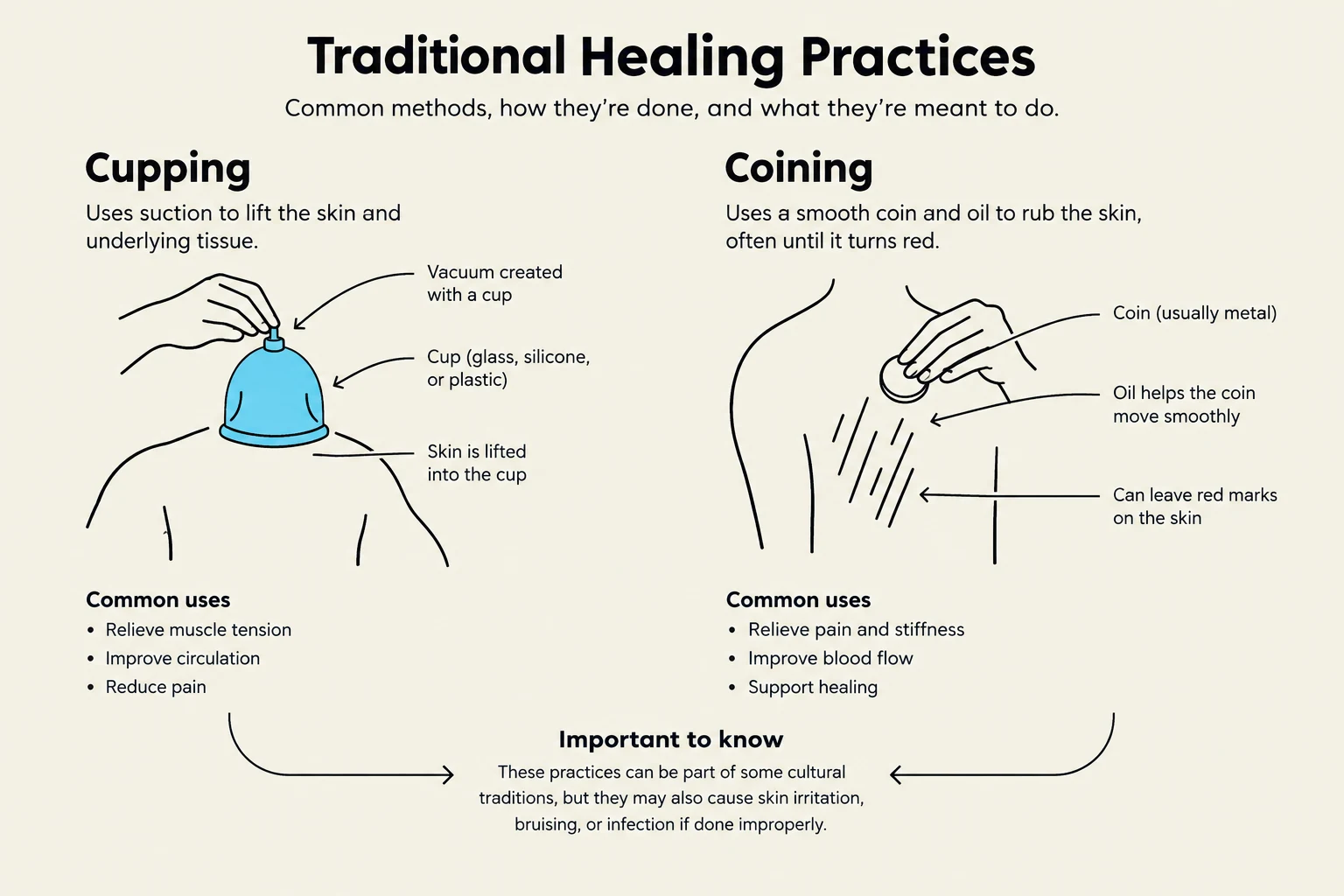
Healthcare providers must distinguish between abuse and cultural practices to avoid misdiagnosis. Some practices, such as cupping, coining, or Gua Sha, are traditional healing methods. Similarly, some cultures may use corporal punishment or view reporting domestic issues as a dishonor to the family.
This illustration depicts two traditional healing practices: cupping and coining, detailing their methods, common uses, and potential side effects.
Nursing Management and Intervention
Diagnostic Testing
While diagnostic tests cannot "prove" abuse, they provide essential evidence of possible abuse:
Imaging: X-rays, MRI, and CT scans.
Laboratory: DNA swabs, STI testing, and pregnancy tests.
The Nursing Process
When caring for a victim, nurses should follow a structured approach:
Noticing/Assessment: Assess for life-threatening injuries first, then establish safety and obtain a complete medical history.
Interpreting/Problems: Identify issues such as acute pain, powerlessness, post-trauma syndrome, sexual dysfunction, or social isolation.
Responding/Interventions:
Promote Safety: This is the primary concern. If mandatory reporting is not required, provide resources like domestic violence shelters, lawyers, or law enforcement.
Establish Trust: Be nonjudgmental and encourage the patient to make their own choices.
Communication: Use open-ended questions. For example, instead of asking "Did your mother hit your head?" (a leading question), ask "How did you hit your head?".
Empowerment: Help the patient develop a safety plan and connect them with social workers or counselors.
Reflecting/Evaluation: Evaluate if the patient is safe, has a plan in place, and understands that they are not responsible for the abuse.
Support Systems
Children’s Advocacy Centers (CAC): These provide a safe, supportive environment specifically for children to recover from abuse.
Domestic Violence Shelters: These offer immediate shelter, legal referrals, and parent training for survivors and their children.
Clinical Note: When interviewing a suspected child abuse victim, never use leading questions. Use open-ended questions to allow the child to provide their own account without being influenced by your suggestions.
Summary of Therapy
Treatment for survivors often requires a multi-modal approach:
Pharmacologic: Pain medication, sedatives, anti-inflammatories, wound care, vaccines, and mental health medications.
Non-pharmacologic: Counseling, psychotherapy, and support groups.
Keep reading for free.
Create an account to finish this reading and make it part of your study routine.