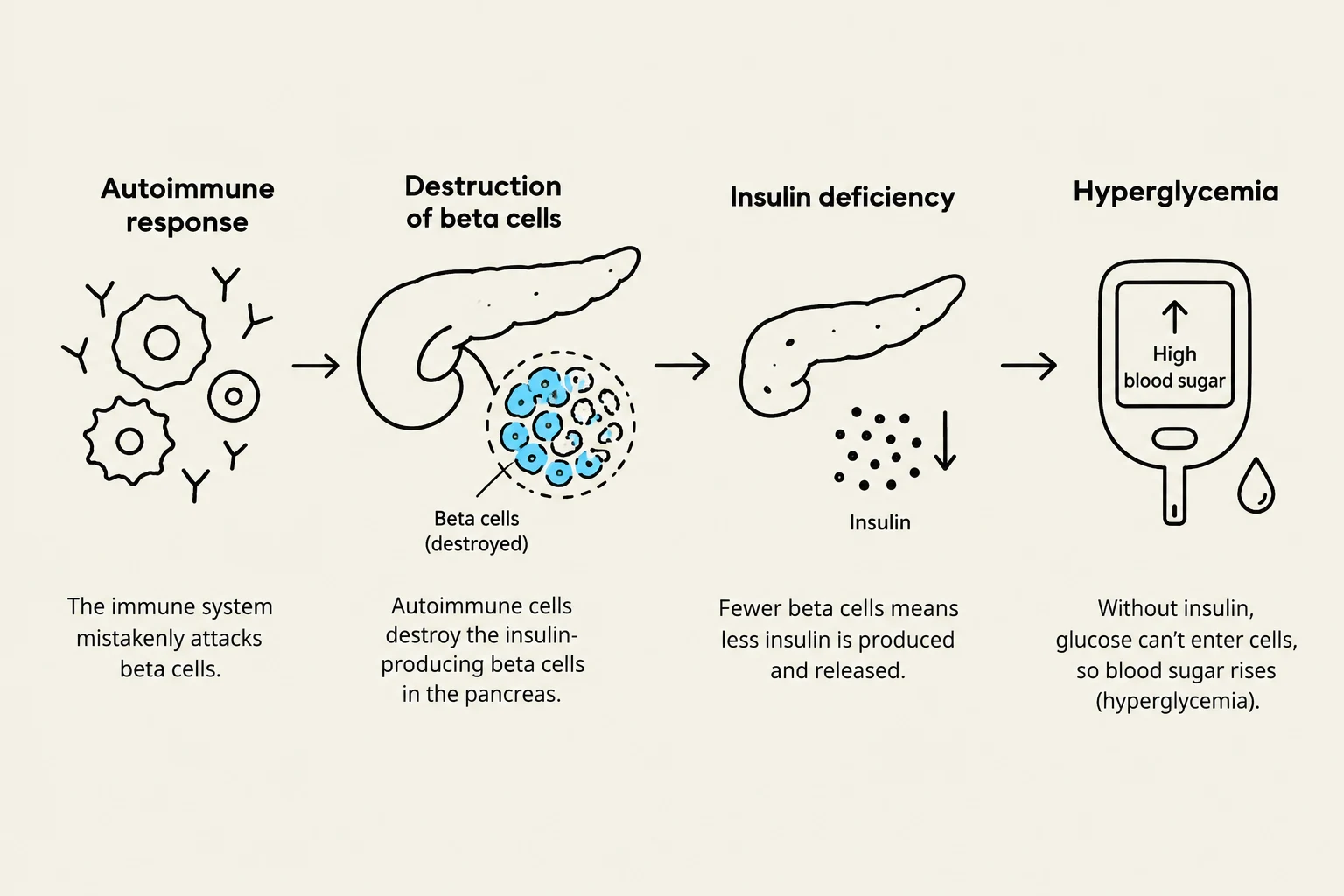
Type 1 Diabetes Mellitus (T1DM) is a chronic autoimmune condition that requires lifelong management. Unlike Type 2 diabetes, which is often characterized by insulin resistance, Type 1 is defined by an absolute deficiency of insulin. This occurs because the body's immune system mistakenly attacks and destroys the insulin-producing beta cells in the pancreas. Without insulin, glucose cannot enter the body's cells to be used for energy, leading to a dangerous buildup of sugar in the bloodstream.
Pathophysiology and Diagnosis
The pathophysiology of T1DM is centered on the loss of endogenous insulin production. When beta cells are destroyed, the body loses its ability to regulate blood glucose levels, resulting in continuous hyperglycemia. While T1DM is most commonly diagnosed in children and adolescents (typically between ages 10–14), it can also present in adults through a specific form known as Latent Autoimmune Diabetes in Adults (LADA).
To diagnose T1DM, clinicians look for specific glycemic markers and indicators of pancreatic function:
Fasting Blood Glucose:>126 mg/dL.
Non-fasting Blood Glucose:>200 mg/dL.
Hemoglobin A1C:≥7%.
C-peptide Levels: A decreased level of C-peptide is a critical indicator, as C-peptide is a byproduct of insulin production; low levels confirm that the pancreas is not producing sufficient endogenous insulin.
This diagram illustrates the progression of type 1 diabetes, starting with an autoimmune response that destroys beta cells in the pancreas, leading to insulin deficiency and consequently hyperglycemia (high blood sugar).
Clinical Manifestations
Because the onset of T1DM is often rapid, patients frequently present with a classic triad of symptoms known as the "Three Ps":
Polyuria: Excessive urination as the kidneys attempt to filter out excess glucose.
Polydipsia: Excessive thirst resulting from the dehydration caused by polyuria.
Polyphagia: Excessive hunger because the cells are "starving" for energy despite high blood sugar levels.
In addition to these symptoms, patients often experience unexplained weight loss because the body begins to consume its own fat and muscle stores for fuel.
Acute Complication: Diabetic Ketoacidosis (DKA)
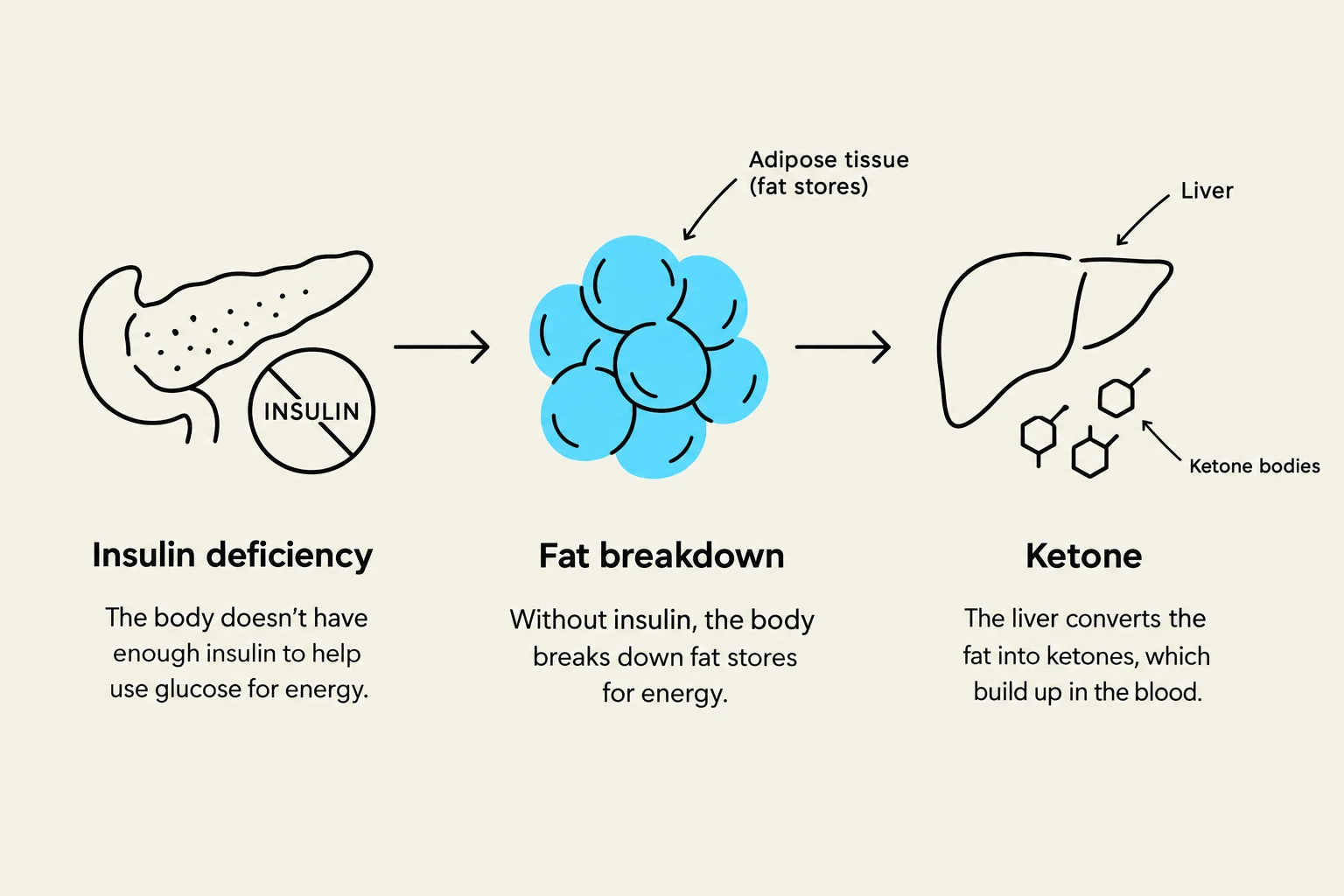
One of the most life-threatening acute complications of T1DM is Diabetic Ketoacidosis (DKA). When the body has little to no insulin, glucose remains trapped in the bloodstream and is unavailable to the cells. To compensate for this energy deficit, the body begins to break down fat at an accelerated rate.
A byproduct of this rapid fat metabolism is the production of ketones. As ketones accumulate in the blood, they lower the pH, leading to metabolic acidosis.
Clinical Alert: Recognizing DKA
Nurses should monitor for the following "red flag" indicators of DKA:
Fruity-smelling breath (due to acetone/ketones).
Abdominal pain (which may also indicate pancreatitis).
Altered mental status.
Elevated Anion Gap (a key laboratory indicator of metabolic acidosis).
This diagram illustrates the process of ketosis, where insulin deficiency leads to fat breakdown and the production of ketone bodies by the liver.
Insulin Management and Administration
Since the body cannot produce its own insulin, patients must rely on exogenous insulin via subcutaneous injection. Historically, insulin was derived from animal sources such as pigs, horses, and mice.
Insulin Types
Insulin is categorized by its onset and duration of action:
Rapid-acting insulin (e.g., Lispro): Used for mealtime dosing. It works quickly (within an hour) but carries a high risk of hypoglycemia if a meal is delayed.
Regular insulin: An intermediate option, though used less frequently in modern practice than rapid or long-acting types.
Long-acting insulin (e.g., Glargine/Lantus): Provides a steady "baseline" of insulin throughout the day with no distinct peak.
Administration Safety
Insulin is a high-alert medication. Nurses must be extremely vigilant regarding concentrations:
U-100: 100 units per mL.
U-200 or U-500: Higher concentrations (e.g., 500 units per mL) used for patients with high insulin resistance.
Warning: Administering U-500 instead of U-100 can result in a five-fold overdose.
When mixing different types of insulin in one syringe, always follow the "clear before cloudy" rule. You must draw the clear (rapid/regular) insulin into the syringe before the cloudy (intermediate/NPH) insulin. If the needle enters the cloudy vial first, it can contaminate the clear vial, deactivating the insulin.
Delivery Methods
Patients may use several methods for subcutaneous delivery:
Syringes and Vials: Traditional method.
Insulin Pens: Convenient for self-administration.
Insulin Pumps: Devices that provide continuous insulin delivery; these are typically self-managed by the patient.
Nursing Considerations and Patient Care
Monitoring and Nutrition
Blood glucose monitoring is essential and can be performed via traditional finger sticks or Continuous Glucose Monitors (CGM).
Nutrition plays a vital role in glycemic control. Patients are often placed on a carbohydrate-consistent diet. Insulin dosing is managed in two primary ways:
Sliding Scale: Administering a specific amount of insulin based on the current blood glucose reading to "correct" high numbers.
Carbohydrate Counting: Administering insulin to "cover" the specific amount of carbohydrates the patient is about to consume. In clinical settings, nurses may wait until the end of a meal to calculate the exact carb intake before administering this dose.
Long-term Complications
Uncontrolled diabetes can lead to systemic damage, particularly affecting the vascular and nervous systems:
Neuropathy: Peripheral nerve damage, often assessed using a sharp/dull sensation test.
Nephropathy: Damage to the kidneys.
Retinopathy/Glaucoma: Eye damage caused by increased intraocular pressure; patients require annual exams by an ophthalmologist (not just an optometrist).
Cardiovascular Risk: Increased risk of stroke and heart attack.
Foot Care Education
Because of peripheral neuropathy, patients may lose sensation in their feet. A small injury, such as a piece of gravel in a shoe, can go unnoticed and develop into a severe, non-healing ulcer.
Patient Teaching Tip: Daily Foot Care
Instruct patients to perform daily foot inspections and always check their shoes for foreign objects before putting them on.
Keep reading for free.
Create an account to finish this reading and make it part of your study routine.