


In clinical audiology, understanding how sound energy moves through the ear is essential for diagnosing hearing health. This concept is captured by the term Acoustic Immittance, which describes the energy flow through the auditory system. Immittance is composed of two opposing principles: Acoustic Impedance, which is the opposition to the flow of sound energy, and Acoustic Admittance, which represents the ease of that flow.
One of the most common ways to assess these properties is through Tympanometry. This procedure provides a snapshot of the health of the middle ear by measuring three specific metrics: middle ear pressure, peak compliance (also known as static admittance), and ear canal volume.
The Three Primary Metrics of Tympanometry
To interpret a tympanogram, a clinician must look at three distinct numerical values.
1. Peak Pressure
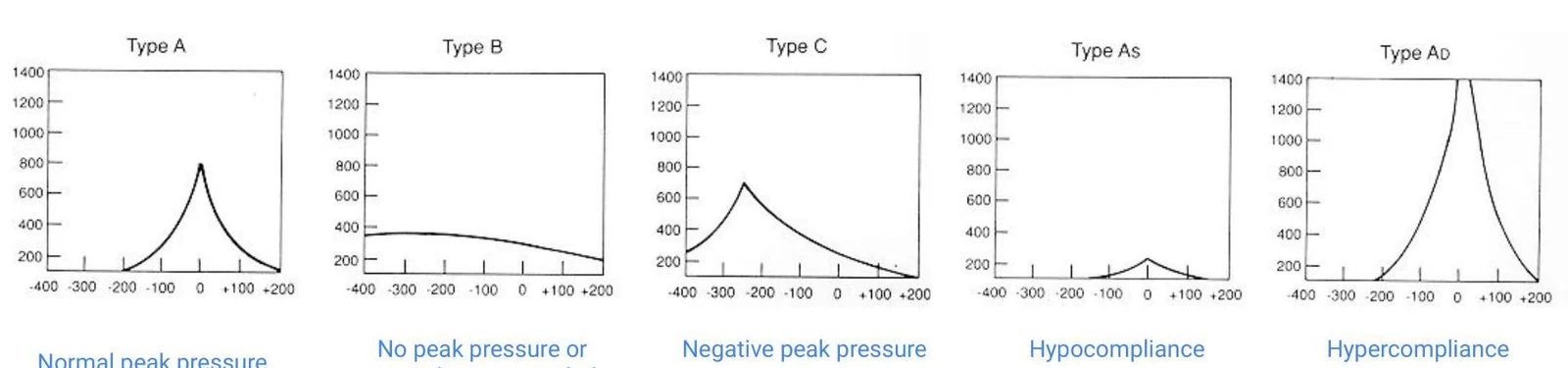
Peak pressure refers to the air pressure in the middle ear space at the point where the eardrum moves most easily. This is measured in decapascals (daPa).
- Normal Range: Typically between -100 and +100 daPa.
- Clinical Significance: A pressure of -100 daPa means the pressure in the middle ear is less than the atmospheric pressure, which can cause the eardrum to retract (suck inward).
2. Peak Compliance (Static Admittance)
Peak compliance represents the maximum movement of the eardrum in response to sound. It is often referred to as static admittance. This is measured in milliliters (mL), millimhos (mmho), or cubic centimeters (cc).
- Normal Adult Range: Approximately 0.6 to 1.6 mL/mmho.
- Normal Child Range: Approximately 0.2 to 1.0 mL/cc.
Exam Tip: If the compliance is below the normal range, the eardrum is not moving as much as it should (hypocompliance). If it is above the upper limit, the eardrum may be too "flaccid" or loose (hypercompliance).
Keep reading for free.
Create an account to finish this reading and make it part of your study routine.
Continue reading freeAlready have an account? Log in
Updated