


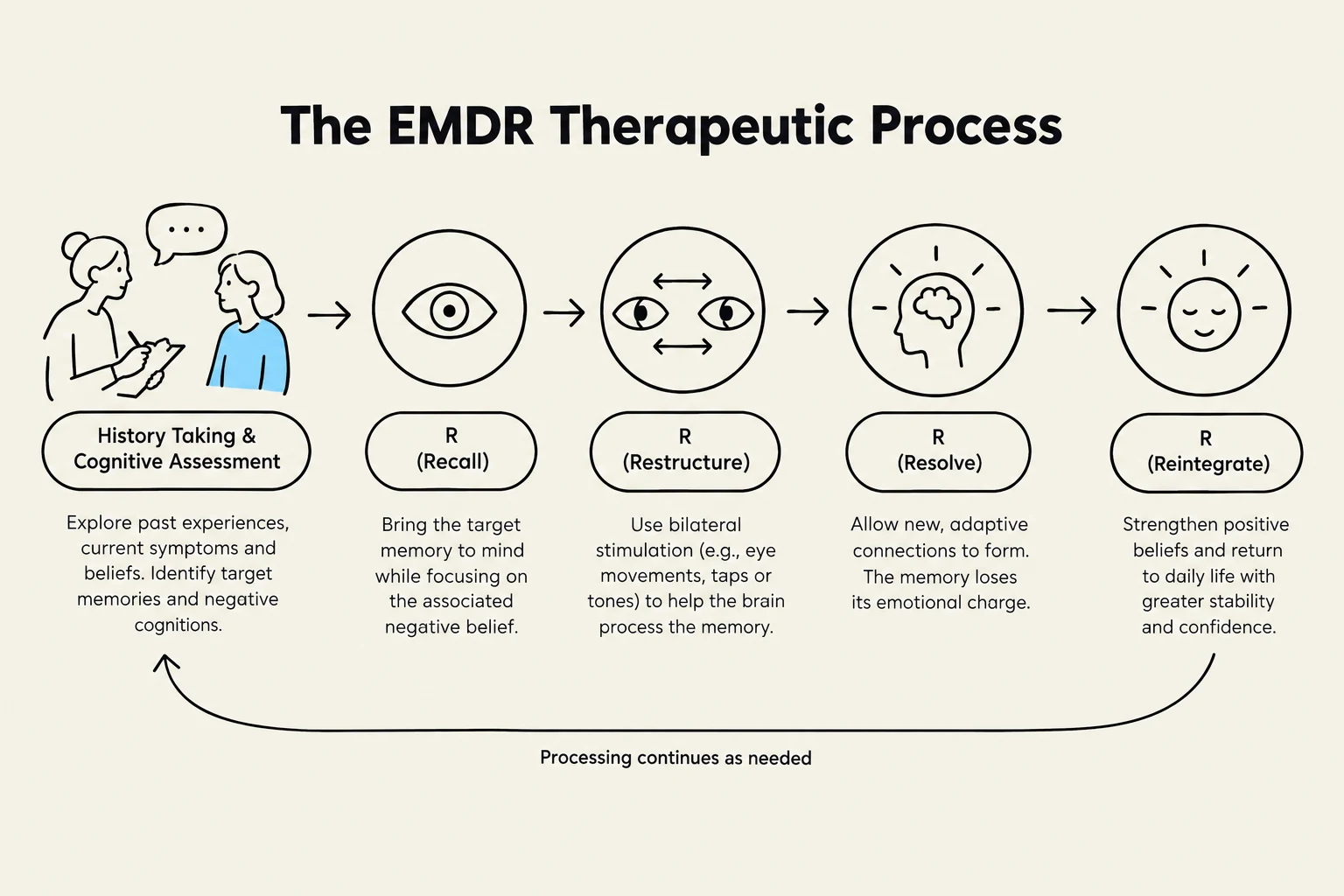
Trauma is not merely a memory of a bad event; it is a profound disruption of the brain's ability to process reality. When an individual experiences a traumatic event, the brain may undergo neurobiological alterations that leave the person "stuck" in a state of constant survival. This article explores the complexities of Post-Traumatic Stress Disorder (PTSD), the distinction between mental health struggles and intentional deception, and the evidence-based mechanisms of Eye Movement Desensitization and Reprocessing (EMDR) therapy.
Post-Traumatic Stress Disorder (PTSD)
PTSD is defined as a distinct, measurable neurobiological alteration of the brain. In a healthy brain, the prefrontal cortex regulates emotions and helps the hippocampus—the brain's memory processor—place memories in their proper time and place. However, in individuals with PTSD, this regulation fails. The brain's "panic button" becomes hyperactive, keeping the individual in a constant state of "fight or flight".
Because the hippocampus fails to "file" the memory away as a past event, traumatic memories are experienced in real-time. This leads to four primary manifestations of the disorder:
- Intrusion: Involuntary flashbacks or distressing dreams (e.g., screaming in one's sleep).
- Avoidance: Steering clear of people, places, conversations, or even medical appointments that might trigger the memory.
- Negative Alterations in Cognition: Difficulty remembering key aspects of the trauma, feeling that the future is short, or experiencing a lack of positive emotions.
- Negative Arousal: Hypervigilance (scanning a room constantly), irritability, insomnia, and an exaggerated startle response.
Exam Tip: When distinguishing PTSD symptoms, remember that "Intrusion" is about the memory coming into the present, while "Avoidance" is about the person staying away from potential triggers.


Keep reading for free.
Create an account to finish this reading and make it part of your study routine.
Continue reading freeAlready have an account? Log in
Updated