


In the healthcare environment, preventing the spread of pathogens is a fundamental responsibility of the nursing team. While Standard Precautions are applied to every client regardless of their infection status—based on the anticipation of exposure to blood, body fluids, secretions, and nonintact skin—there are specific situations where additional layers of protection are required. These additional layers are known as Transmission-Based Precautions. By implementing these precautions based on the specific route of disease transmission, nurses break the "Chain of Infection" and protect both the client and the healthcare workforce.
Understanding the Chain of Infection
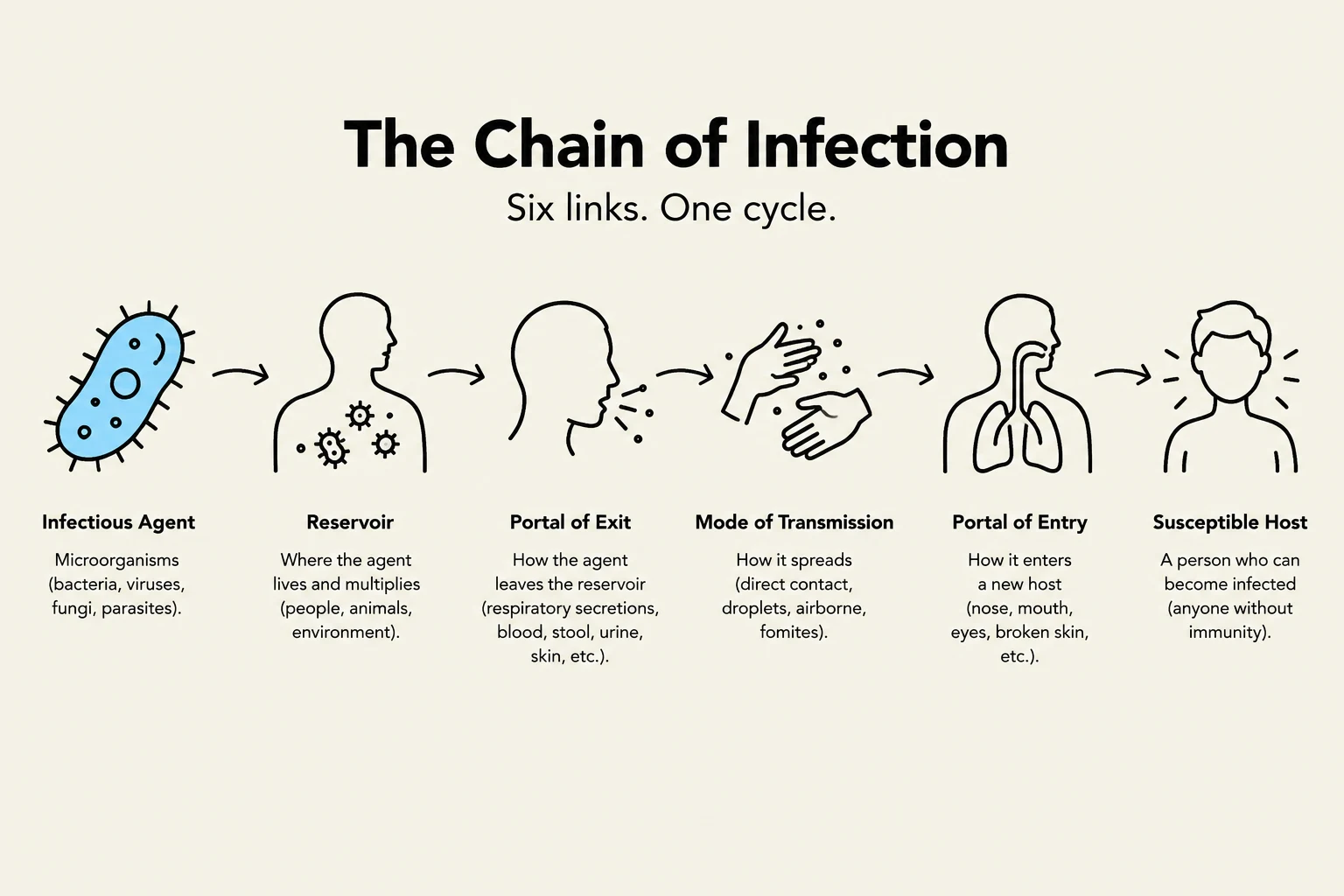
To effectively implement precautions, one must understand how diseases move. The chain of infection consists of several links: the infectious agent (pathogen), the reservoir (where it lives), the portal of exit (how it leaves the host), the mode of transmission (how it moves), the portal of entry (how it enters a new host), and the susceptible host. Transmission-based precautions are specifically designed to target the Mode of Transmission link.
Contact Precautions
Contact precautions are implemented when an infectious agent is spread through direct physical contact with the patient or indirect contact with contaminated surfaces and equipment.
- Common Examples: C. difficile, norovirus, or draining wounds with uncontrolled drainage.
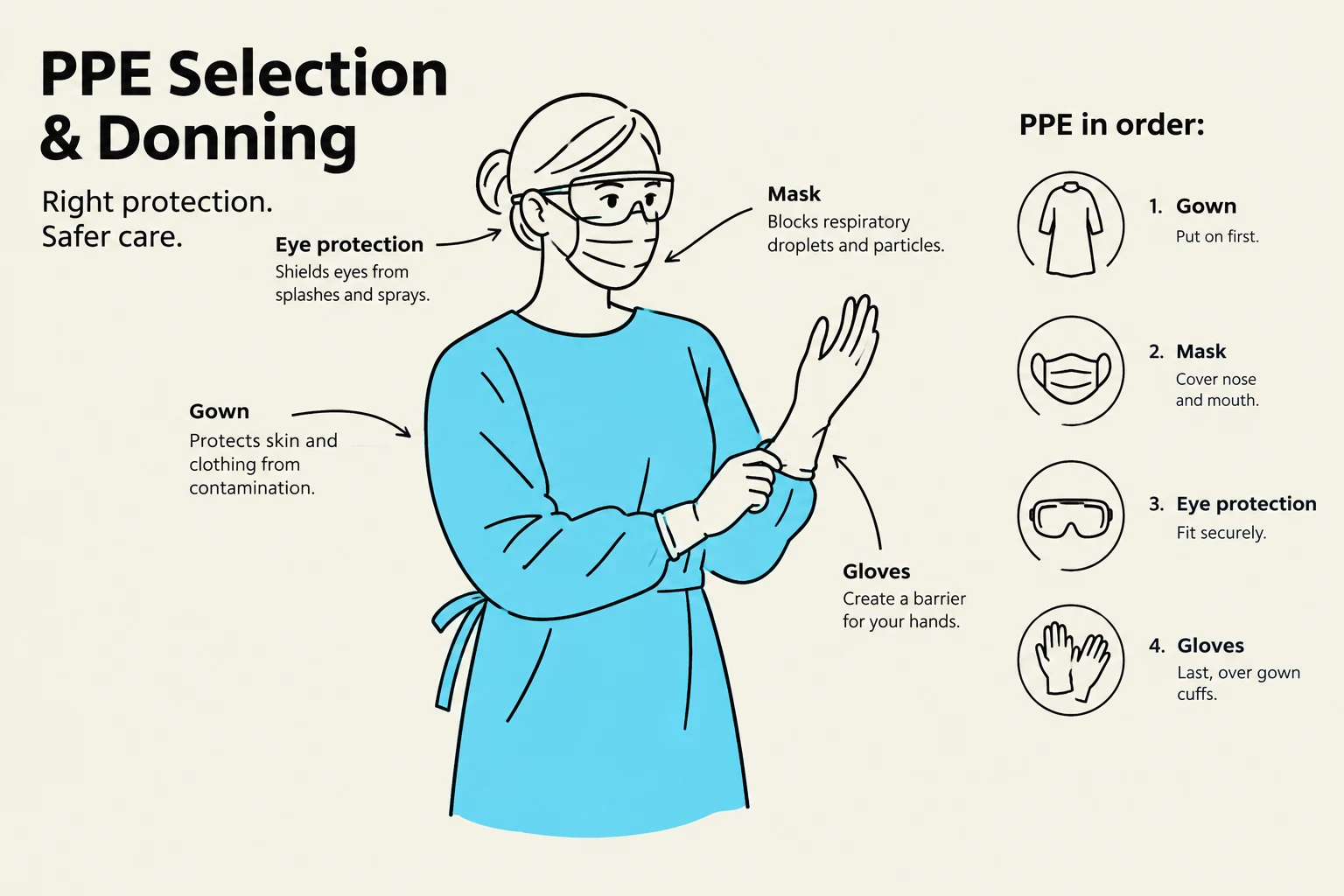
- Required PPE: Typically includes a gown and gloves, which should be donned upon entry to the room as indicated by facility policy.
- Environmental Management: Use dedicated equipment for the patient whenever possible to prevent cross-contamination between rooms.
Keep reading for free.
Create an account to finish this reading and make it part of your study routine.
Continue reading freeAlready have an account? Log in
Updated