An exploration of transformational leadership, its four pillars (idealized influence, inspirational motivation, intellectual stimulation, and individualized consideration), and its contrast with transactional leadership. It also touches upon related normative philosophies like servant and authentic leadership, and the
In the study of organizational behavior, leadership is often categorized by the "normative" framework—the set of values, ethics, and philosophies that guide how a leader interacts with their followers. While some leaders focus on simple exchanges of labor for money, others seek to fundamentally change the character and motivation of their team. Among these, Transformational Leadership stands out as a process of engaging with others to increase both motivation and morality in both the leader and the follower.
Understanding Transformational Leadership
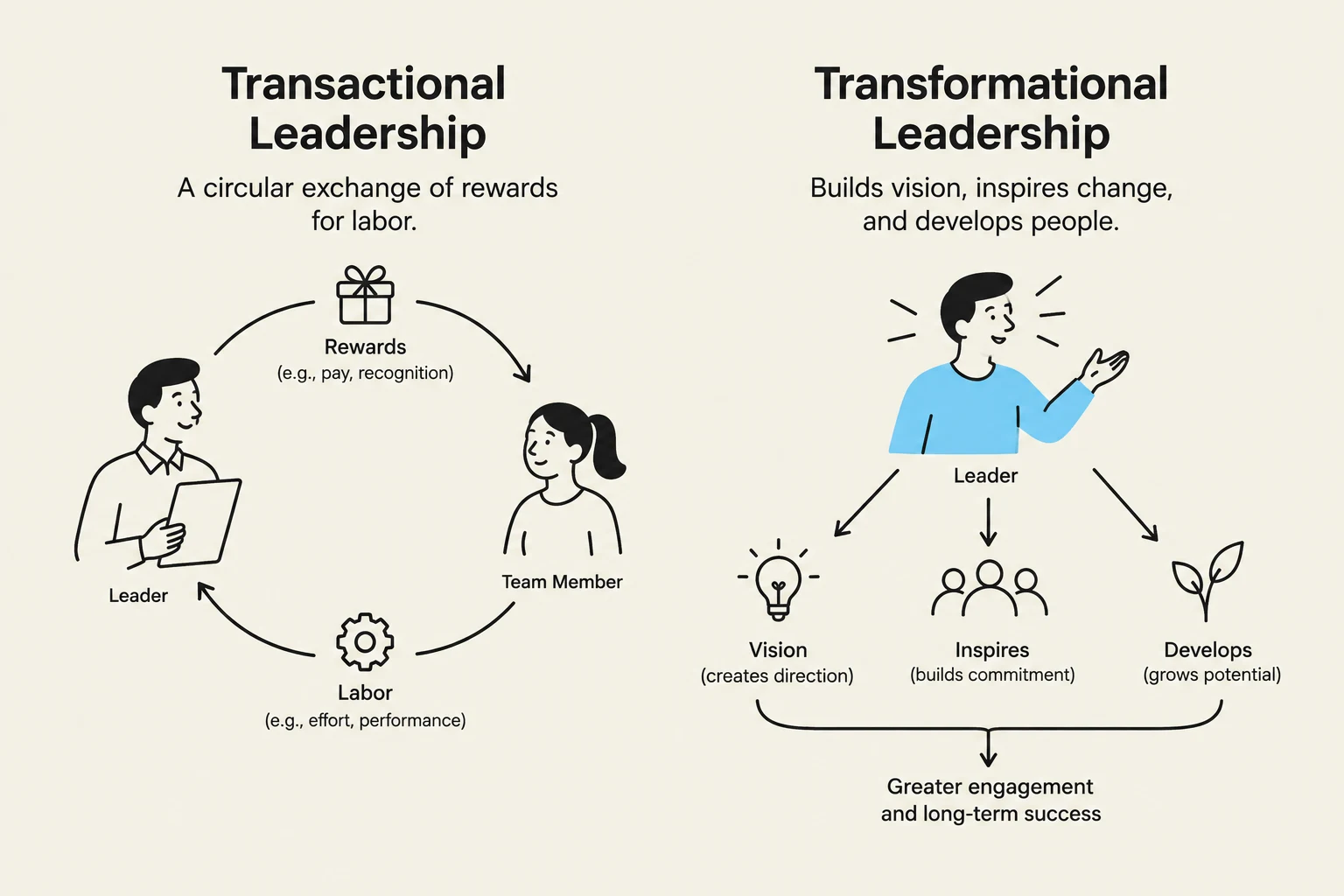
Transformational leadership is distinct from its counterpart, Transactional Leadership. Transactional leaders operate on a utilitarian basis, focusing on the exchanges that occur between leaders and followers. They use rewards (like money or benefits) to ensure obedience and goal completion, often working strictly within existing organizational hierarchies.
In contrast, transformational leaders aim to mobilize followers through common goals and higher-level reasoning. Rather than just managing tasks, they seek to realign the perceptions and values of the organization. This process is deeply rooted in morality; transformational leaders are driven by duty and guided by universal ethical principles. They focus on terminal values—end-state goals such as liberty, equality, and justice—rather than just intermediate means.
Exam Tip: If a question asks about the difference between "exchanging rewards for performance" and "raising the moral level of followers," it is distinguishing between Transactional and Transformational leadership.
This illustration contrasts transactional leadership, characterized by a circular exchange of rewards for labor, with transformational leadership, which focuses on building vision, inspiring change, and developing people to achieve greater engagement and long-term success.
The Four Pillars of Transformational Leadership
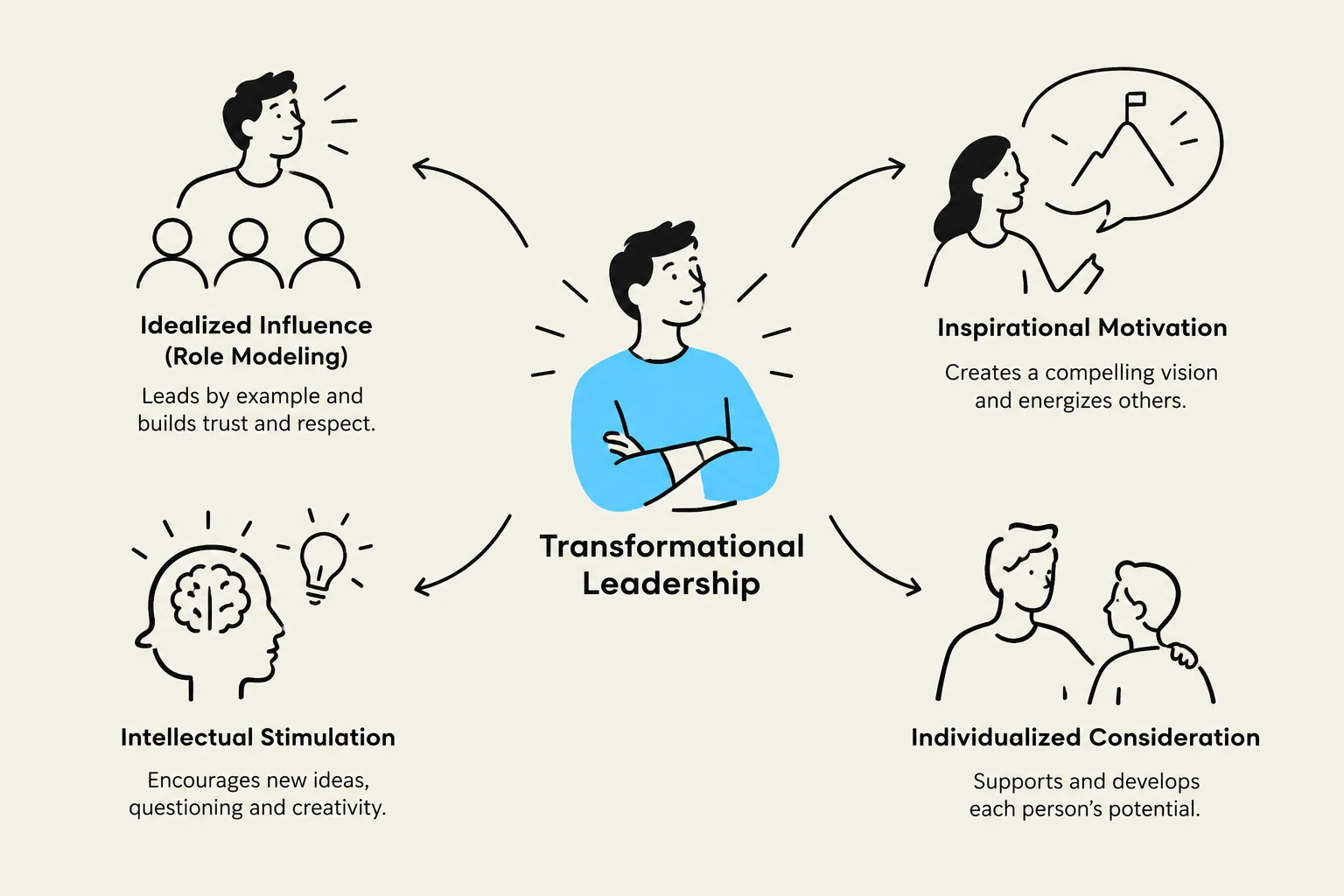
According to the research of Bass and Avolio, transformational leadership is characterized by four specific dimensions:
1. Idealized Influence (Charisma)
Often referred to as charisma, this is the ability of a leader to act as a role model. Charismatic leaders put the needs of their followers above their own, making others want to follow their vision through their own exemplary behavior. They demonstrate high expectations and possess a moral foundation that elicits respect.
2. Inspirational Motivation
Transformational leaders do not just assign tasks; they provide meaning and challenge. They create a compelling vision—a clear picture of the future that links the past, present, and future. By communicating this vision with enthusiasm, they arouse team spirit and help followers see that their work is part of something greater than a paycheck.
3. Intellectual Stimulation
These leaders encourage followers to be innovative and creative. Instead of demanding blind obedience, they stimulate the intellectual capabilities of their team by encouraging them to question the status quo and look beyond what they have been traditionally taught.
4. Individualized Consideration
Rather than treating everyone as a generic unit of labor, transformational leaders act as coaches or mentors. They pay special attention to the unique needs of each follower and adapt their leadership style to provide the specific support or guidance required in a given context.
This diagram illustrates the four components of transformational leadership: Idealized Influence, Inspirational Motivation, Intellectual Stimulation, and Individualized Consideration.
The Impact and the "Dark Side"
When implemented effectively, transformational leadership yields significant benefits, including higher employee task performance, increased job satisfaction, reduced turnover, and improved organizational financial performance. It is particularly effective in driving innovation, as leaders "clear a path to the unknown" rather than simply dictating end goals.
However, there is a cautionary side to this theory. Because transformational leadership is "leader-centric," it can sometimes foster dependency. Furthermore, researchers distinguish between authentic transformational leaders (motivated by altruism and integrity) and pseudotransformational leaders.
Pseudotransformational leaders use the tools of inspiration to manipulate followers for self-serving ends. They may exhibit "Dark Triad" traits:
Machiavellianism: Using deception and manipulation to get ahead.
Narcissism: Having an extremely inflated view of oneself.
Psychopathy: Lacking remorse and showing poor impulse control.
Related Normative Philosophies
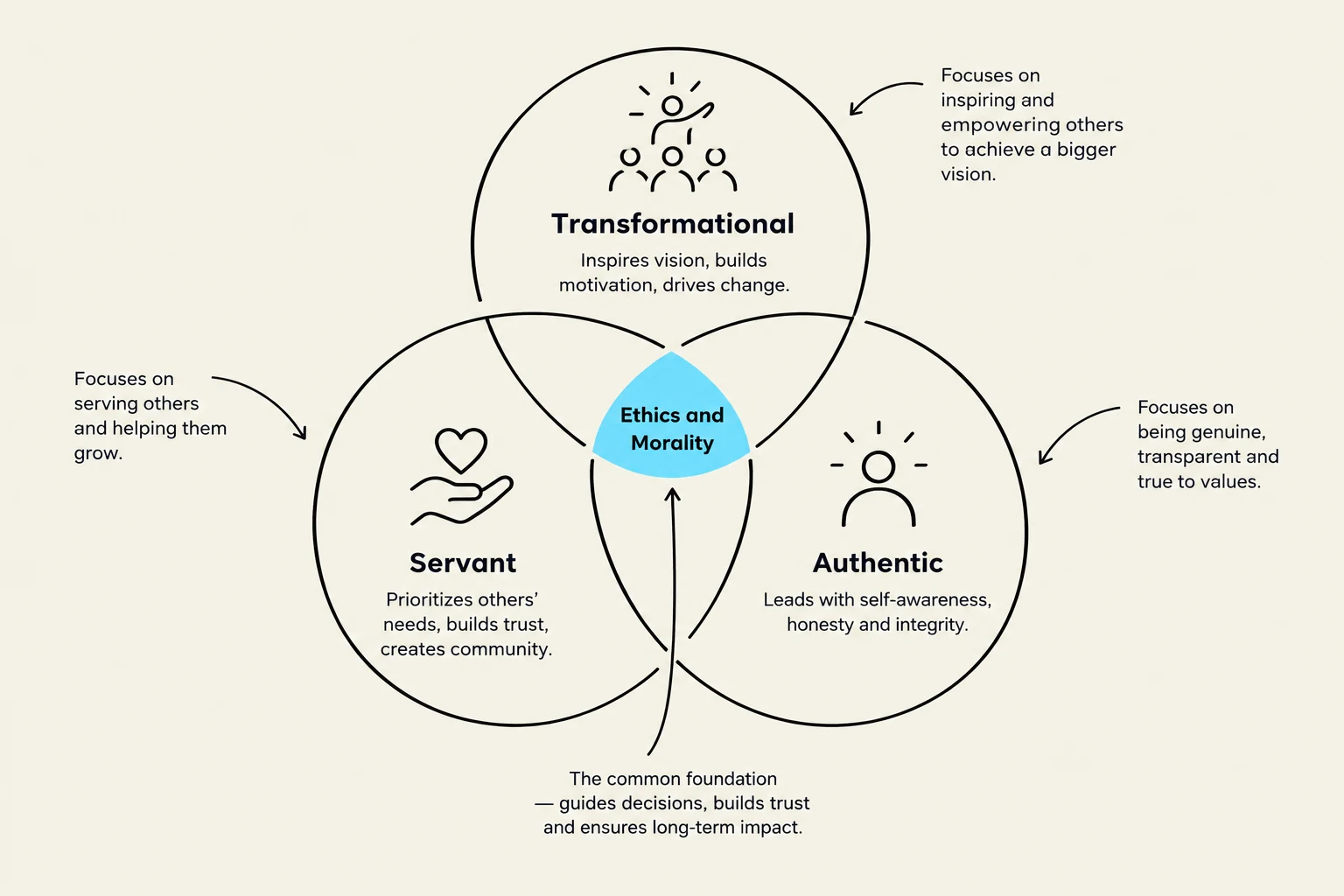
While transformational leadership focuses on changing the organization through vision and motivation, other normative theories offer different focal points:
Servant Leadership: This philosophy posits that leaders should put the needs of followers before their own. Servant leaders are "givers" who view followers as partners and focus on stewardship, empathy, and the growth of people.
Authentic Leadership: These leaders are characterized by self-awareness, balanced processing of information, an internalized moral perspective, and relational transparency. They lead with their hearts as well as their heads, staying true to their values even at personal risk.
Aesthetic Leadership: This perspective views leadership as an art rather than a science, emphasizing the sensory and emotional dimensions of organizational life. It suggests that the most ethical course of action is also the most "beautiful" or aesthetically pleasing.
Summary Note: Great leaders often integrate these styles. For example, a successful leader may use transactional elements (like contingent rewards) alongside transformational elements to achieve both stability and growth.
This diagram illustrates the intersection of Transformational, Servant, and Authentic leadership styles, with Ethics and Morality at the core, supported by a common foundation of guiding decisions, building trust, and ensuring long-term impact.
Keep reading for free.
Create an account to finish this reading and make it part of your study routine.