


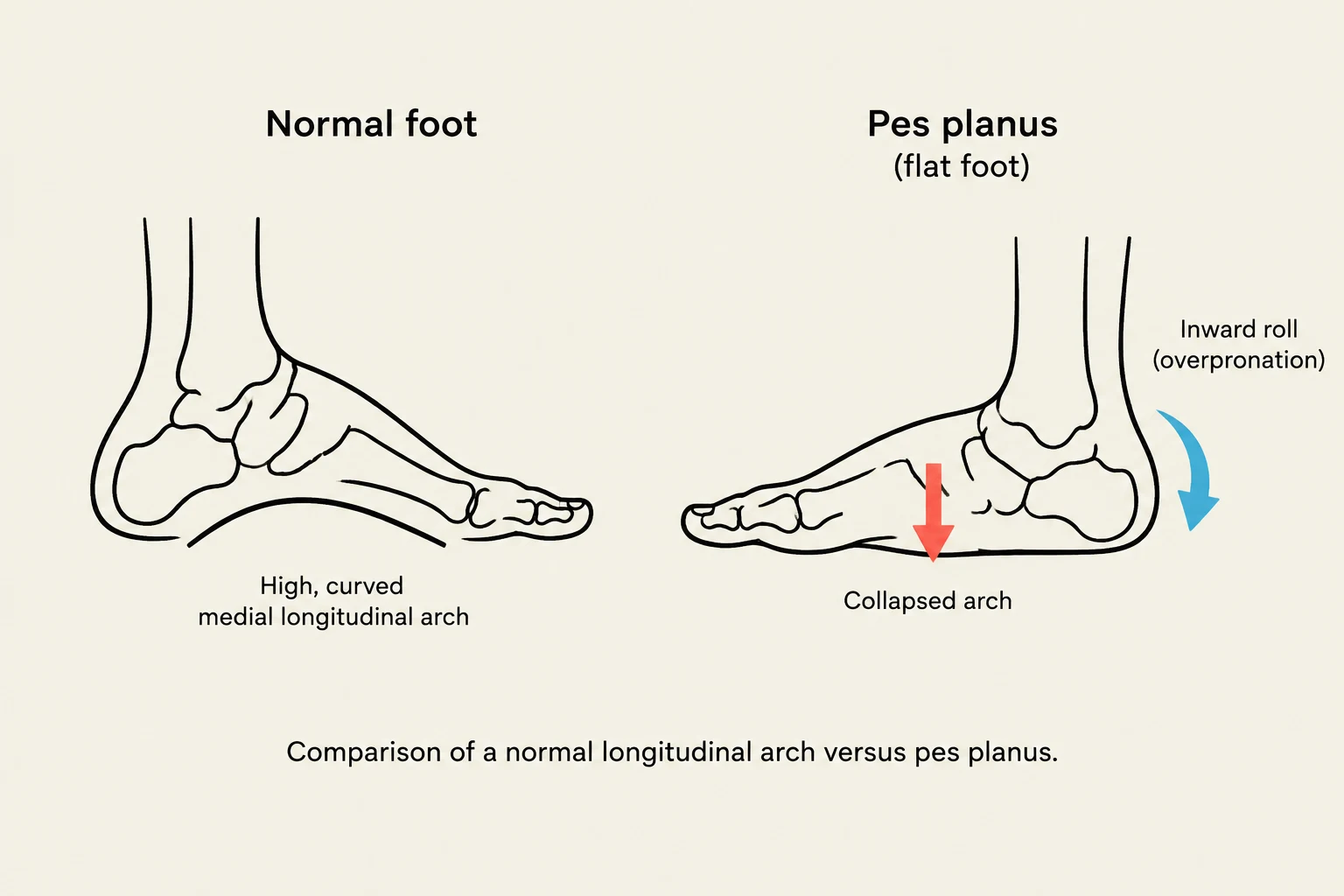
Foot deformities often present as isolated issues, but in clinical biomechanics, they are frequently part of a larger, interconnected system of structural instability. One of the most common presentations involves the abnormal positioning of the toes, specifically through conditions known as hammer, mallet, and claw toes. To understand these pathologies, one must look beyond the toes themselves and examine how the underlying architecture of the foot—specifically the stability of the longitudinal arches—influences toe alignment.
Defining Toe Deformities: Mallet, Hammer, and Claw

Mallet Toe
A mallet toe occurs when there is an abnormal flexion at the distal interphalangeal (DIP) joint (the joint closest to the tip of the toe), while the proximal interphalangeal (PIP) joint remains relatively straight. This is often caused by an imbalance in the pull of the extensor tendons.
Hammer Toe
A hammer toe is characterized by flexion at the proximal interphalangeal (PIP) joint, while the DIP joint remains relatively straight. This deformity is frequently seen in the middle joints of the toes and can lead to significant discomfort when the top of the joint rubs against the inside of footwear.
Claw Toe
A claw toe is a more complex deformity involving both the PIP and DIP joints. In this condition, the PIP joint is hyperextended, while the DIP joint is flexed. This creates a "claw-like" appearance and is often associated with more significant muscular or tendon imbalances than mallet or hammer toes.

Keep reading for free.
Create an account to finish this reading and make it part of your study routine.
Continue reading freeAlready have an account? Log in
Updated