


In the field of cybersecurity, defense is never a one-size-fits-all endeavor. To build a resilient security posture, professionals must look beyond the "what" of an attack—the malware, the exploit, or the breach—and focus on the "who." Understanding the identity, motivation, and capability of a threat actor is fundamental to predicting their next move and allocating defensive resources effectively.
By categorizing adversaries into distinct profiles, security teams can transition from reactive firefighting to proactive threat hunting. This article explores the spectrum of threat actors, ranging from individual hobbyists to highly organized nation-state entities.
The Spectrum of Capability and Motivation
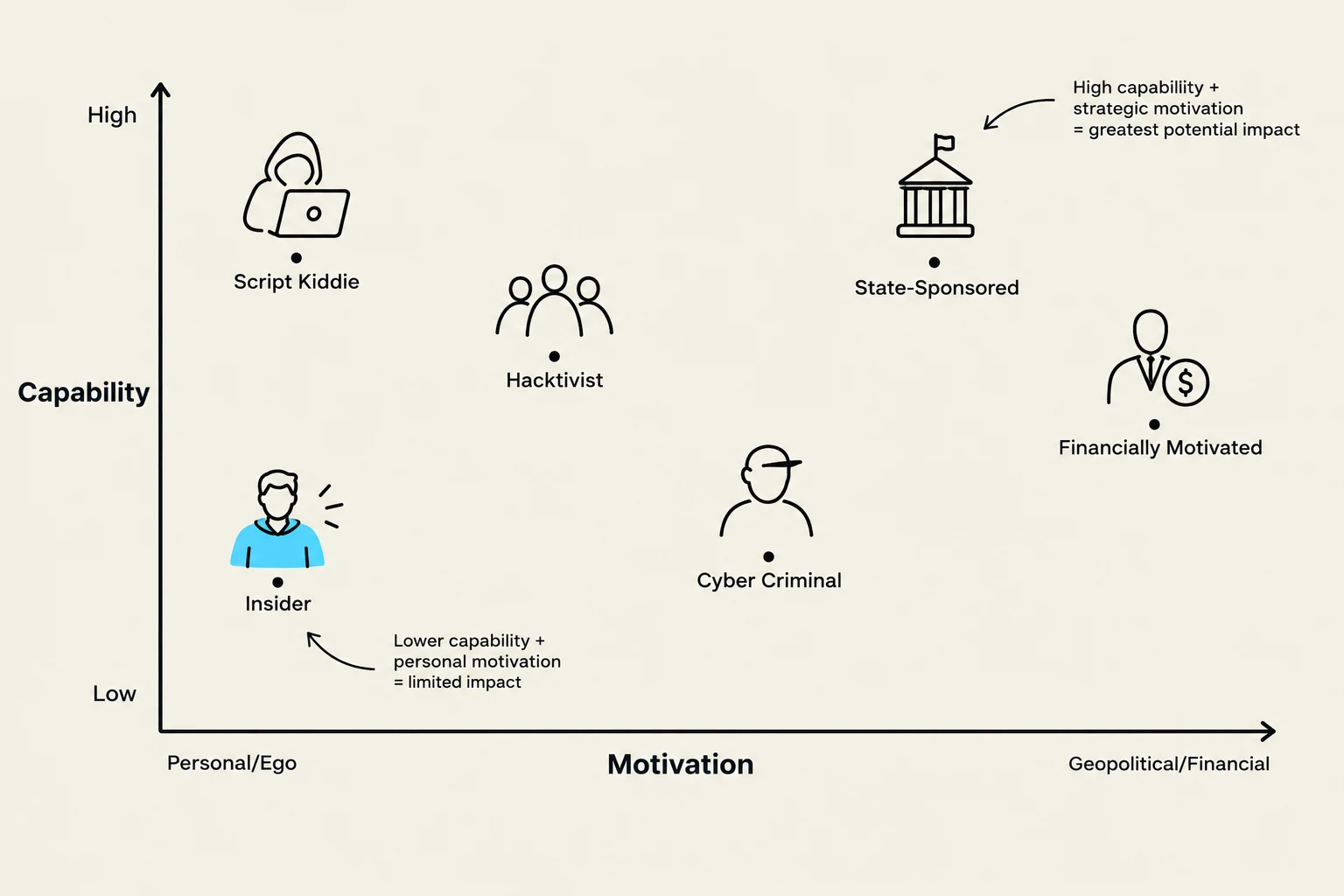
A low-capability actor might be motivated by curiosity or boredom, while a high-capability actor might be driven by geopolitical dominance or massive financial gain. Understanding where an actor sits on this spectrum helps organizations determine whether they are being targeted by a random automated bot or a surgical, human-led intrusion.
Exam Tip: When analyzing a threat, always ask: "Does the sophistication of the method match the likely motive?" A highly complex, custom-coded exploit is rarely used by a script kiddie; it is the hallmark of an Advanced Persistent Threat (APT).
Common Threat Actor Profiles
1. Script Kiddies
At the most basic level of the spectrum are "script kiddies." These are typically less experienced individuals who lack the technical depth to write their own exploits or develop original malware. Instead, they rely on pre-written scripts, automated tools, and publicly available exploit kits found on the internet.
Keep reading for free.
Create an account to finish this reading and make it part of your study routine.
Continue reading freeAlready have an account? Log in
Updated