This guide explains the Statement of Cash Flows (SCF), its core purposes, and the classification of cash activities into operating, investing, and financing. It also details the direct and indirect methods for reporting operating activities and addresses non-cash transactions.
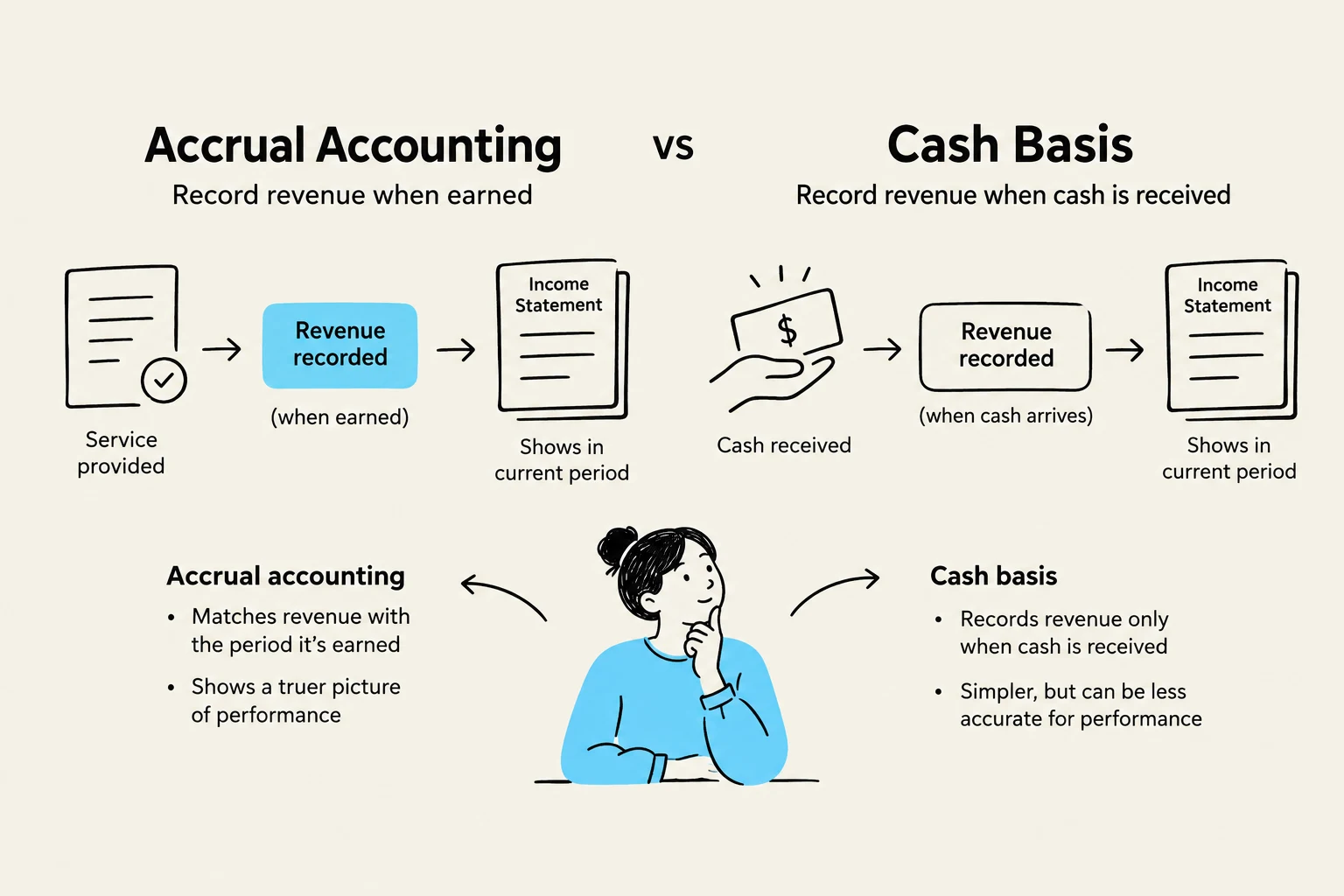
In the world of financial reporting, the Income Statement tells a story of profitability, but it does not always tell the truth about a company's bank account. Because most modern businesses use Accrual Accounting, profits are recorded when earned, not necessarily when the cash hits the bank. To bridge this gap, companies must prepare the Statement of Cash Flows (SCF).
The SCF serves as a vital reconciliation tool, itemizing the specific sources and uses of cash during a period to explain exactly how the company moved from its beginning cash balance to its ending cash balance. It is a required report that must accompany any reported Income Statement.
The Core Purposes of the SCF
While an Income Statement focuses on performance, the SCF focuses on movement and viability. Analysts use the SCF for several critical reasons:
Predicting Future Cash Flows: A company can be profitable on paper but still run out of money. The SCF helps assess the potential for generating positive cash in the future, which is distinct from the ability to generate accounting profit.
Liquidity and Solvency Assessment: By looking at cash movements, stakeholders can predict if an enterprise can satisfy its liabilities (liquidity) and pay dividends to shareholders (solvency).
Reconciliation: It explains the "why" behind the difference between reported net income (accrual basis) and actual cash on hand (cash basis).
Exam Tip: If a question asks about a company's ability to pay its debts or dividends, look to the Statement of Cash Flows rather than the Income Statement.
Classifications of Cash Activities
To make the data digestible, the SCF categorizes every transaction into one of three distinct types: Operating, Investing, or Financing.
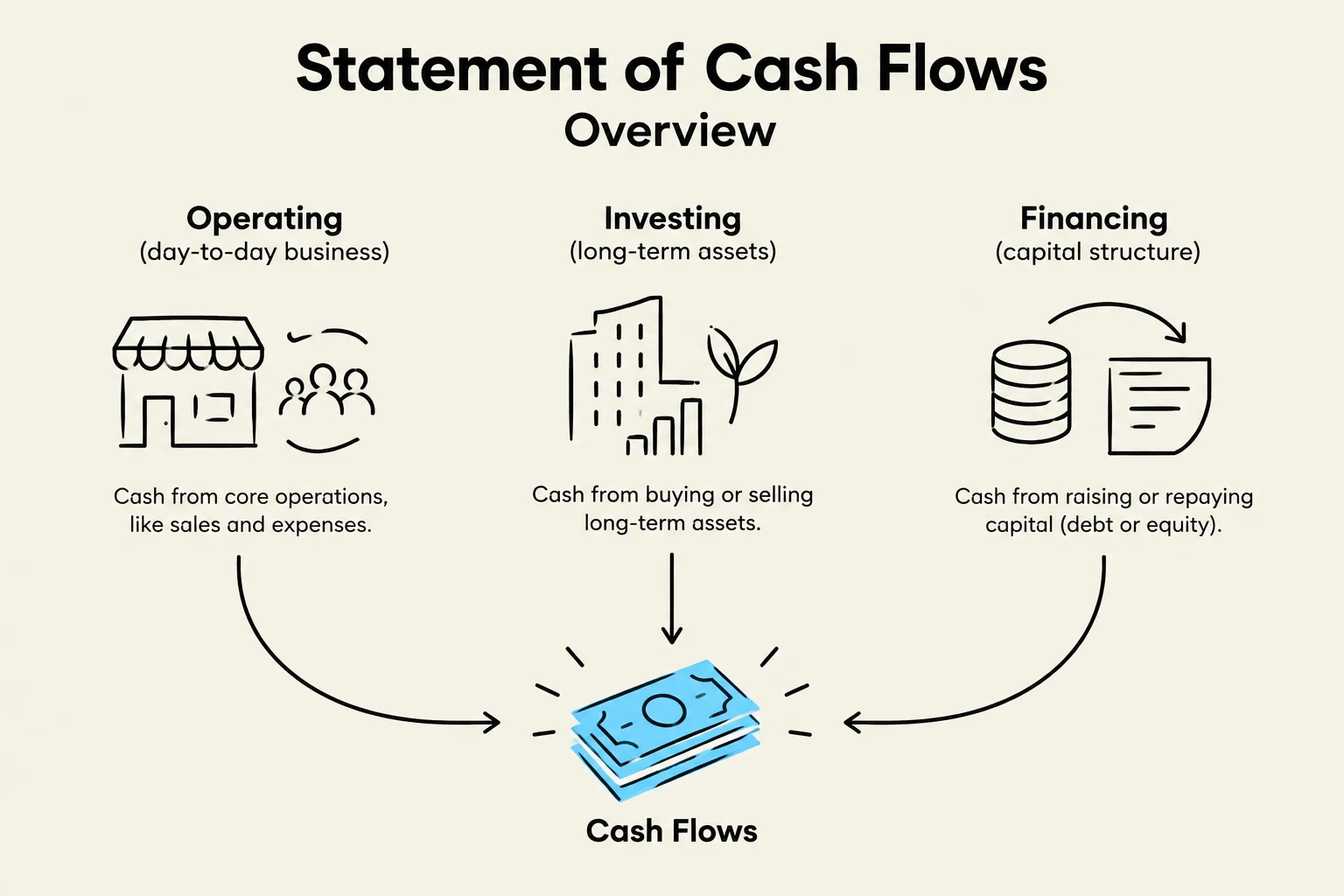
1. Operating Activities
Operating activities represent the "day-to-day" or "normal" business functions of a company. These activities involve current assets and current liabilities.
Typical Inflows: Cash collected from customers, interest received, and dividends received from investments.
Typical Outflows: Payments for inventory, employee payroll, interest on debt, and income taxes.
2. Investing Activities
Investing activities focus on the acquisition and disposal of long-term assets and other non-operating assets.
Typical Inflows: The sale of Property, Plant, and Equipment (PPE) or the collection of principal on long-term notes receivable.
Typical Outflows: The purchase of fixed assets (PPE) or the purchase of investment securities.
3. Financing Activities
Financing activities relate to the company's capital structure and its equity accounts. This section shows how the company raises money and how it pays it back to providers of capital.
Typical Inflows: Issuing stock to shareholders or issuing bonds to creditors.
Typical Outflows: Repaying bond principal, retiring debt, or paying cash dividends to shareholders.
This diagram illustrates the three main categories of cash flows: operating, investing, and financing, which collectively form the statement of cash flows.
Non-Cash Transactions
Not every significant business event involves a physical exchange of cash. For example, if a company issues new stock specifically to purchase a piece of machinery, no cash changed hands during the stock issuance. Similarly, converting convertible bonds into common stock is a major event that does not involve cash.
While these Non-Cash Transactions are not included in the main body of the Statement of Cash Flows, they are significant enough that they must be disclosed in the notes to the financial statements or in separate schedules.
Methods for Reporting Operating Activities
While the final "Net Cash from Operating Activities" figure will be the same regardless of the method used, companies have two choices for how they present the details.
The Direct Method
The Direct Method reports the actual cash effect of each operational asset and liability. For instance, instead of starting with Net Income, it would list "Cash received from customers" and "Cash paid to suppliers" directly. Although the Financial Accounting Standards Board (FASB) prefers this method, it is less commonly used in practice.
The Indirect Method
The Indirect Method is the most common approach used in practice. Instead of listing cash receipts and payments, it starts with Net Income and "reverses" the accrual accounting entries to arrive at the cash basis figure.
The Indirect Method process involves two main stages:
Stage 1: General Eliminations
First, we must remove items that are not related to operations or did not involve cash:
Remove Non-operating Activities: We subtract gains and add back losses from the sale of fixed assets, as these belong in the "Investing" section, not "Operating".
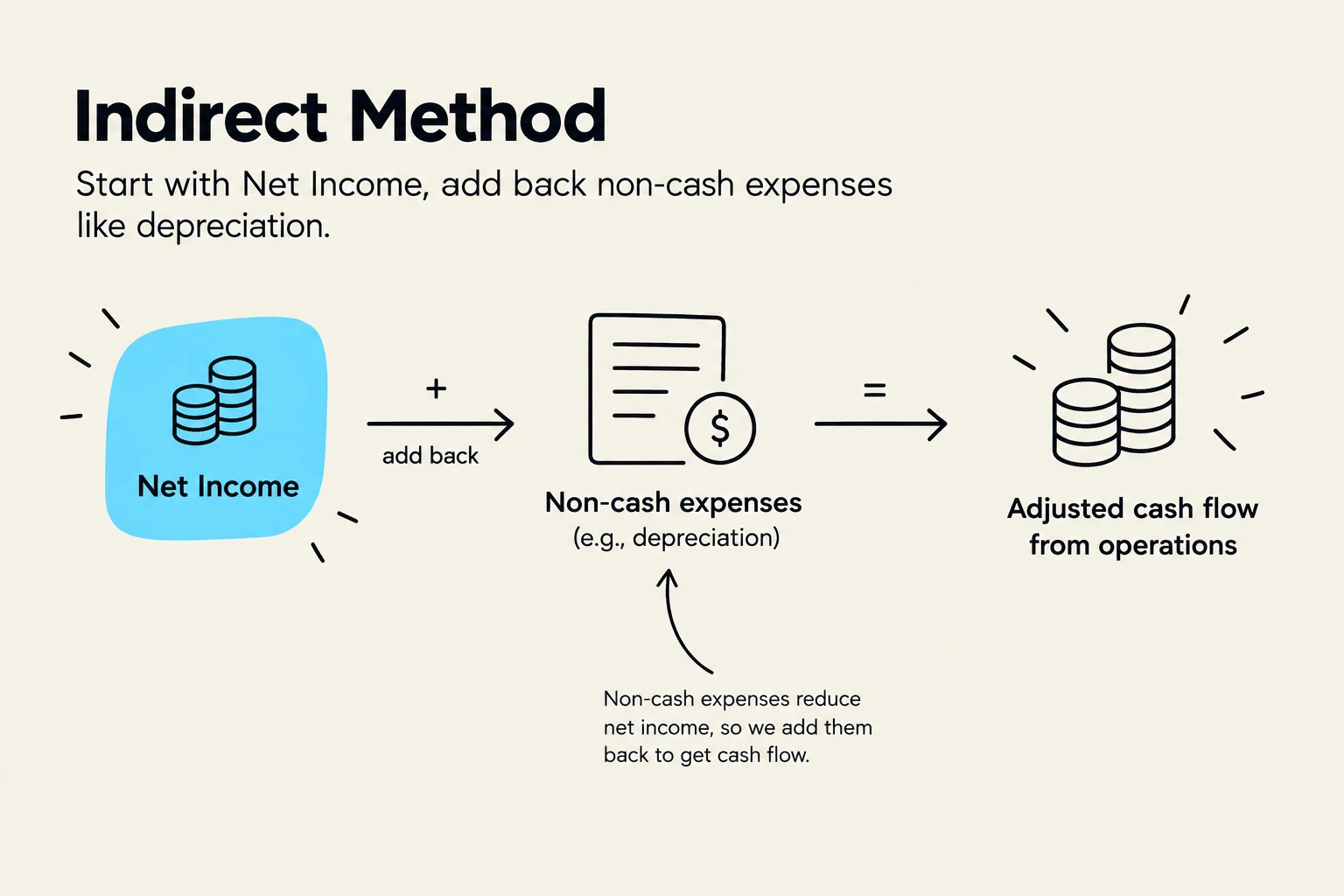
Remove Non-cash Transactions: We add back expenses that reduced Net Income but did not actually cost any cash, such as Depreciation and Amortization.
Stage 2: General Adjustments (Working Capital)
Next, we adjust for changes in Working Capital to reverse the effects of accrual accounting. This accounts for the fact that not all sales are cash-based (Accounts Receivable) and not all disbursements are cash-based (Accounts Payable).
The indirect method for calculating cash flow from operations starts with net income and adds back non-cash expenses like depreciation.
Summary Table of Common Items
To master the SCF, you must be able to categorize items quickly. Use the following logic to distinguish between the categories:
Item
Category
Reason
Collection of cash for services
Operating
Day-to-day revenue
Purchase of a building
Investing
Long-term asset acquisition
Payment of dividends
Financing
Distribution to owners
Conversion of bonds to stock
Non-Cash
No cash exchanged
Mathematical Logic for Indirect Method:
To find the cash impact of a change in a current asset (like Accounts Receivable):
Cash Flow=−(Increase in Asset)+(Decrease in Asset)
To find the cash impact of a change in a current liability (like Accounts Payable):
Cash Flow=+(Increase in Liability)−(Decrease in Liability)
This illustration compares accrual accounting and cash basis accounting, highlighting their differences in revenue recognition and impact on financial statements.
By understanding these classifications and the mechanics of the indirect method, you can look past the "paper profits" of an Income Statement and see the true economic reality of a company's cash position.
Keep reading for free.
Create an account to finish this reading and make it part of your study routine.