


Understanding signal transduction is a cornerstone of cell biology. To master this topic, one must be able to predict how specific mutations or environmental changes affect the flow of information from the cell surface to the nucleus. This article breaks down the Receptor Tyrosine Kinase (RTK), Ras, and ERK signaling cascade, using the logic found in the "Signalling Activity #10 Group Problem Set".
By analyzing wild-type cells versus mutant cells, we can learn how cells control essential processes like growth and division.
The Gateway: Receptor Tyrosine Kinases (RTK)
The signaling cascade typically begins at the plasma membrane with Receptor Tyrosine Kinases (RTK). In a resting state (wild type without growth factor), these receptors are monomeric and inactive.
When a growth factor binds to the extracellular domain, it induces receptor dimerization. This physical pairing allows the intracellular kinase domains to cross-phosphorylate one another on specific tyrosine residues. This "ON" state creates docking sites for downstream signaling proteins.
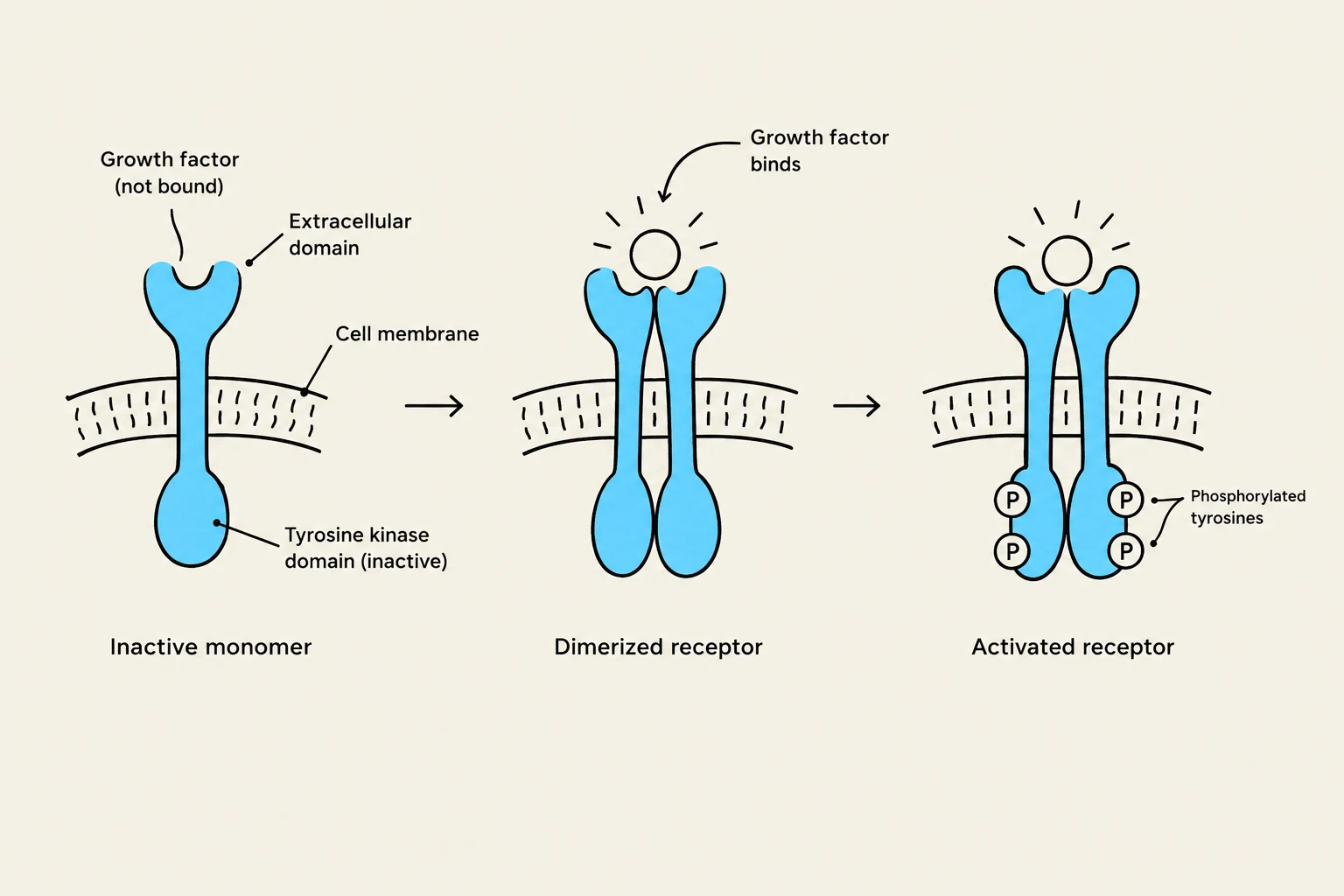
Exam Tip: Always check if the receptor is "dimerized" and "phosphorylated." If it is not, the signal cannot proceed to Ras, regardless of what other mutations are present in the cell.
The Molecular Switch: Ras and its Nucleotide States
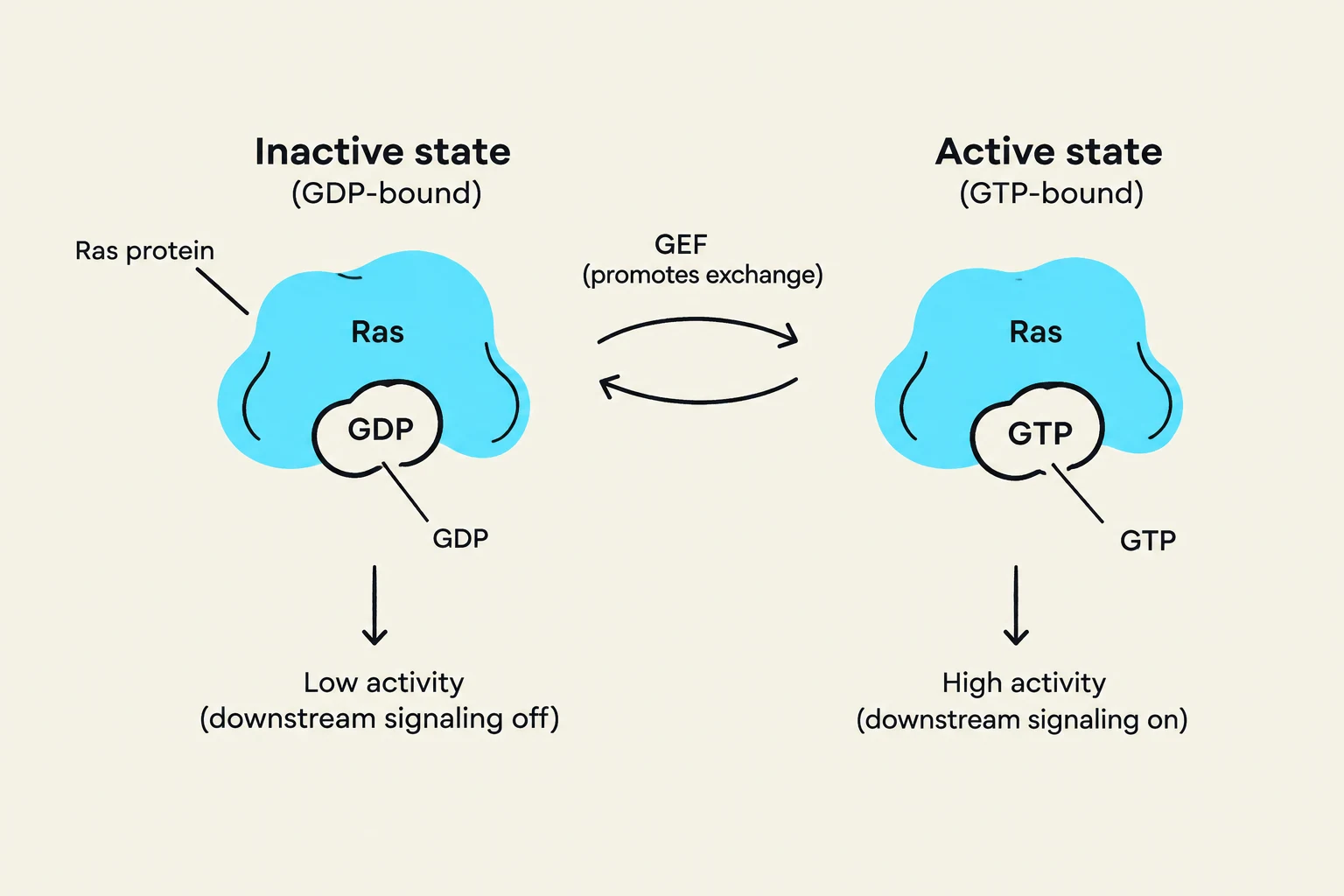
Once the RTK is activated, it recruits adapter proteins that activate Ras, a small GTPase. Ras acts as a molecular switch that toggles between two distinct conformational states:
Keep reading for free.
Create an account to finish this reading and make it part of your study routine.
Continue reading freeAlready have an account? Log in
Updated