


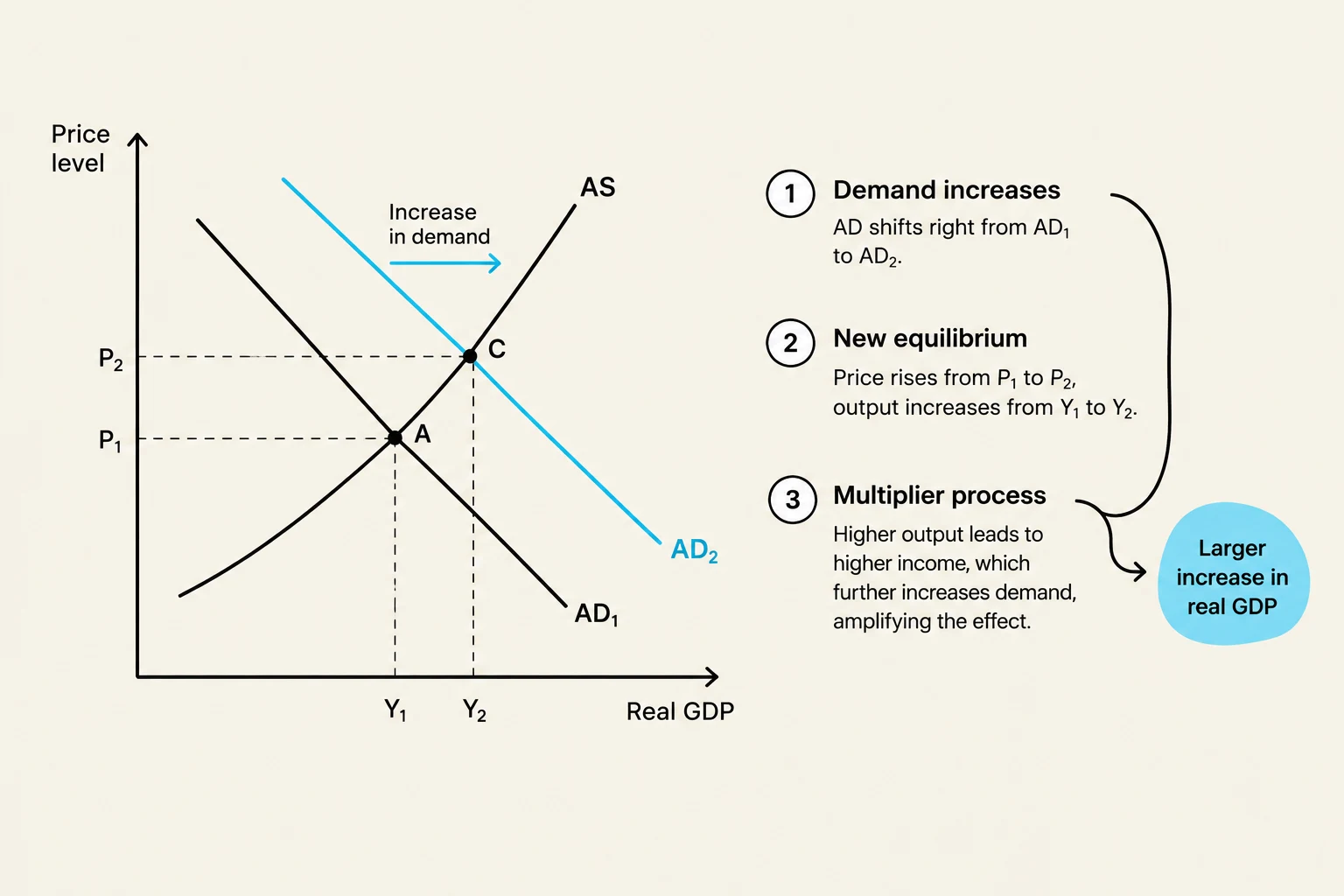
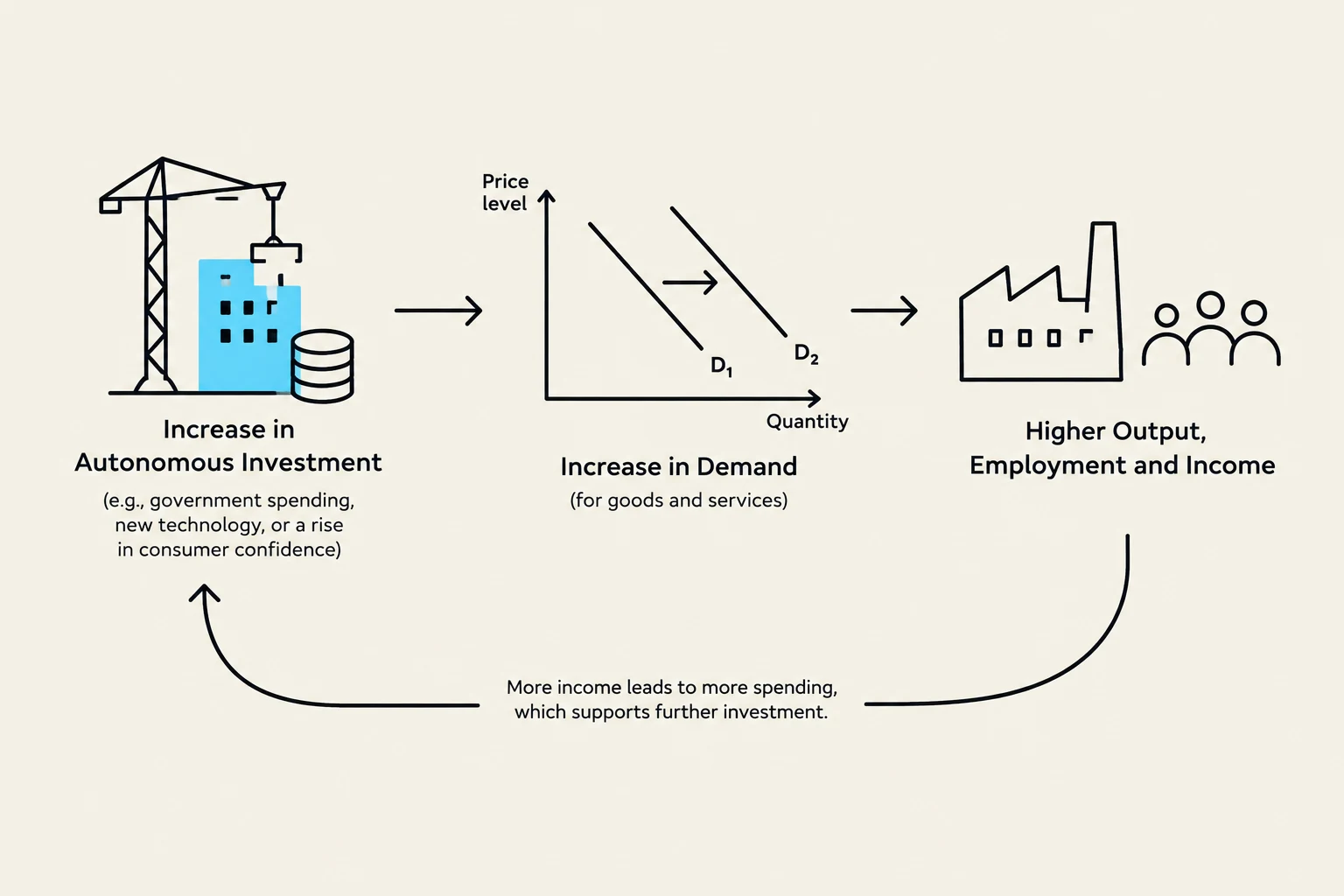
In macroeconomics, understanding how a single change in spending can trigger a chain reaction throughout the entire economy is fundamental. This phenomenon is known as the multiplier process. When aggregate demand shifts upward—perhaps due to increased business confidence or government spending—the resulting increase in the equilibrium level of income is often much larger than the initial change in demand.
Understanding Demand and Equilibrium
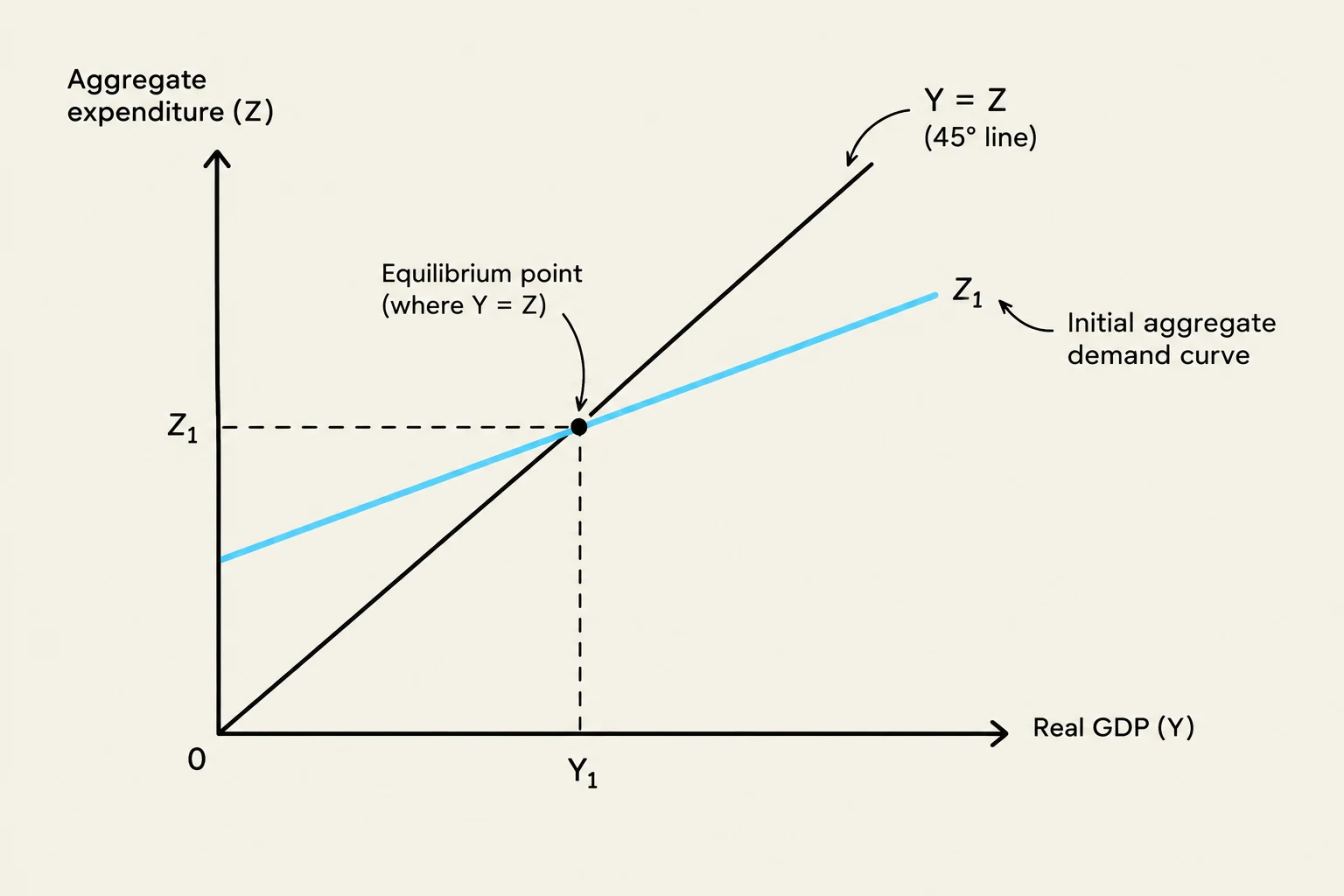
To understand how the economy adjusts, we must first look at the relationship between aggregate demand () and total income or output (). In a Keynesian framework, the economy reaches an equilibrium when the total amount produced (income) is exactly equal to the total amount demanded.
This equilibrium is visually represented by the "45-degree line" in a Keynesian Cross diagram. This line represents the condition where . Any point where an aggregate demand curve intersects this 45-degree line is a potential equilibrium point for the economy.
The Mechanics of an Increase in Demand
What happens when there is a sudden "shock" to the system, such as an increase in business confidence? When businesses become more optimistic, they increase their autonomous investment (). This causes the aggregate demand curve to shift upward from to .
Immediately following this shift, the economy finds itself in a state of disequilibrium. At the original income level (), the new demand () is higher than the current supply. This creates a situation where (Demand is greater than Supply), leading to a shortage.
Keep reading for free.
Create an account to finish this reading and make it part of your study routine.
Continue reading freeAlready have an account? Log in
Updated