


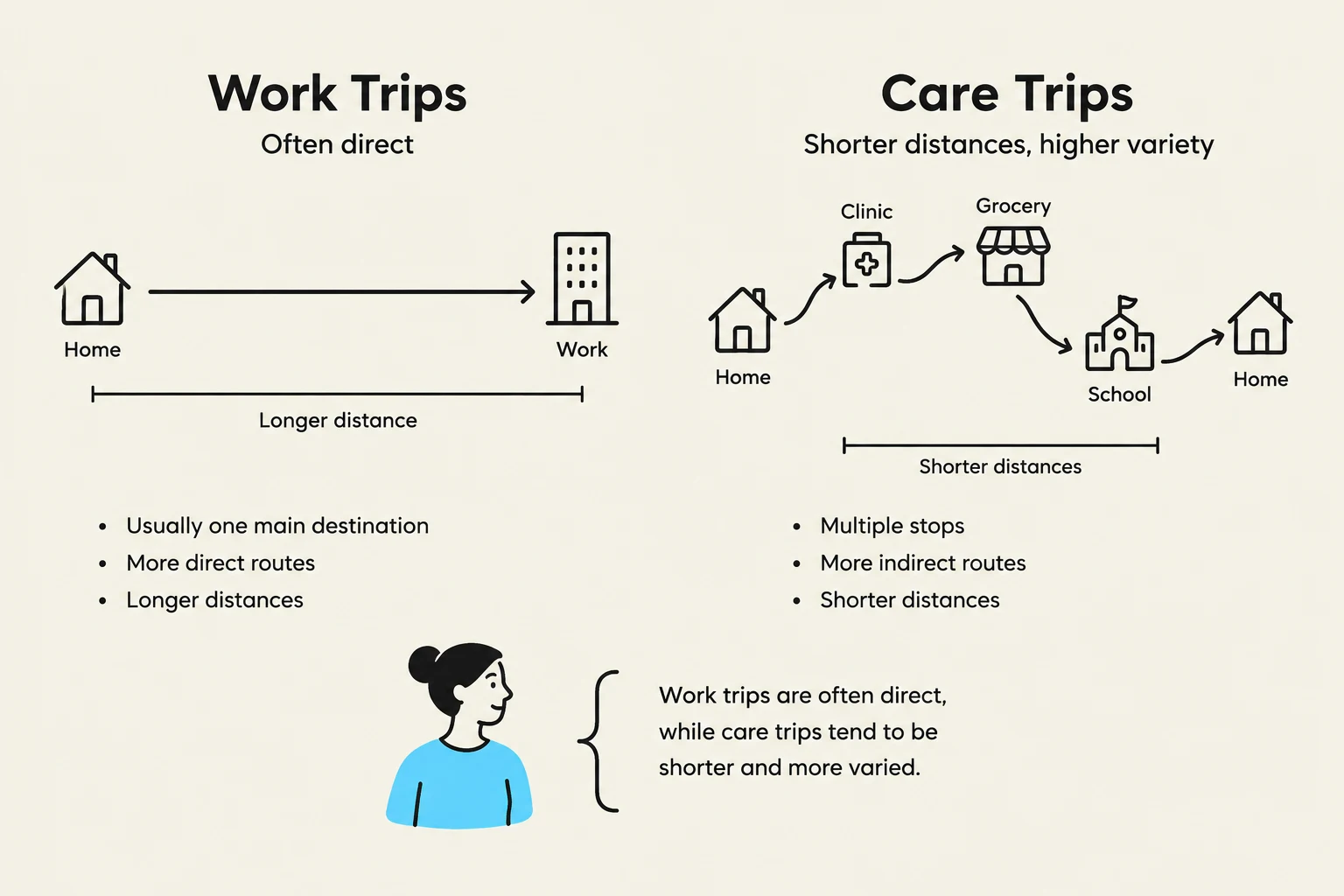
When we think about urban transportation, our minds often jump to the "commute"—the daily journey from home to a place of paid employment. However, this narrow focus overlooks a massive, essential portion of human movement: the mobility of care. In Montreal, Canada, research reveals that approximately 28% of all daily trips are dedicated to care work. These are not optional leisure trips; they are the necessary movements required to sustain families and communities, including caring for children, assisting older adults, medical appointments, and essential household errands.
Understanding Mobility of Care and Care Work
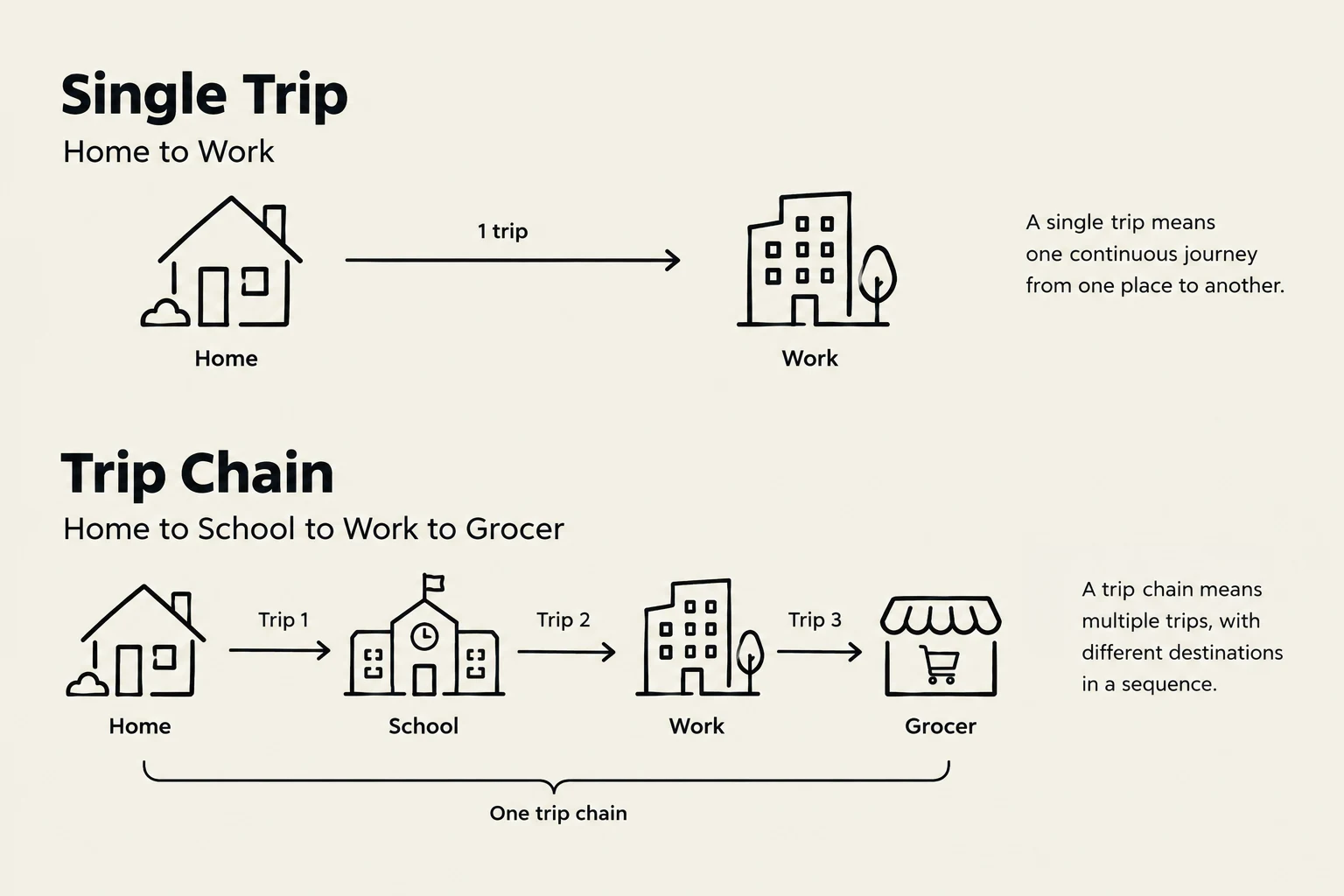
Care work is defined as unpaid labor that requires time, effort, and skill to maintain the well-being of others. Because these trips are often interconnected, they are frequently analyzed through the lens of "trip chaining." Instead of a simple A-to-B movement, a care trip often looks like a complex chain: .
Study Tip: When analyzing transportation data, look for "trip chains." If a researcher only counts "work trips," they may miss the fact that 59.55% of care trips are part of a larger chain that includes other purposes.
Gender, Income, and the Care Gap
The distribution of care mobility is far from equal. There are significant gender differences in how much time and effort is spent on these trips. In Montreal, women perform 58.2% of all care trips, compared to 41.8% for men. This gap is even more pronounced when looking at the share of daily mobility: 32% of a woman's daily movement is dedicated to care, while only 25% of a man's is.
Keep reading for free.
Create an account to finish this reading and make it part of your study routine.
Continue reading freeAlready have an account? Log in
Updated