


In the world of business, no company operates in a vacuum. Every strategic decision, from product development to pricing, is influenced by a complex web of external forces. To build and maintain successful relationships with target customers, marketing managers must constantly monitor and adapt to these forces, which are collectively known as the marketing environment.
Understanding this environment requires a distinction between two primary layers: the microenvironment, which consists of actors close to the company, and the macroenvironment, which consists of larger societal forces that shape the microenvironment.
The Microenvironment: Immediate Actors
The microenvironment includes the actors that directly affect a company's ability to serve its customers. These are the entities that a company interacts with on a regular, often daily, basis.
Internal and External Micro-Actors
At the center of this environment is the company itself. Within a firm, interrelated departments—such as finance, R&D, purchasing, and operations—must work together to share the responsibility of understanding customer needs and creating value.
Beyond the company walls, several key actors play vital roles:
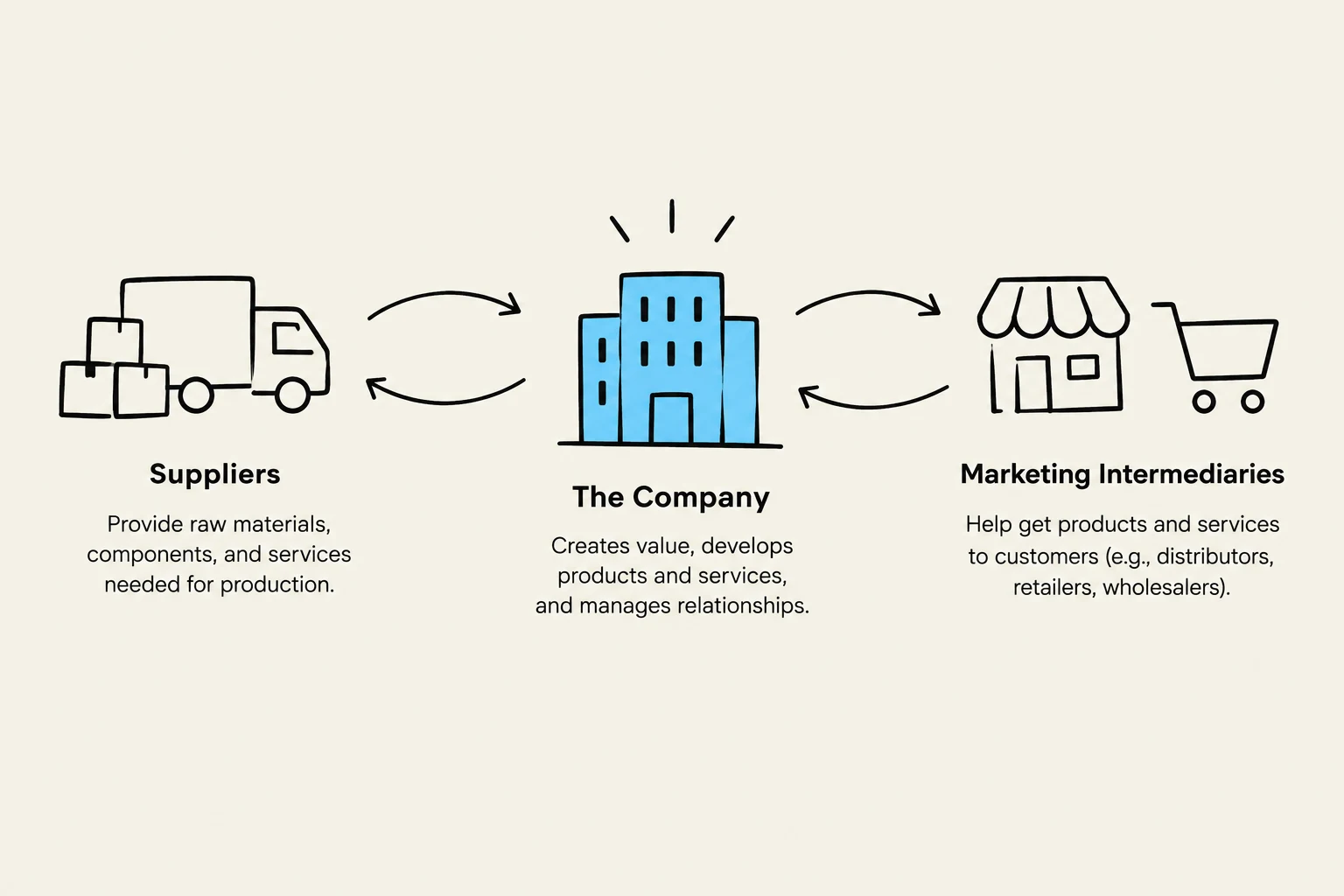
- Suppliers: These entities provide the resources needed to produce goods and services. Problems with suppliers, such as shortages, delays, or natural disasters, can seriously disrupt marketing activities. For example, L’Oréal focuses on building long-term, mutually beneficial relationships with its suppliers to ensure respect and growth.
- Marketing Intermediaries: These are firms that help the company promote, sell, and distribute its products to final buyers. This includes resellers, physical distribution firms, marketing services agencies, and financial intermediaries. A classic example is Coca-Cola, which provides significant marketing support to its retail partners to ensure success.
- Competitors: To succeed, marketers must gain a strategic advantage by positioning their products strongly against competitors.
- Publics: A "public" is any group that has an actual or potential interest in or impact on an organization's ability to achieve its objectives. This includes financial publics, media, government, citizen-action groups, local publics, general publics, and internal publics.
- Customers: The most important actor in the microenvironment. Customer markets can be categorized into five types: consumer, business, reseller, government, and international markets.

Keep reading for free.
Create an account to finish this reading and make it part of your study routine.
Continue reading freeAlready have an account? Log in
Updated