


The human brain is a marvel of biological engineering, characterized by its complex folding and distinct structural divisions. One of the most fundamental aspects of its gross anatomy is the division of the cerebrum into two distinct halves: the left and right cerebral hemispheres. This division is not merely a visual distinction but a structural reality that influences how neural information is processed and organized throughout the central nervous system.
The Longitudinal Fissure: The Great Divide
At the center of the brain's surface lies a deep, prominent groove known as the longitudinal fissure. This fissure serves as the primary anatomical boundary that separates the brain into its left and right cerebral hemispheres.
The longitudinal fissure is more than just a "crack" in the tissue; it is a profound indentation that extends from the anterior (front) portion of the brain toward the posterior (back) region. By creating this separation, the fissure allows for the massive expansion of the cerebral cortex, providing more surface area for the complex folding (gyri and sulci) that characterizes human intelligence.
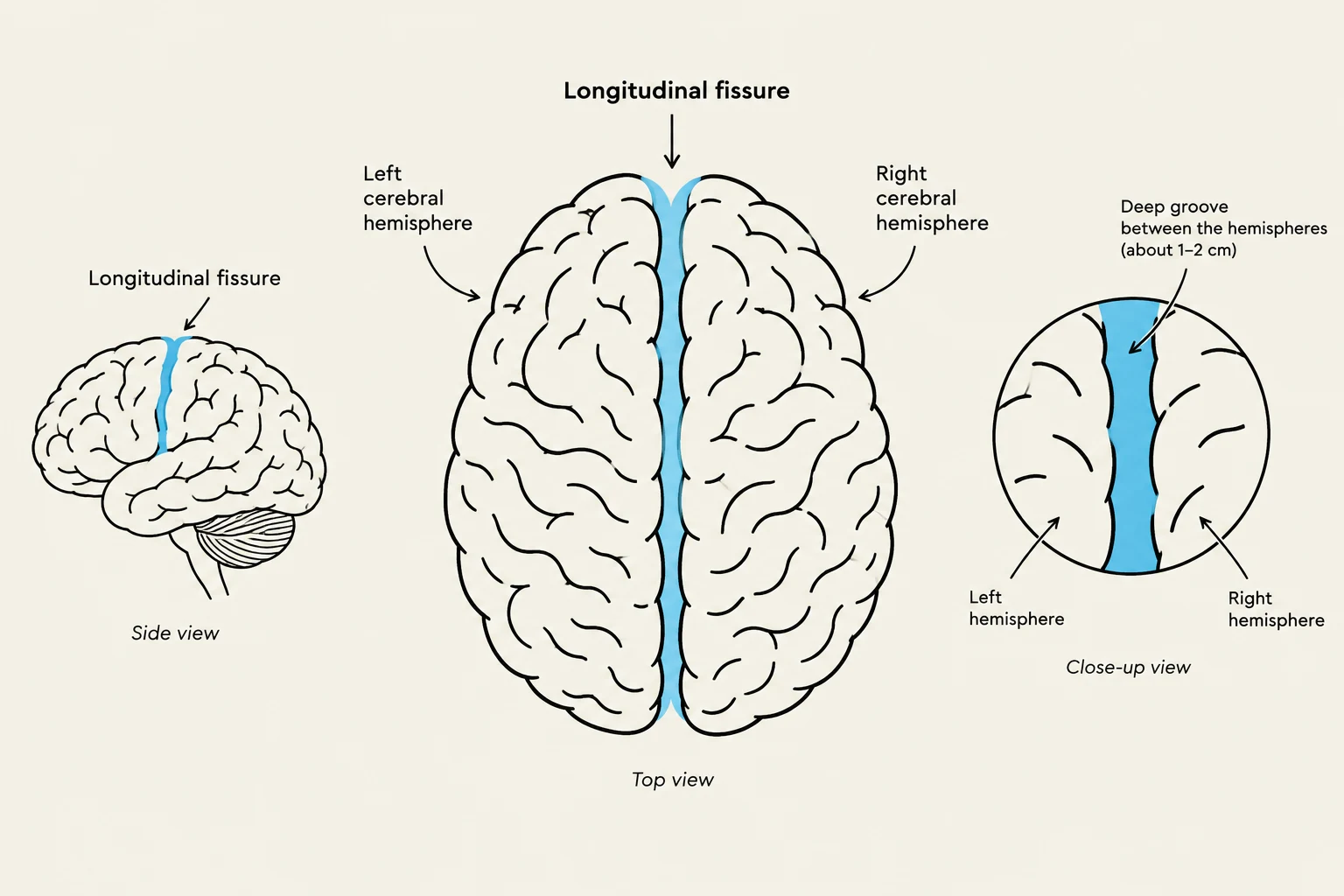
Exam Tip: When identifying brain structures in a sagittal or superior view, remember that the longitudinal fissure is the most significant landmark for distinguishing between the two hemispheres. If you see a deep midline groove, you are looking at the longitudinal fissure.

Keep reading for free.
Create an account to finish this reading and make it part of your study routine.
Continue reading freeAlready have an account? Log in
Updated