


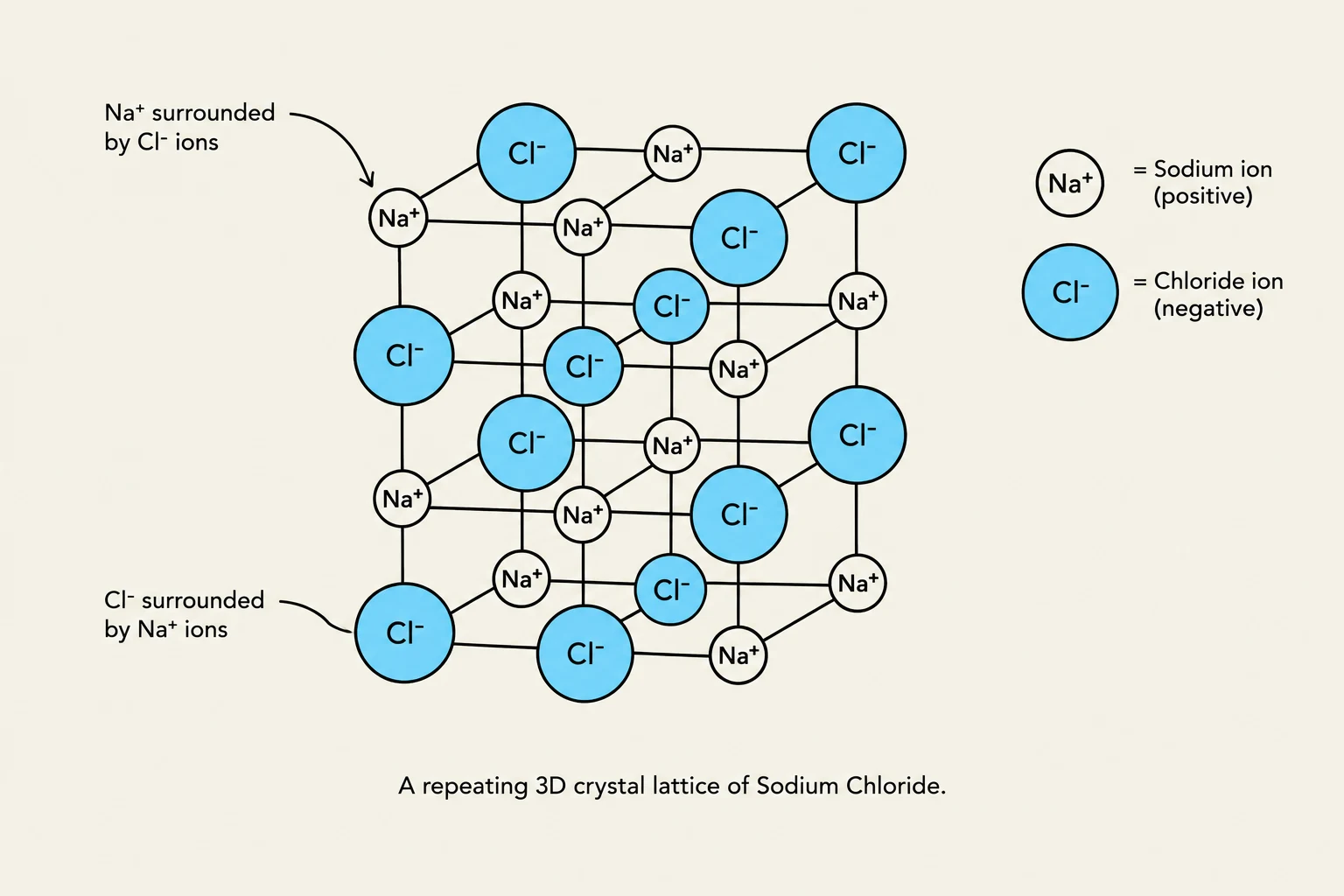
In the world of chemistry, atoms are constantly seeking stability. One of the most powerful ways they achieve this is through the formation of an ionic bond. An ionic bond is defined as the electrostatic attraction between oppositely charged ions. This attraction is the "glue" that holds certain types of matter together, creating substances we interact with every day, such as table salt.
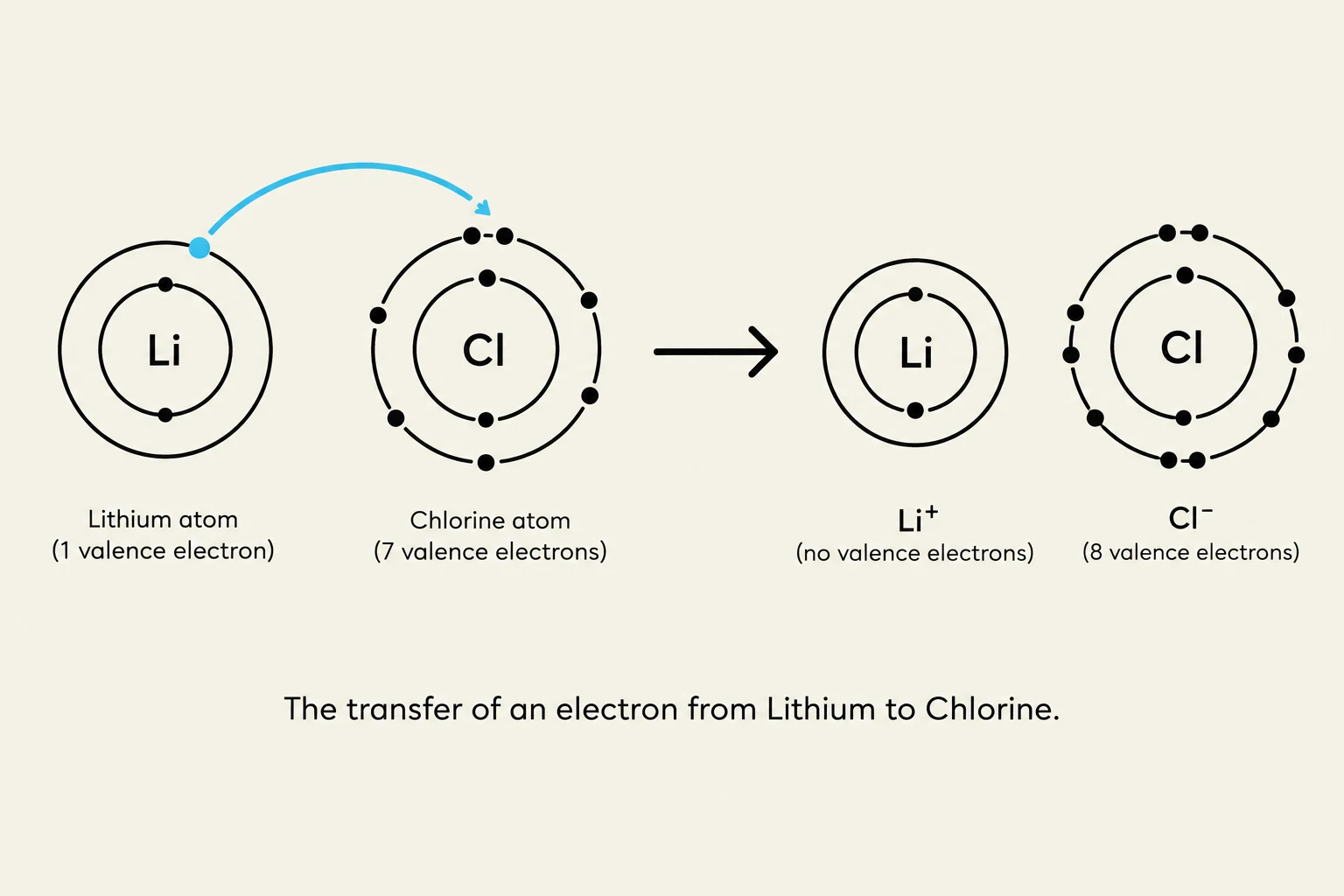
The Mechanism: Transfer of Electrons
Unlike covalent bonds, where atoms share electrons, an ionic bond is characterized by the transfer of electrons from one atom to another. This process typically occurs between a metal and a non-metal.
When an atom loses an electron, it becomes a positively charged ion (a cation). Conversely, when an atom gains an electron, it becomes a negatively charged ion (an anion). This movement is driven by the atoms' valence electron configuration—the arrangement of electrons in their outermost shell. Atoms tend to transfer electrons to achieve a full outer shell, which is a much more stable energetic state.
Using Lewis Symbols to Visualize Transfer
To visualize exactly how these electrons move, chemists use Lewis symbols. These symbols represent the valence electrons of an atom as dots around the element's symbol. By drawing arrows from the donor atom to the acceptor atom, we can track the specific transfer of electrons.
Consider these common examples of electron transfer:
- Lithium chloride (): A single electron is transferred from a Lithium atom to a Chlorine atom, resulting in and .
- Calcium oxide (): Because Oxygen requires two electrons to complete its shell, two separate Calcium atoms each contribute one electron to a single Oxygen atom.

Keep reading for free.
Create an account to finish this reading and make it part of your study routine.
Continue reading freeAlready have an account? Log in
Updated