Understanding the Immune System: Innate, Adaptive Immunity, and Vaccines
An overview of the human immune system, detailing innate and adaptive immunity, how immunity is acquired, and the role of vaccines in public health and herd immunity.
The human body is constantly under siege by a diverse array of pathogens, including viruses, bacteria, and other microbes. To survive, we rely on a complex, multi-layered defense network known as the immune system. This system is not a single entity but a coordinated effort involving various organs, cells, and specialized proteins designed to identify, attack, and remember invaders. Understanding how these defenses work—and how we can enhance them through technology—is fundamental to both biology and public health.
The First Line of Defense: Innate Immunity
Innate immunity is our body's "nonspecific" defense mechanism. It is called nonspecific because it does not distinguish between different types of pathogens; instead, it provides a general, immediate response to anything recognized as foreign. This system is organized into two primary lines of defense:
1st Line: Physical Barriers
The first goal of the immune system is to prevent pathogens from entering the body in the first place. Physical barriers, such as the skin and mucous membranes, act as the primary shield.
2nd Line: Chemical and Cellular Barriers
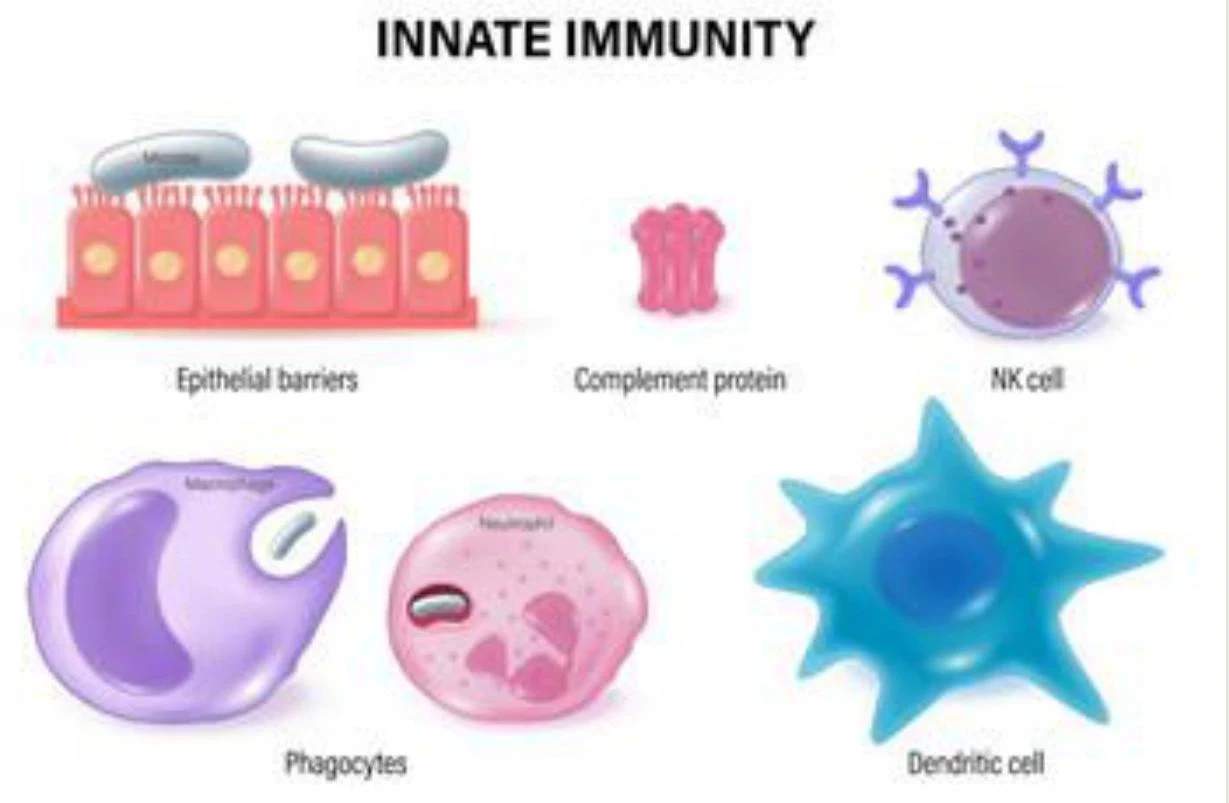
If a pathogen manages to breach the physical barriers, the second line of defense takes over. This involves chemical barriers, such as antimicrobial proteins and the complement system, as well as cellular responses like phagocytosis (where cells "eat" invaders), inflammation, and fever.
Diagram illustrating components of innate immunity, including epithelial barriers, complement proteins, NK cells, phagocytes, and dendritic cells.
The Specialized Response: Adaptive Immunity
When innate immunity is insufficient to clear an infection, the body activates adaptive (or acquired) immunity. Unlike the innate system, adaptive immunity is highly specialized. It is triggered by the recognition of antigens—unique molecules located on the surface of pathogens that act as "fingerprints".
The adaptive immune response is driven by specialized white blood cells called lymphocytes. These are categorized into two main types based on how they fight:
Humoral Immunity (B Cells)
Humoral immunity is mediated by B cells. When a B cell encounters its matching antigen, it produces antibodies. These antibodies circulate in body fluids, binding to pathogens to neutralize them or marking them so other immune cells can destroy them.
Cell-Mediated Immunity (T Cells)
Cell-mediated immunity involves T cells, which deal with pathogens that have already entered the body's cells. There are two critical types of T cells:
Helper T cells: These act as the "command center," activating other immune cells to join the fight.
Cytotoxic T cells: These are the "soldiers" that directly destroy cells that have been infected by viruses or have become cancerous.
Exam Tip: The Importance of Memory
A key outcome of adaptive immunity is the creation of memory cells. Once an infection is cleared, these cells remain in the body, "remembering" the specific antigen. If the same pathogen invades again, memory cells trigger a response that is much faster and stronger, often preventing the person from getting sick a second time.
How Immunity is Acquired
Immunity can be classified by how the body obtains its protection, categorized into active and passive types.
Type
Mechanism
Duration
Examples
Natural Active
Recovering from an actual infection
Long-lasting
Recovering from chickenpox
Artificial Active
Exposure via vaccination
Long-lasting
Measles vaccine
Natural Passive
Antibodies passed from mother to child
Temporary
Antibodies via placenta or breast milk
Artificial Passive
Injection of antibodies from an external source
Temporary
Immune globulin for rabies exposure
Vaccines: Training the Immune System
Vaccines are medical tools used to induce artificial active immunity. They work by exposing the immune system to an antigen (a piece of the pathogen) in a way that mimics an infection without actually causing the disease. This "trains" the body to produce antibodies and memory cells.
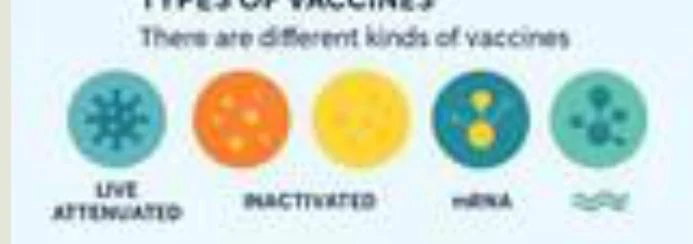
Different vaccine technologies are used depending on the pathogen and the desired immune response:
Live-attenuated vaccines: Use a weakened version of the pathogen. They provide strong immunity but are generally used for specific diseases like MMR (measles, mumps, rubella) and chickenpox.
Inactivated vaccines: Use killed versions of the pathogen. These are safer for some individuals but may require booster shots to maintain immunity, such as the polio vaccine.
mRNA vaccines: A newer technology that provides cells with genetic instructions to produce a harmless piece of viral protein, which then triggers the immune response (e.g., Pfizer or Moderna COVID-19 vaccines).
Viral vector vaccines: Use a different, harmless virus to deliver genetic instructions to the cells (e.g., Ebola or the Johnson & Johnson COVID-19 vaccine).
Subunit vaccines: Use only specific pieces (subunits) of the pathogen, such as a protein or sugar, rather than the whole organism (e.g., HPV or Hepatitis B vaccines).
This illustration shows different types of vaccines: live attenuated, inactivated, mRNA, and viral vector.
Public Health and Herd Immunity
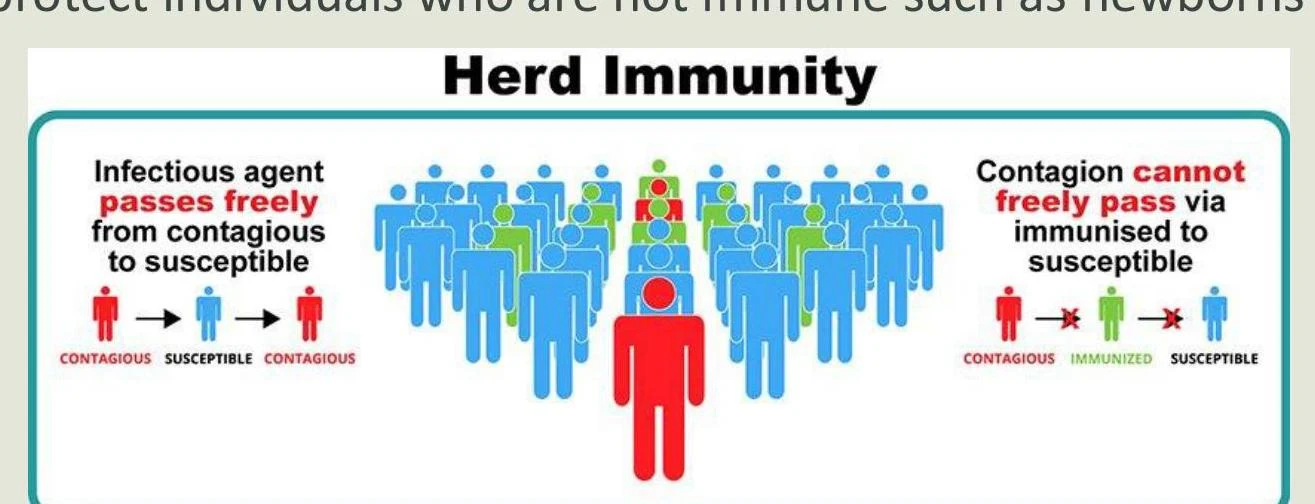
Vaccination is not just an individual health choice; it is a community defense strategy. When a high percentage of a population is vaccinated, a phenomenon known as herd immunity occurs.
In a vaccinated population, the pathogen has a difficult time finding susceptible hosts to infect, which slows or stops the spread of the disease. This provides indirect protection to vulnerable individuals who cannot be vaccinated, such as newborns or people with severely weakened immune systems.
Note on Evolving Threats: The threshold required for herd immunity depends on how contagious a disease is. For example, while early estimates for COVID-19 suggested a threshold of 60–70%, the emergence of highly contagious variants like Delta and Omicron has led researchers to suggest that as much as 85% of the population may need immunity to achieve herd protection.
This diagram illustrates the concept of herd immunity, showing how the spread of infectious agents is limited when a sufficient proportion of a population is immune.
Keep reading for free.
Create an account to finish this reading and make it part of your study routine.