


When studying law, it is easy to assume that the "law" is a single, monolithic document. However, in the realm of transportation and road safety, the legal framework is actually a two-tiered system. At the top sits the Highway Traffic Act, and beneath it lies a complex web of regulations.
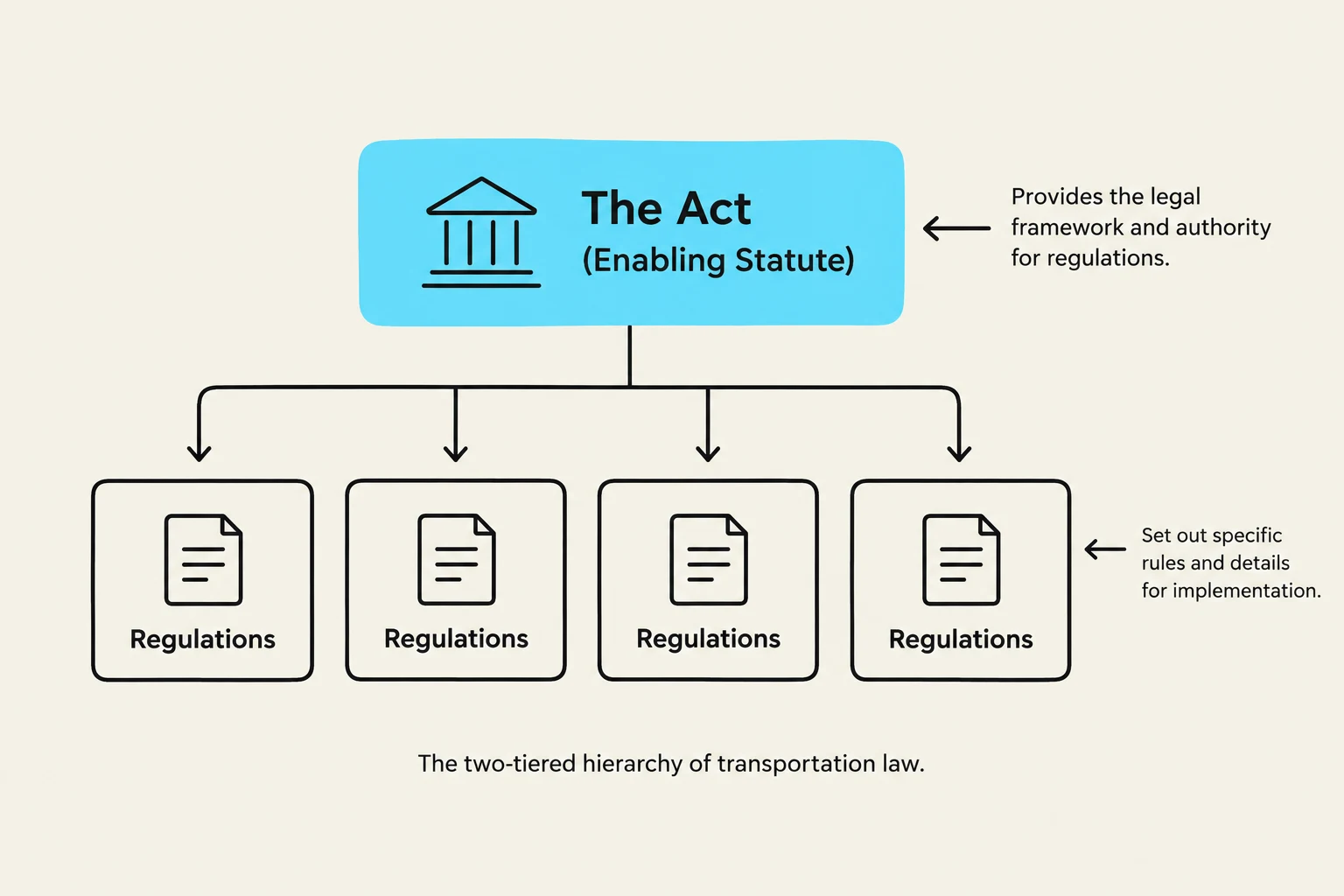
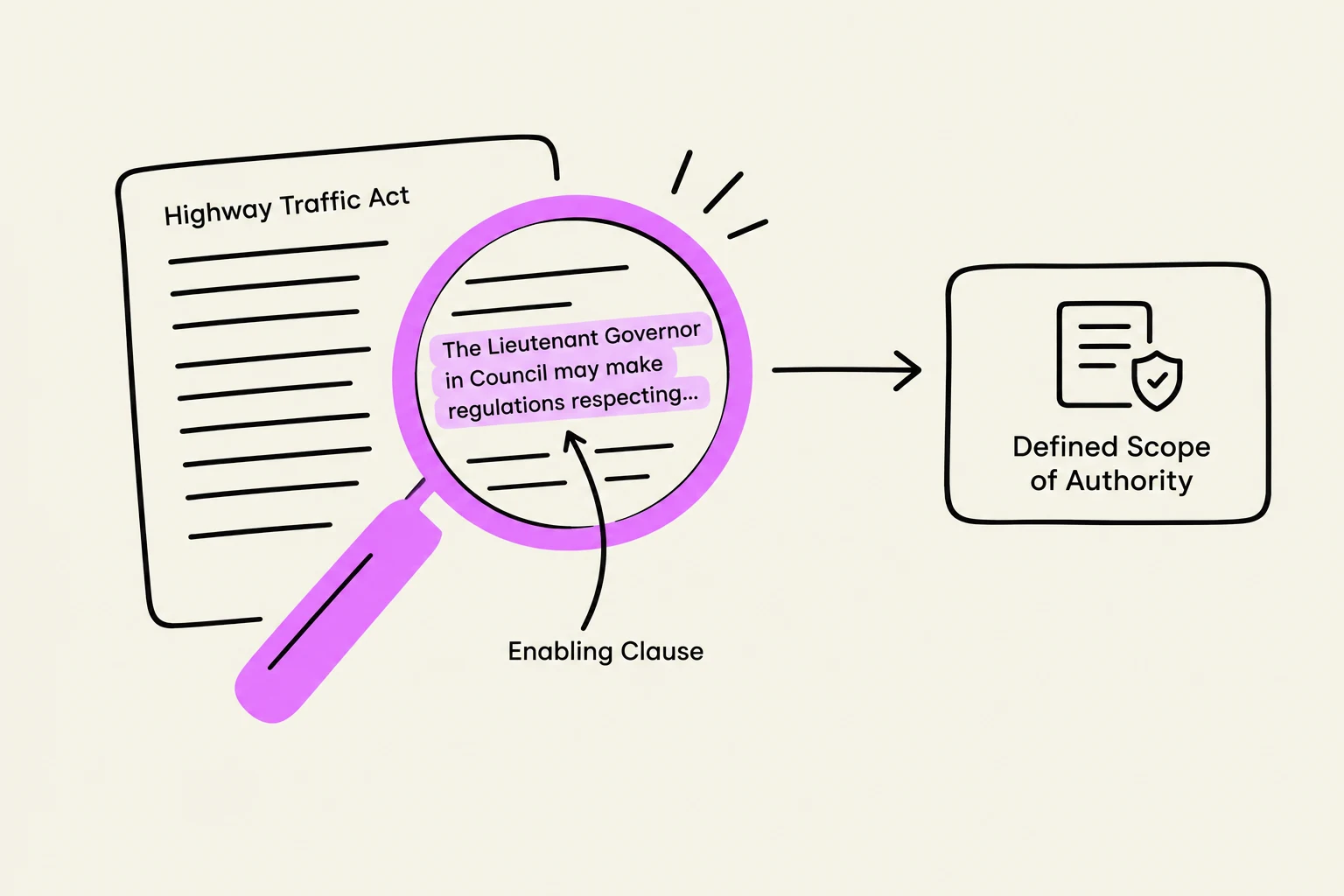
To master legal analysis in this field, you must understand how these two layers interact. The Act provides the "skeleton" of the law, while the regulations provide the "muscle" and detail. This article will guide you through navigating the Highway Traffic Act to locate the specific provisions that permit regulations to be drafted and to identify exactly who holds the power to create them.
The Relationship Between the Act and Regulations
The Highway Traffic Act serves as the primary legislative framework governing road usage. However, in legal terms, the Act often functions as an enabling statute.
An enabling statute is a law passed by the legislature that "enables" or gives permission to a different body to make more specific rules. Because the legislature cannot possibly vote on every minute detail—such as the exact technical specifications of a headlight or the specific font size on a driver's license—they pass the Act to set the broad mandate and then delegate the technical work to others.
Key Differences at a Glance
| Feature | Highway Traffic Act (The Statute) | Regulations (The Rules) |
|---|---|---|
| Source of Power | Passed by the Legislature | Derived from the Act |
| Level of Detail | Broad principles and mandates | Granular, technical, and administrative |
| Flexibility | Hard to change (requires legislative process) | Easier to update (responsive to technology) |
| Function | Provides the legal "permission" | Provides the enforceable "details" |

Keep reading for free.
Create an account to finish this reading and make it part of your study routine.
Continue reading freeAlready have an account? Log in
Updated